The America-Italy Society of Philadelphia
Vittorini Award
since 1963
for Undergraduate Excellence in Italian at University of Pennsylvania
Vittorini Award 2026
Rose Marone
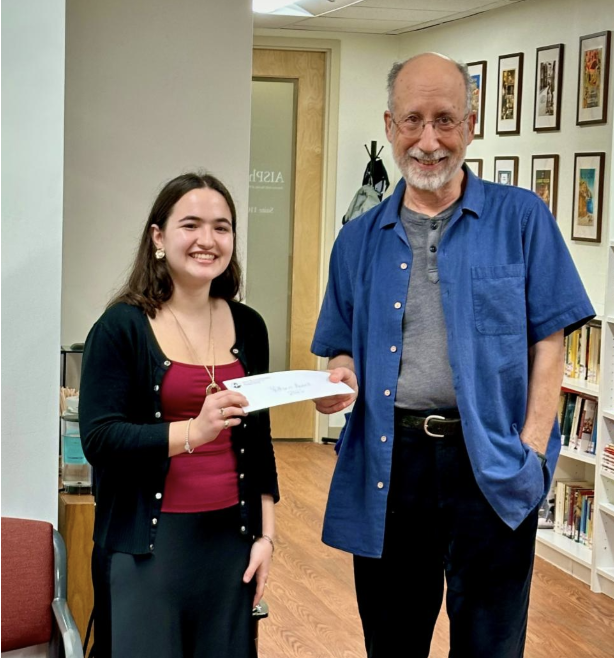
My name is Rose Marone and I am an undergraduate student at the University of Pennsylvania. This fall I am travelling to study at the University of Bologna on an Italian language track. I am grateful for the guidance of the Italian department at Penn and for the opportunity to represent Penn as this year’s Vittorini recipient.
Learning Italian has positively shaped my Penn experience. I look forward to immersing myself in Italian culture and enhancing my language skills in a real-world setting. I am excited to embrace all the challenges that come with studying abroad and — as I am an avid reader and writer — share my experiences with those at home.

Week 6
-
![]()
After having a week of just University of Bologna courses, my classes with BCSP started again this past Monday. It has been quite the adjustment from the American university system to the Italian one. I think the aspect most surprising to me is how grades are earned and, consequently, how lessons are run.
-
![]()
At Penn, I am used to smaller literature classes with lots of reading and the expectation of lots of class participation. I spend so much time reading the class material because I know that the next class will be a group analysis of the passages we read, guided by my professor. I’m used to my grades being a reflection of this participation and preparedness, and also papers/projects that are completed often across the entire semester.
-
![]()
At Unibo, however, even the literature classes are large lectures where students silently take notes and try to soak in everything the professor is saying. There is no such thing as participation, and my final grade depends solely on an oral exam taken at the end of the course.
-
![]()
In my first couple of lectures, I was so stressed because I couldn’t find the schedule of the readings, and I was worried that I wouldn’t be prepared for the first classes. Then I realized that there is no schedule. Students are just expected to finish the list of books, poem collections, and scholarly articles before the final exam. It has been a challenge to create a schedule that coincides with the lectures, but I’ve also just accepted that using the lectures as an overview of a text and closely reading afterward may be the way to go.
-
![]()
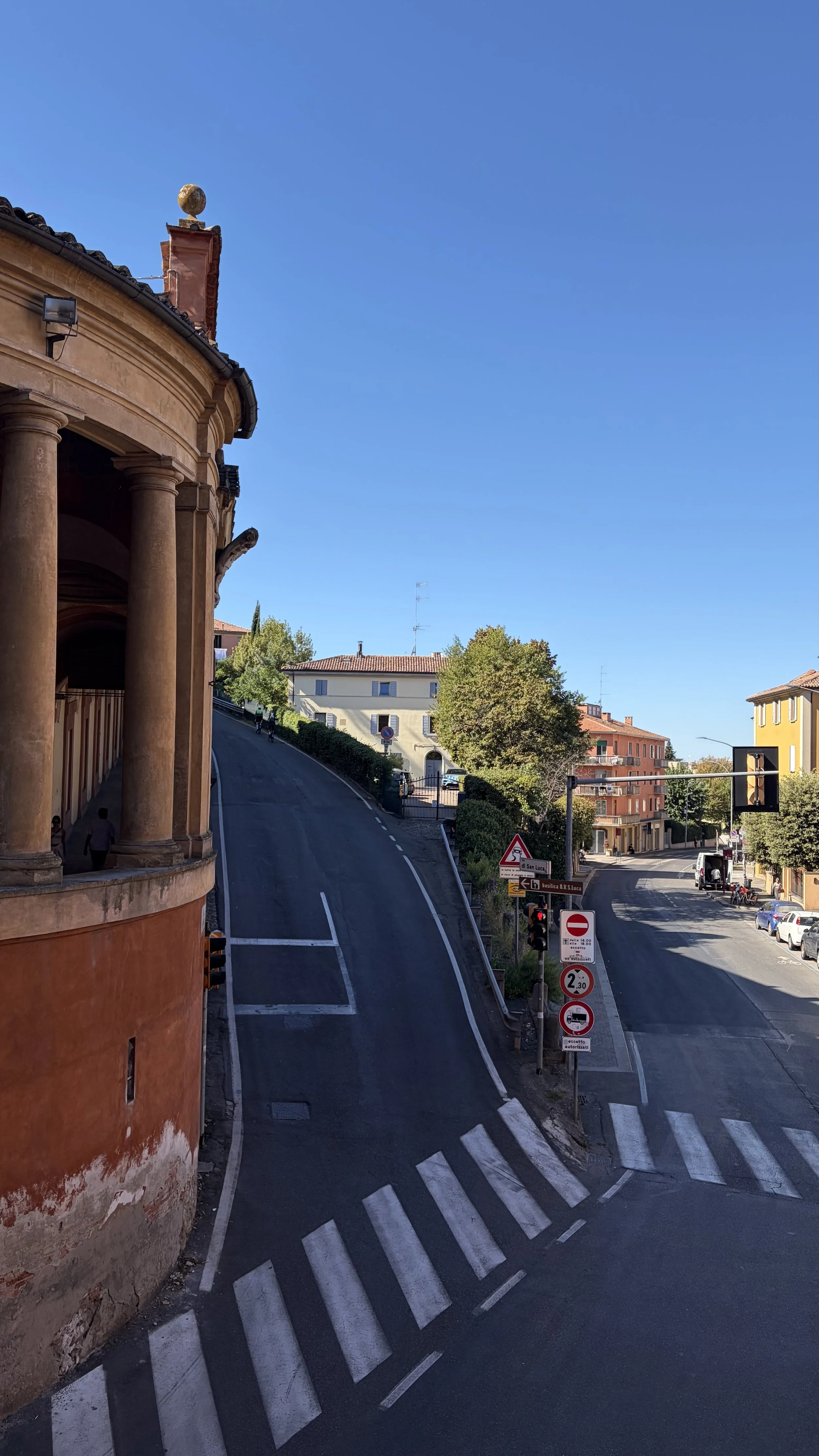
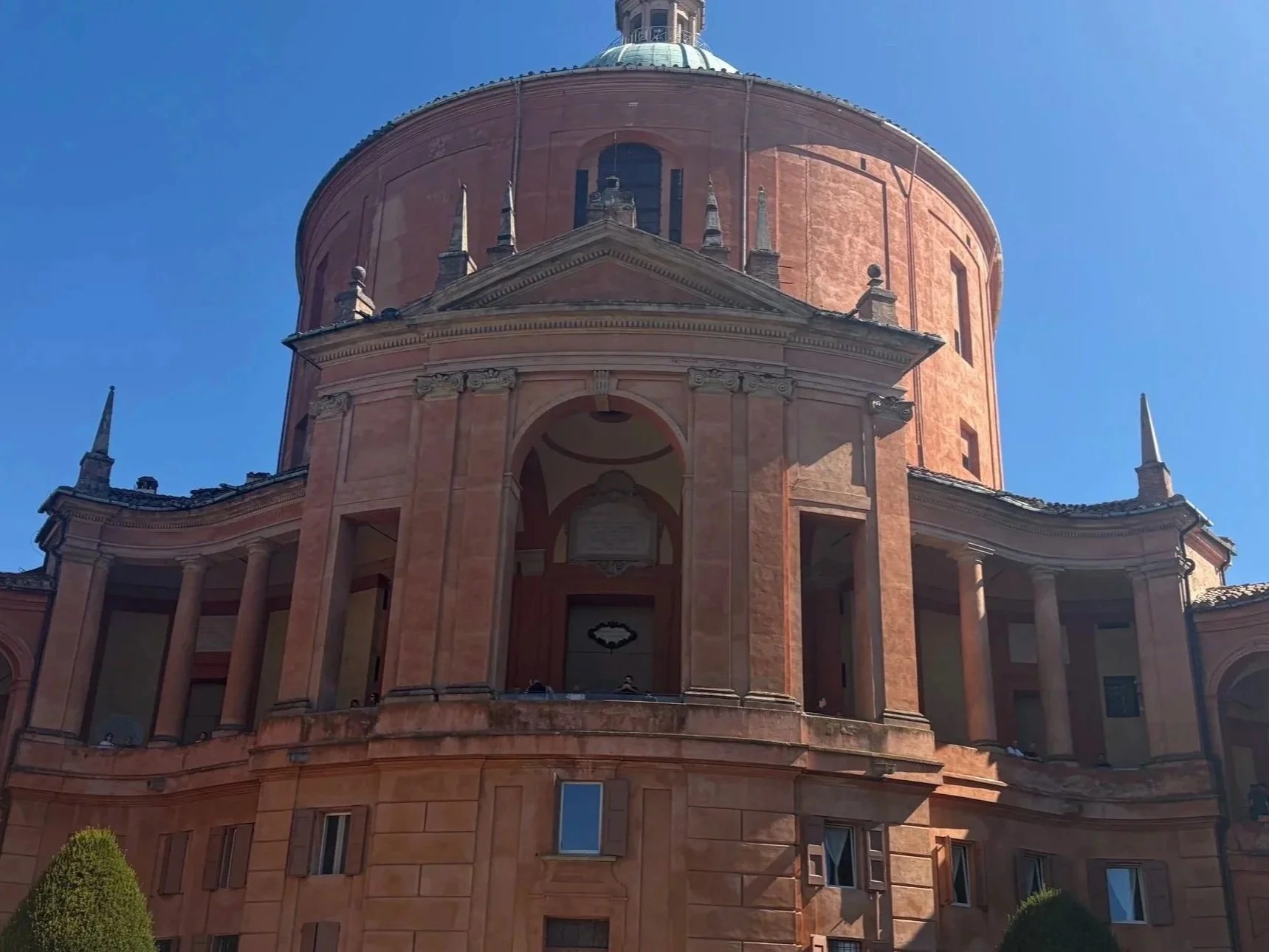
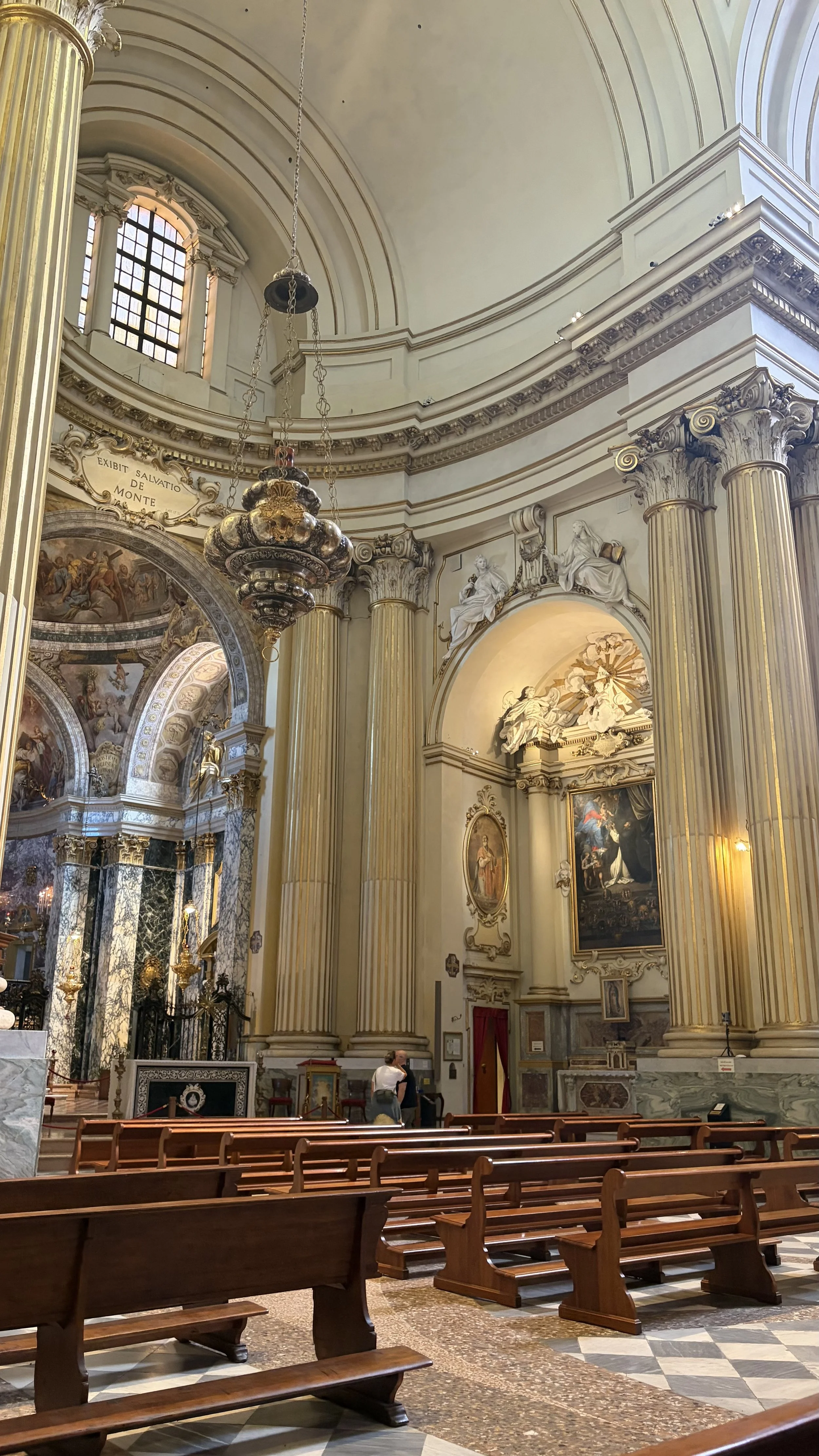
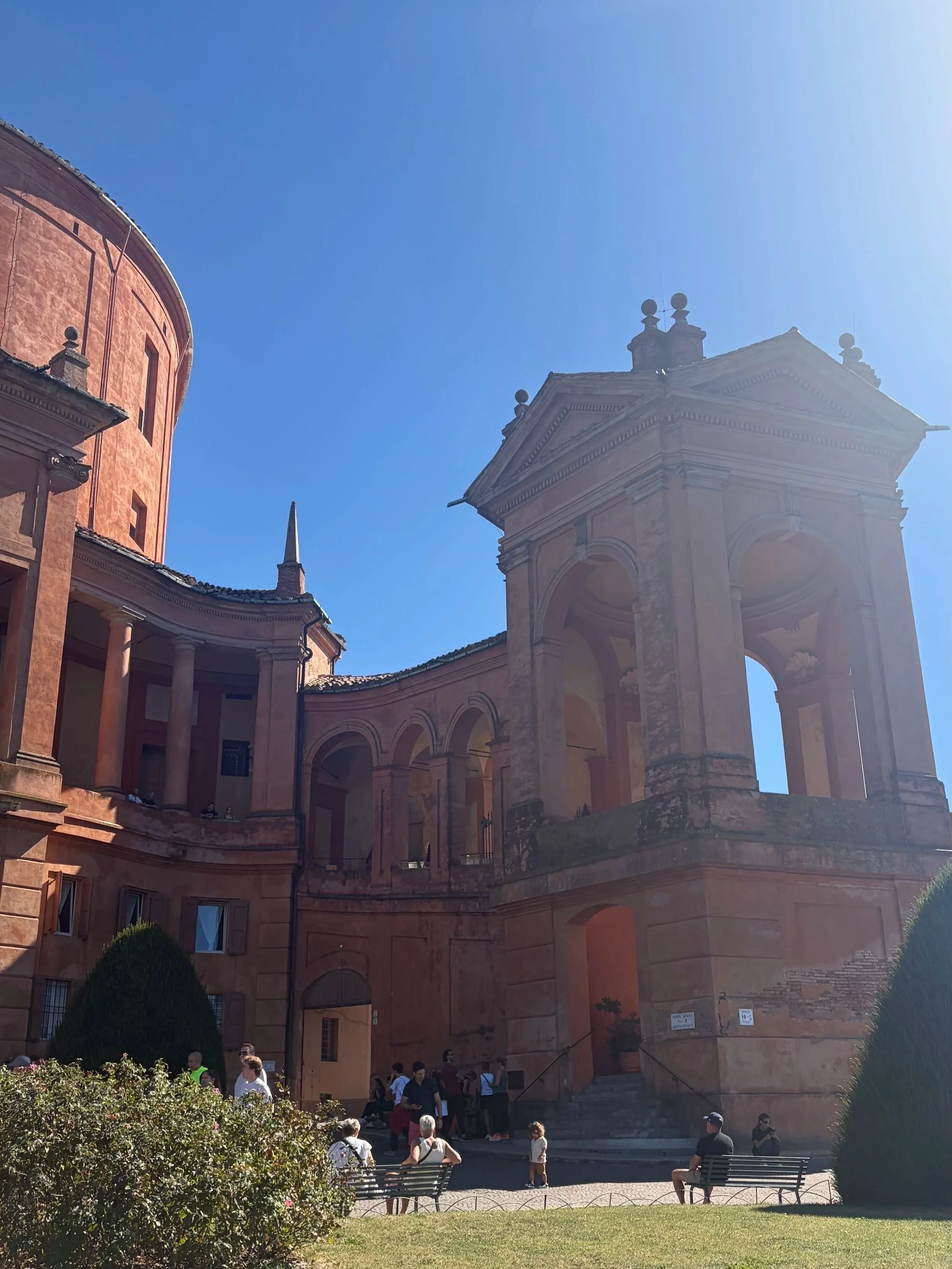
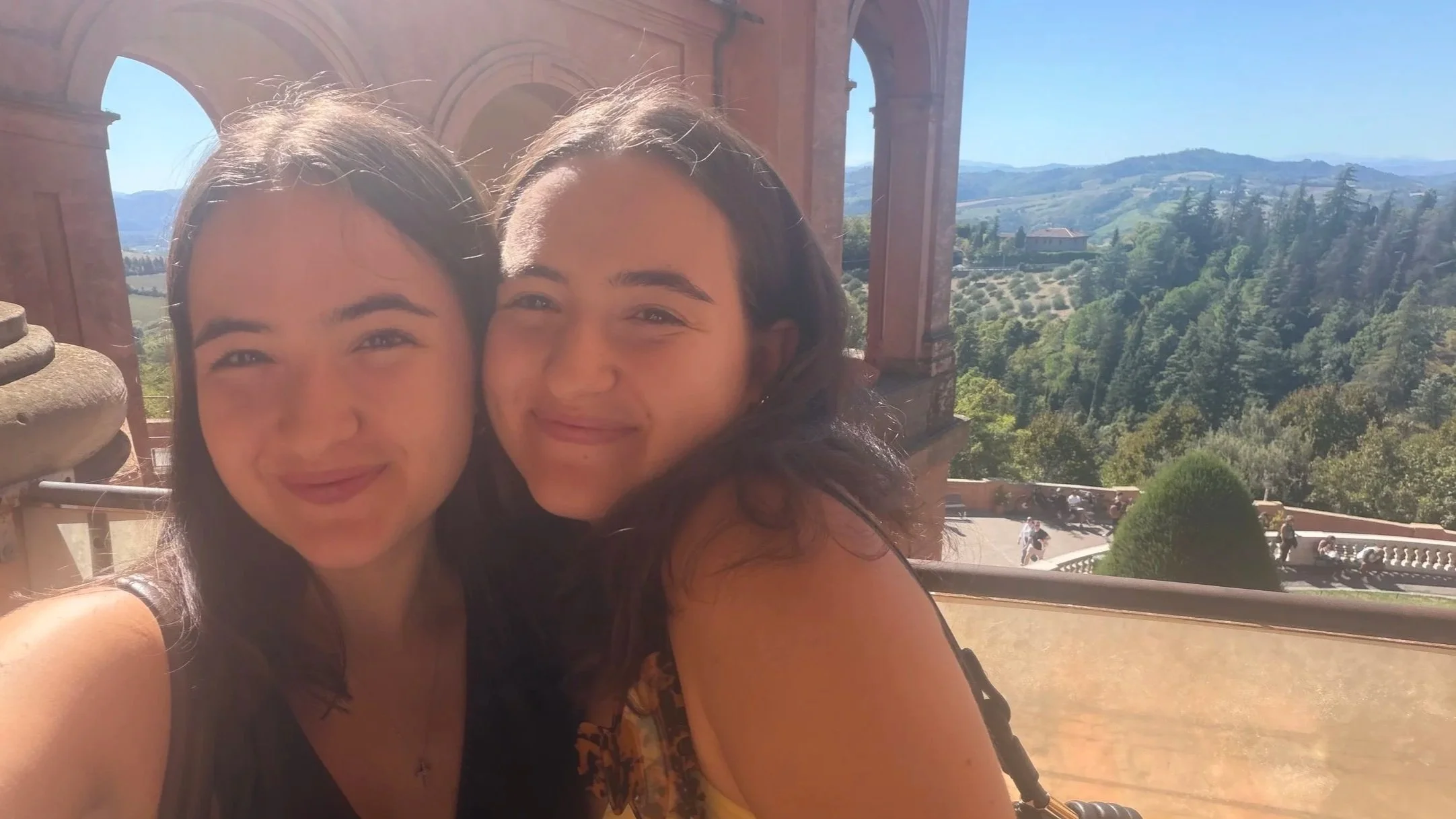
While we both have been trying to find our footing with university classes, my sister and I decided to stay local this weekend. As a way to soak up the good weather and explore another part of Bologna, Lucy and I decided to make the trek up to the Basilica di San Luca. It has been on our list for a while, so it seemed like the perfect weekend to go.
-
![]()
Its popularity made me think that it would be a short walk, with some beautiful scenes on the way there, and the piazza with the Basilica at the top. Two of those things were absolutely true, but it’s safe to say that the walk was not the short and level route I was anticipating. Lucy and I were in our everyday clothes — including what were essentially ballet flats — so it naturally came as a bit of a surprise when everyone walking back down looked like they were training for a marathon.
-
![]()
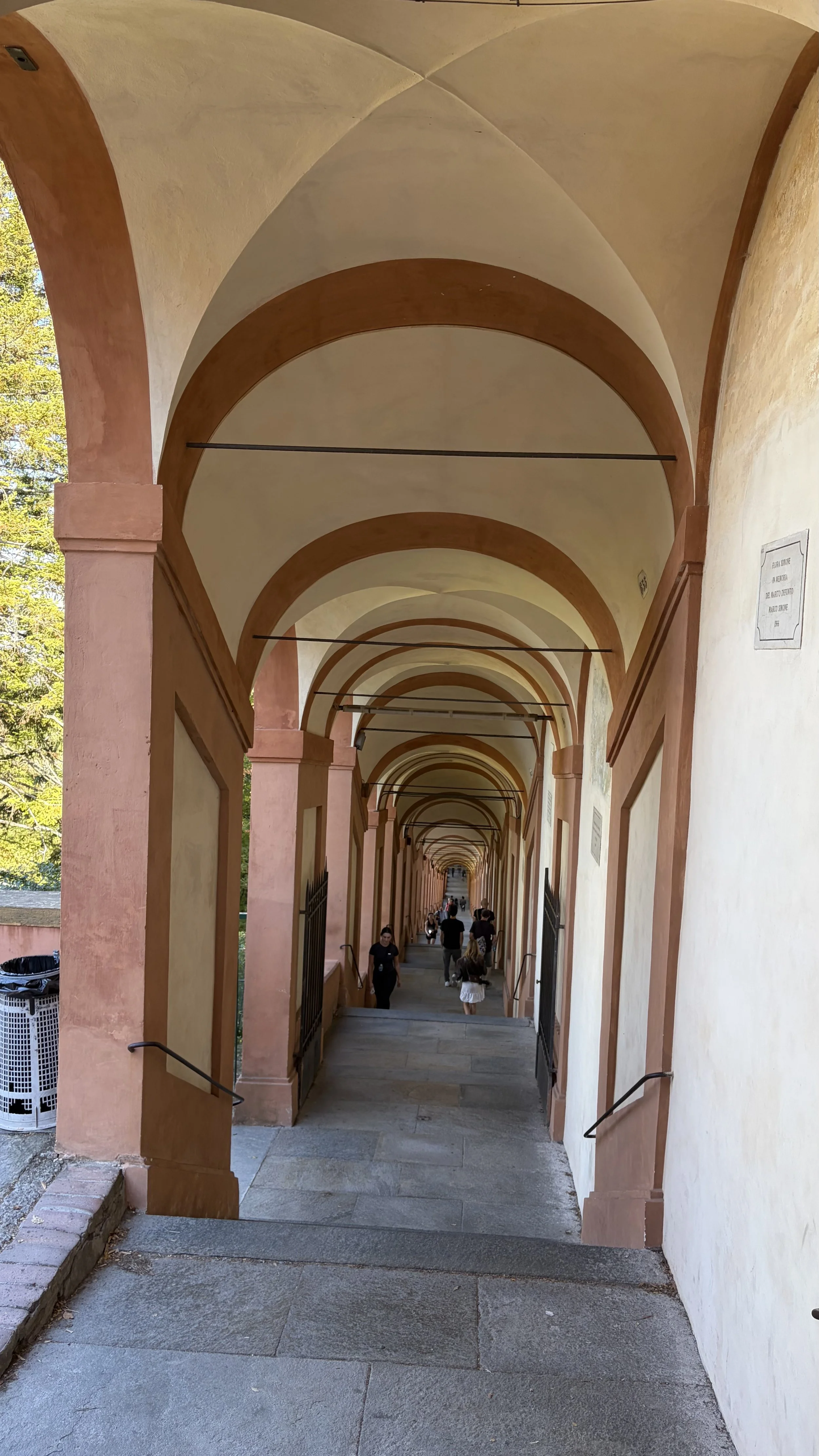
The count of the arches starts right outside of Porta Saragozza, on the southwest side of the city. We had crossed town from our apartments on Santo Stefano, walking through the smaller neighborhood, then through the busy streets near Piazza Maggiore, before arriving at Porta Saragozza.
-
![]()
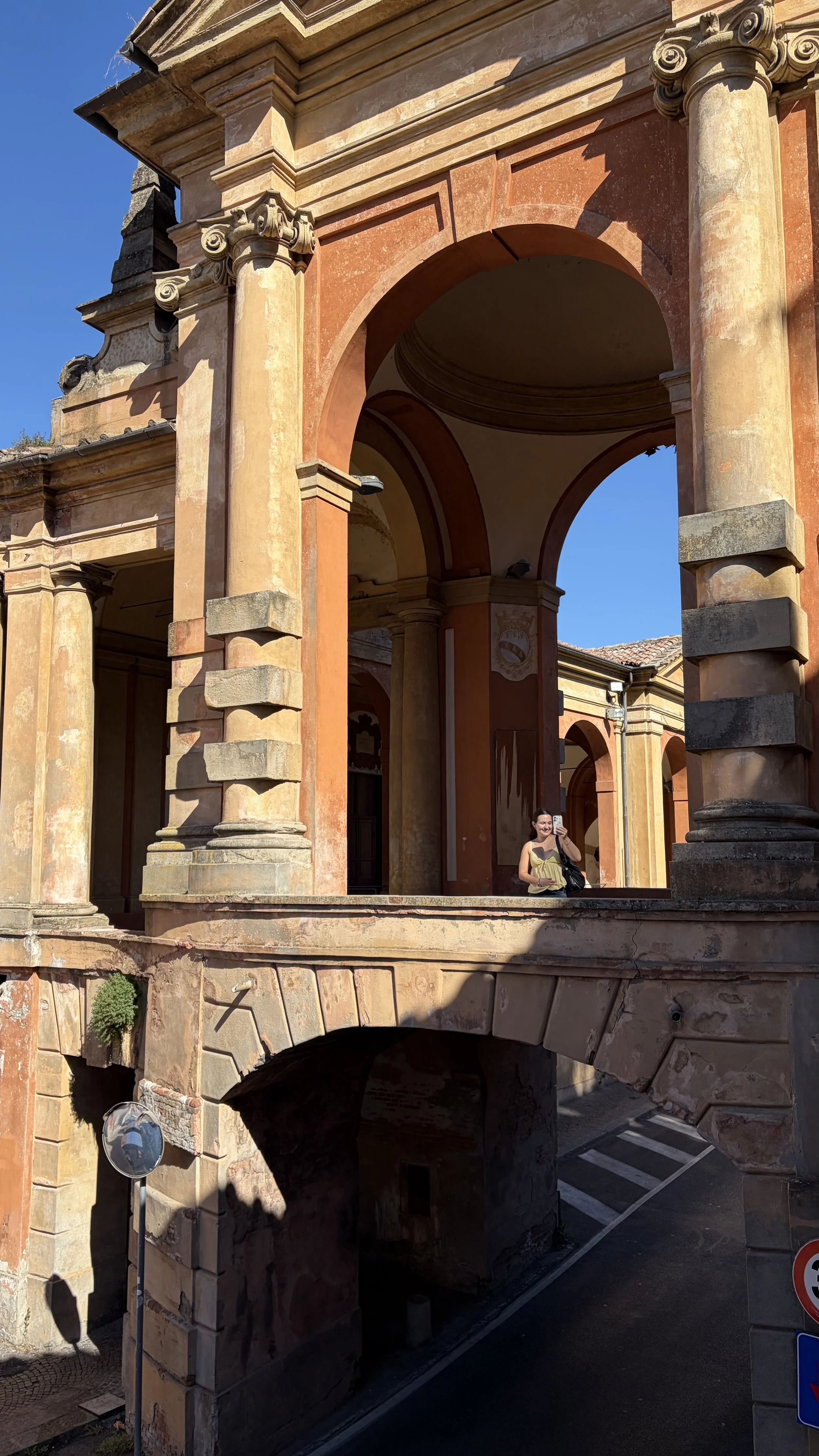
The incline took me by surprise, but I was so enamoured by the view that I didn’t mind. When we reached the Arco di Meloncello, however, I began to realize what we had gotten ourselves into. This arch marks the halfway point, but also the point where the incline starts to climb even more — in addition to being a popular photo spot on the way.
-
![]()
Like when I visited Urbino, I kept taking pictures in the hopes of capturing just how steep this walk actually was. And also, like Urbino, sometimes the incline was so great there was just a staircase to climb.
-
![]()
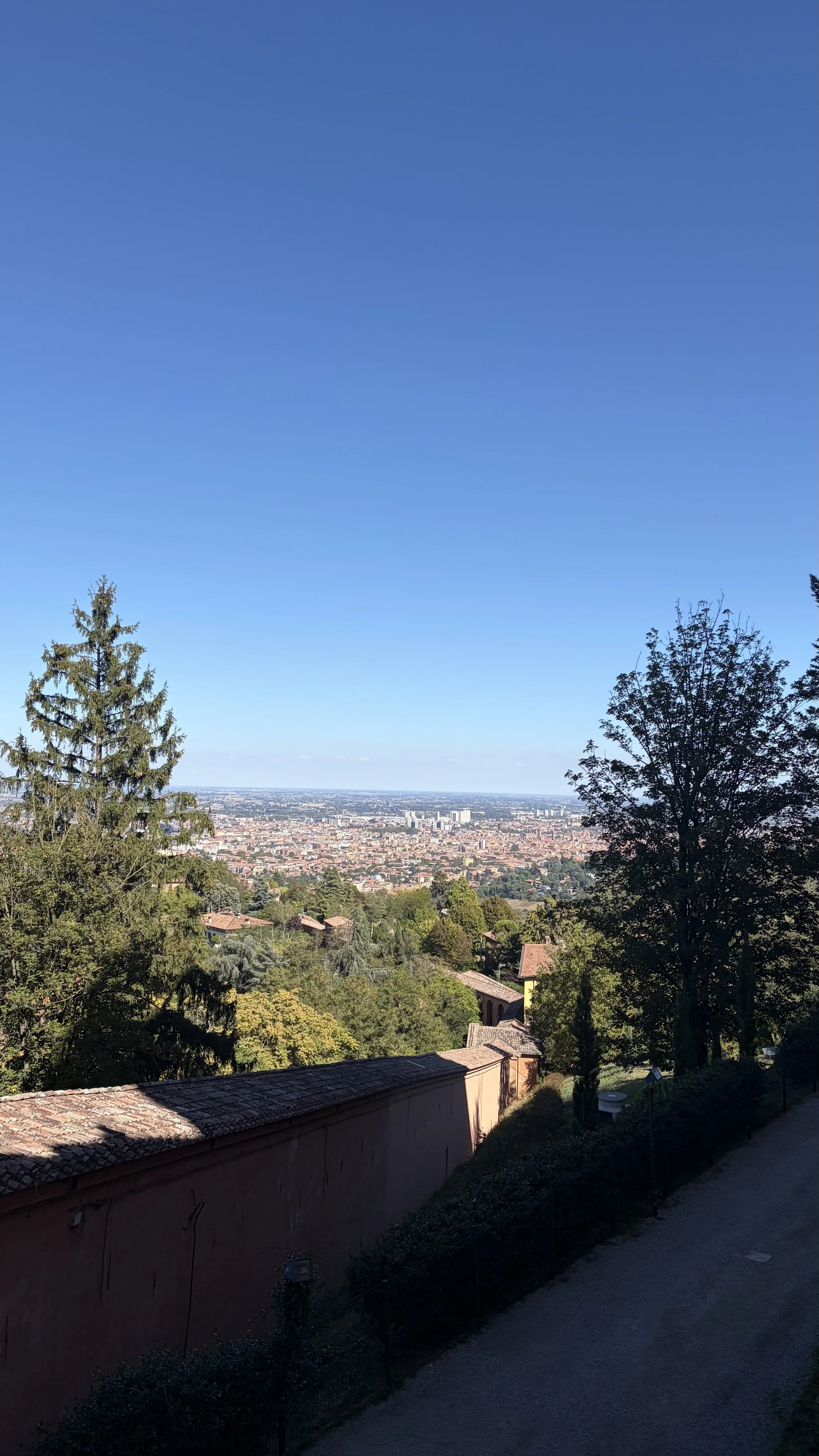
On the way up, we kept taking time to turn around and take a picture of the buildings that kept getting smaller in our view. By the time we made it to the top, Lucy and I were regretting our ballet flats, had sweat completely through our shirts, and were hysterically laughing at how out-of-place we must have looked.
-
![]()
I could romanticize the trip and say that the second we reached the top we were reinvigorated by the gorgeous view, but that would be only half true. Because yes, the view was absolutely worth the trek, but I was also so relieved to see steps to sit on in the shade.
-
![]()
And so that’s how we spent the afternoon: debriefing the week, enjoying the view, and making sure we had enough pictures to send to our family.
-
![]()
I am so glad that this was how Lucy and I decided to spend our day off, but I wish I had taken two seconds to Google what I was getting myself into! By the time we made it all the way back to Santo Stefano, all we wanted before we went back home was a dish of pasta, knowing that we were going to sleep so well that night.
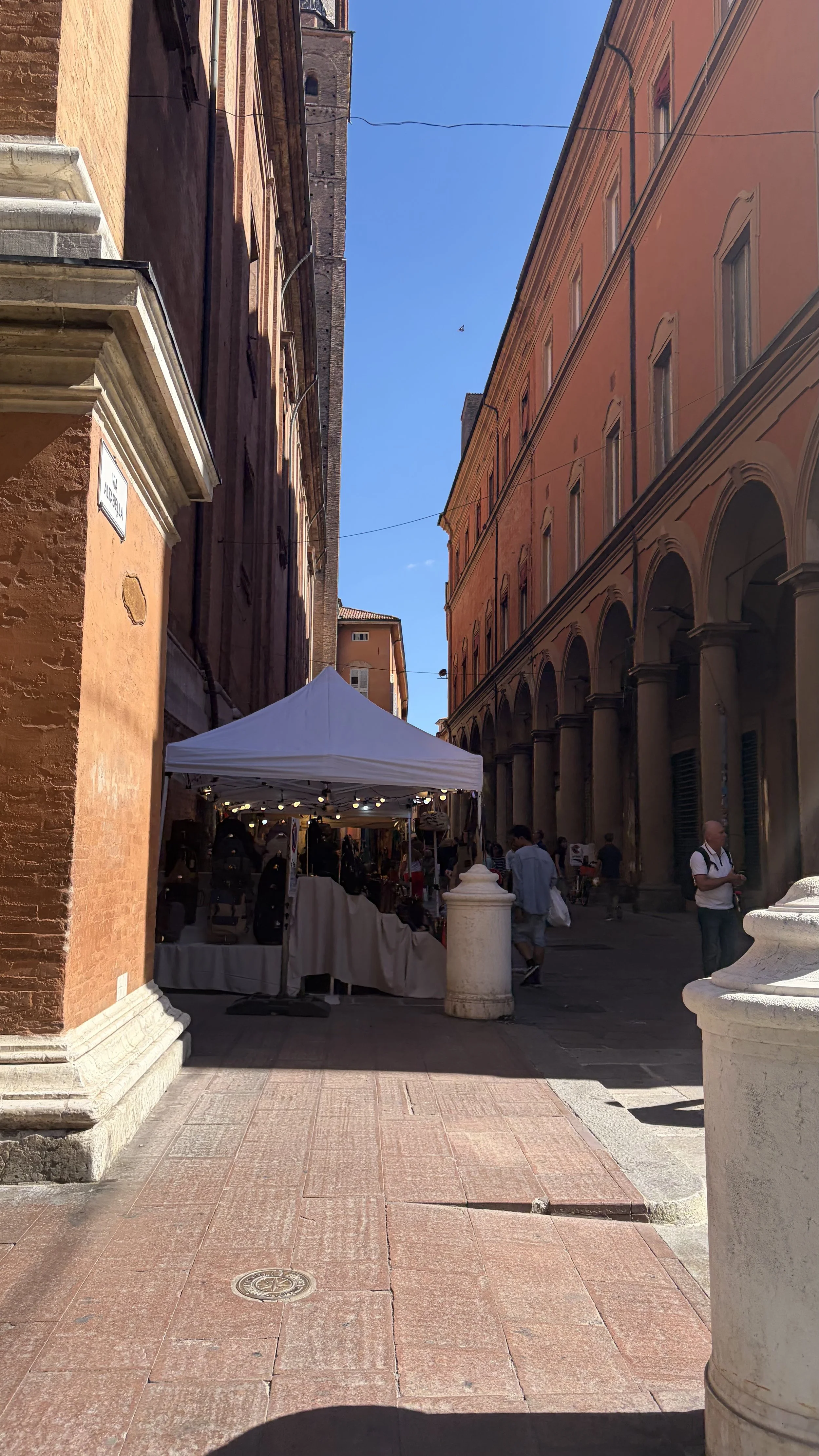
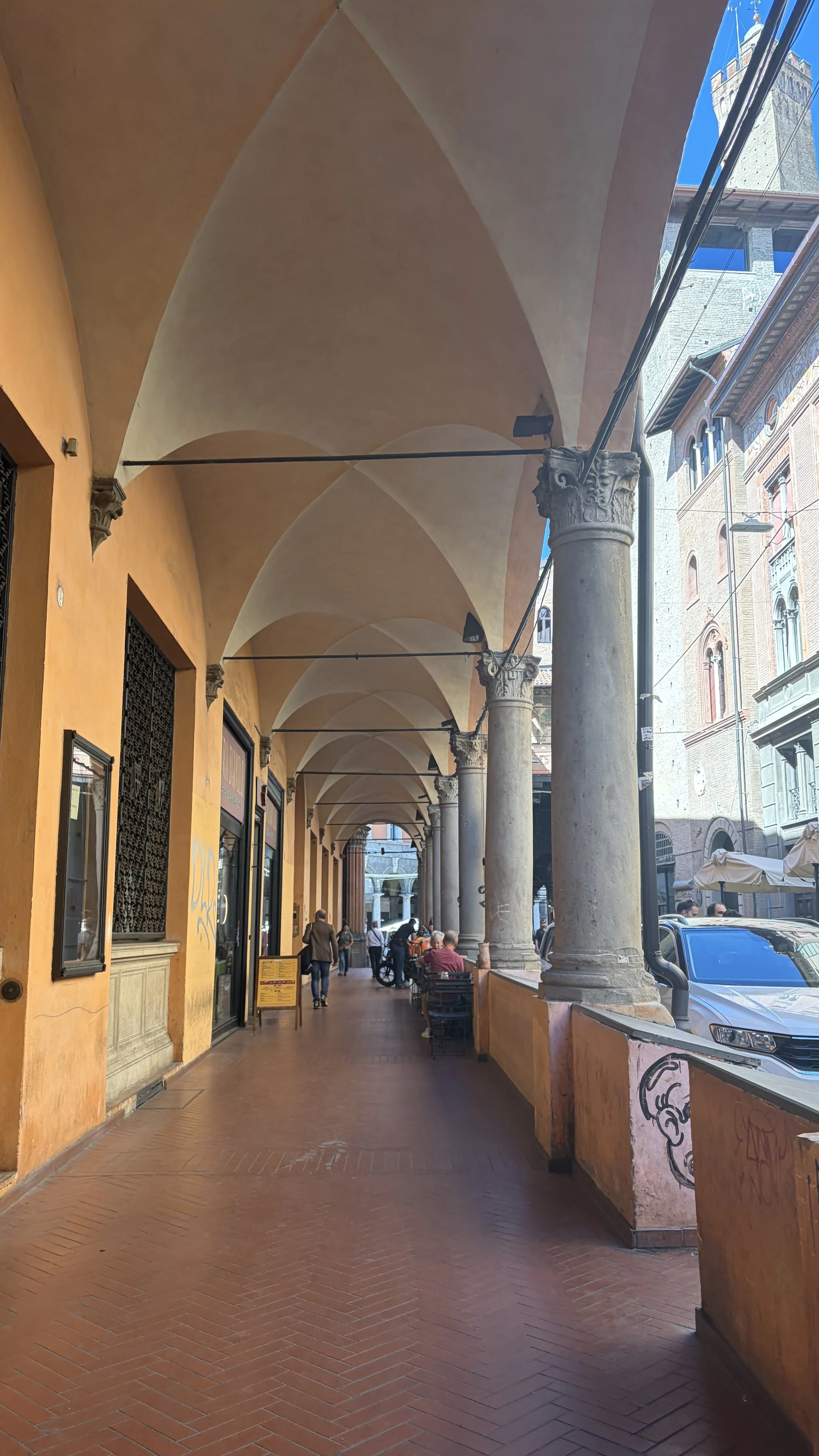
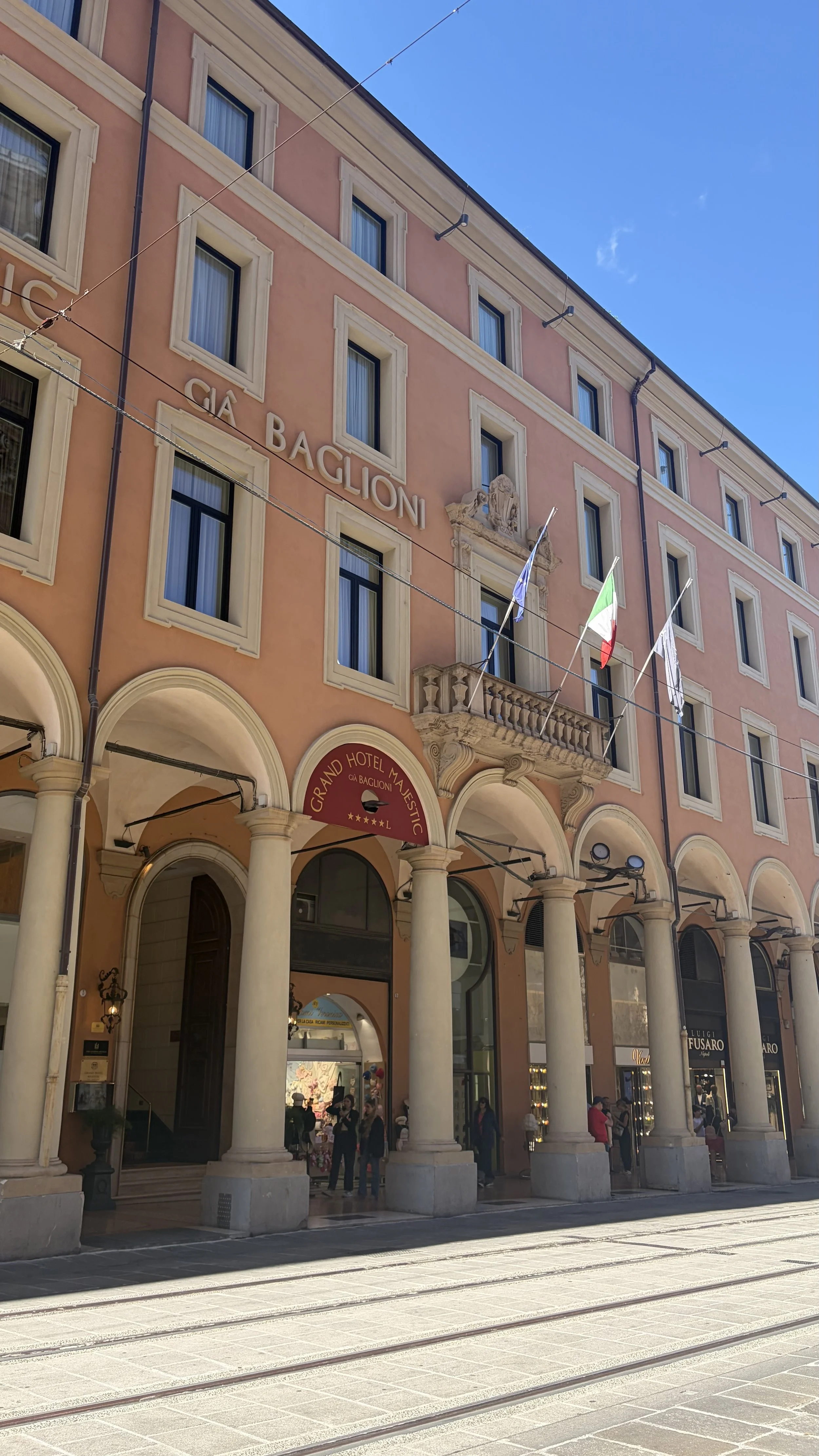
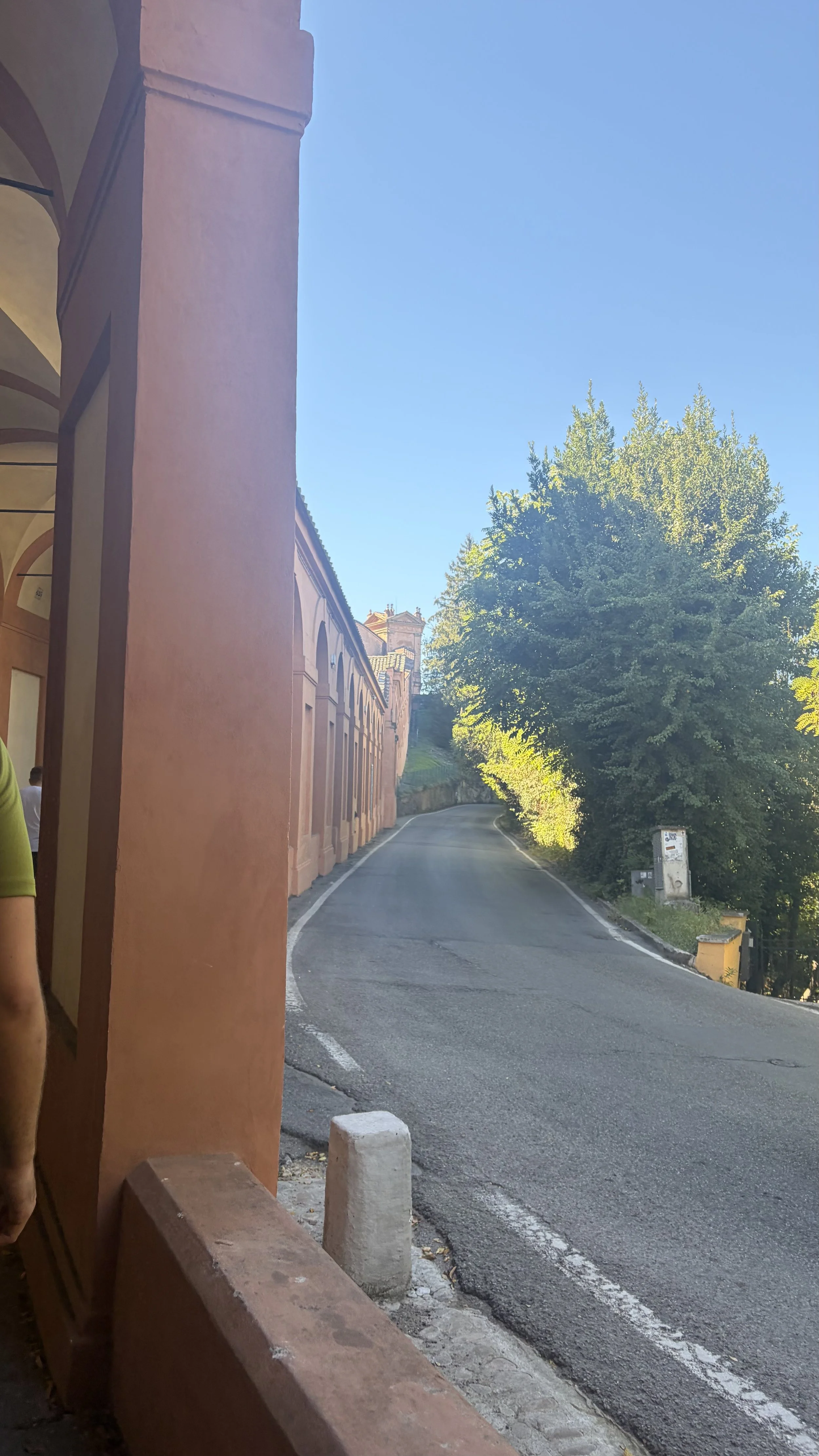
Week 5
-
![]()
This week, my classes at the University of Bologna officially started. My newsletters so far have been mostly about the things I got up to during the orientation period, exploring and getting to know the city I’ll call home for the next few months. During that time, I learned about the history of the area and improved my Italian language skills with an intensive language and culture course with BCSP.
-
![]()
This week, however, I was absolutely thrown into how real Italian universities operate. Since I wasn’t sure which classes would be appropriate for my current Italian level, as I want to challenge myself and take all my classes in Italian, I needed to do some switching around.
-
![]()
I started bright and early Monday morning with a class entitled “Modern Italian Literature.” Though it seems counterintuitive, “modern” literature is Renaissance, not to be confused with “contemporary” literature, which is actually modern! It is not even an exaggeration when I say that I spent the entire two-hour lecture completely lost. And part of me loved it — the idea of such a challenge — but as the lecture continued and my notes devolved to quite literally only the words I could understand, I knew that I wouldn’t get nearly as much out of this class with my current Italian level.
-
![]()
And so, I decided to attend a contemporary Italian literature class that evening, and it was so much more enjoyable. I felt like I was really learning something, even if that something was how to focus for two hours in Italian. The class hasn’t started reading yet, but I’m really excited to see how it goes!
-
![]()
After five days of classes where I was just trying to grasp anything I could, I thought it would be fun to be a bit more ‘in my element’ for the weekend. To do this, Lucy and I decided to go to Verona for the day.
-
![]()
With all my Shakespeare studies at Penn, not to mention my newfound love for Romeo and Juliet upon my reread last year, Verona was definitely a bucket-list city for me. We took the train in the morning, which was super easy. I don’t think it will ever stop being remarkable how easy travel is here.
-
![]()
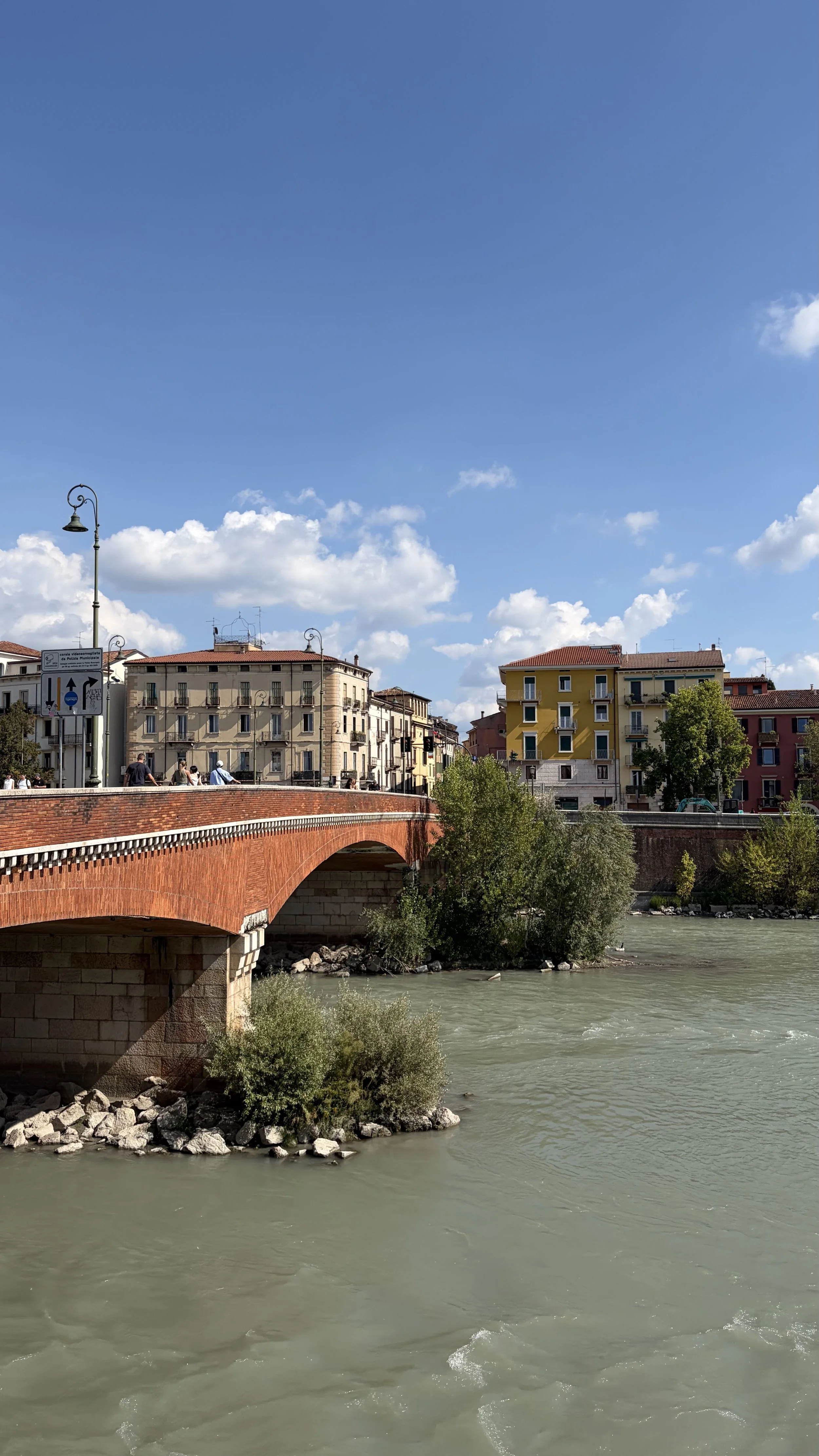
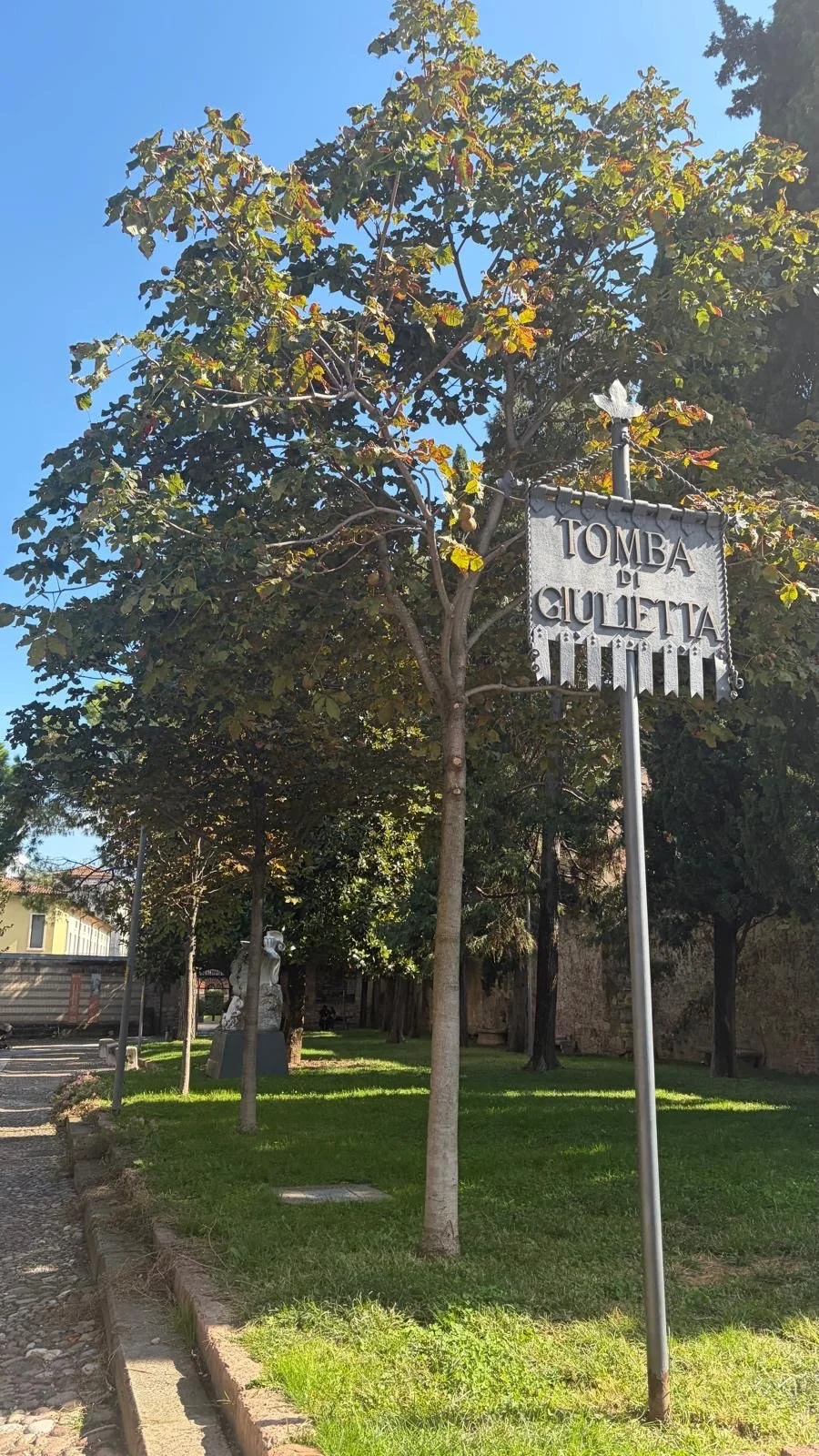
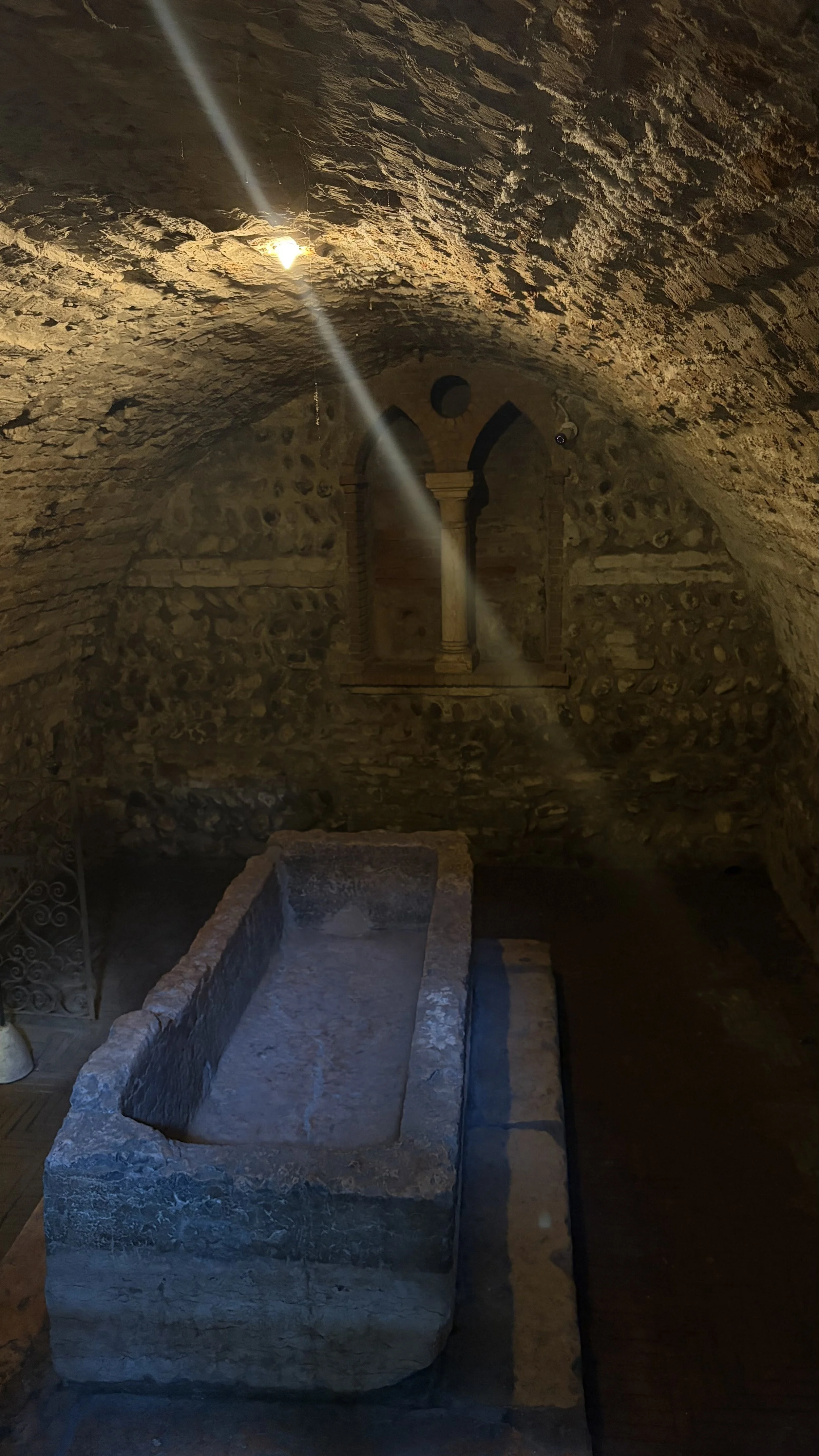
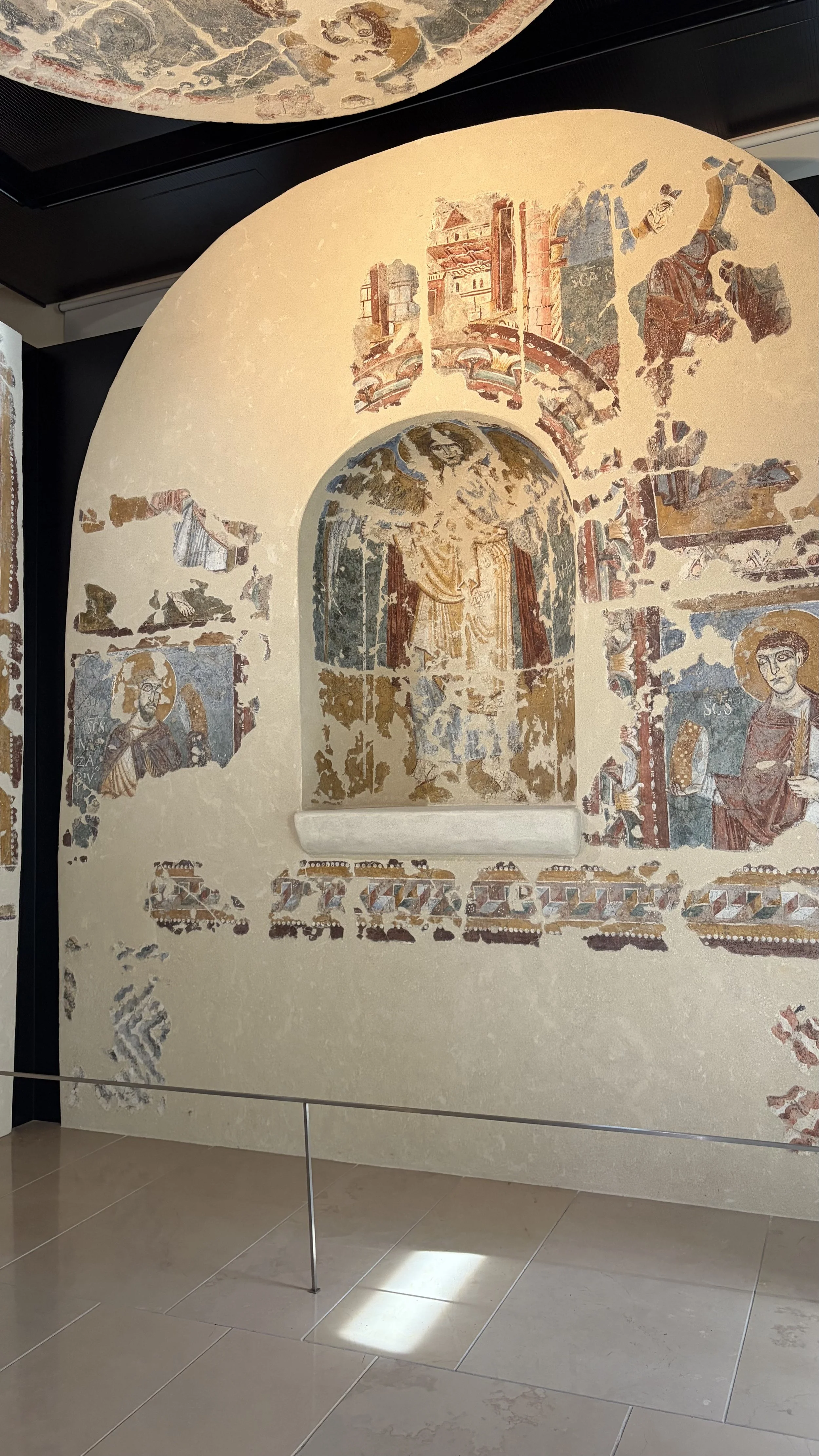
When we arrived, we grabbed some cappuccinos to fuel our touring before walking down the river to see the designated tomb of Juliet. I didn’t even realize it, but the tomb was in this gorgeous fresco museum, so it felt like such a treat to get to walk around there.
-
![]()
We didn’t have too much time in the museum because we had to make our timed tickets to Juliet’s house, which are very coveted! When we approached the courtyard, there were so many tourists around that it felt so different from the rest of the quaint city.
-
![]()
When we walked into the main entrance, the walls were lined with photos from Romeo and Juliet adaptations. The two most represented were the 1968 and 1996 versions, and I am totally trying to convince my new friends to do a rewatch of these classics with me. The courtyard was gorgeous, though. It was all cobblestoned, and the building around had red brick covered in ivy that looked like something out of a movie.
-
![]()
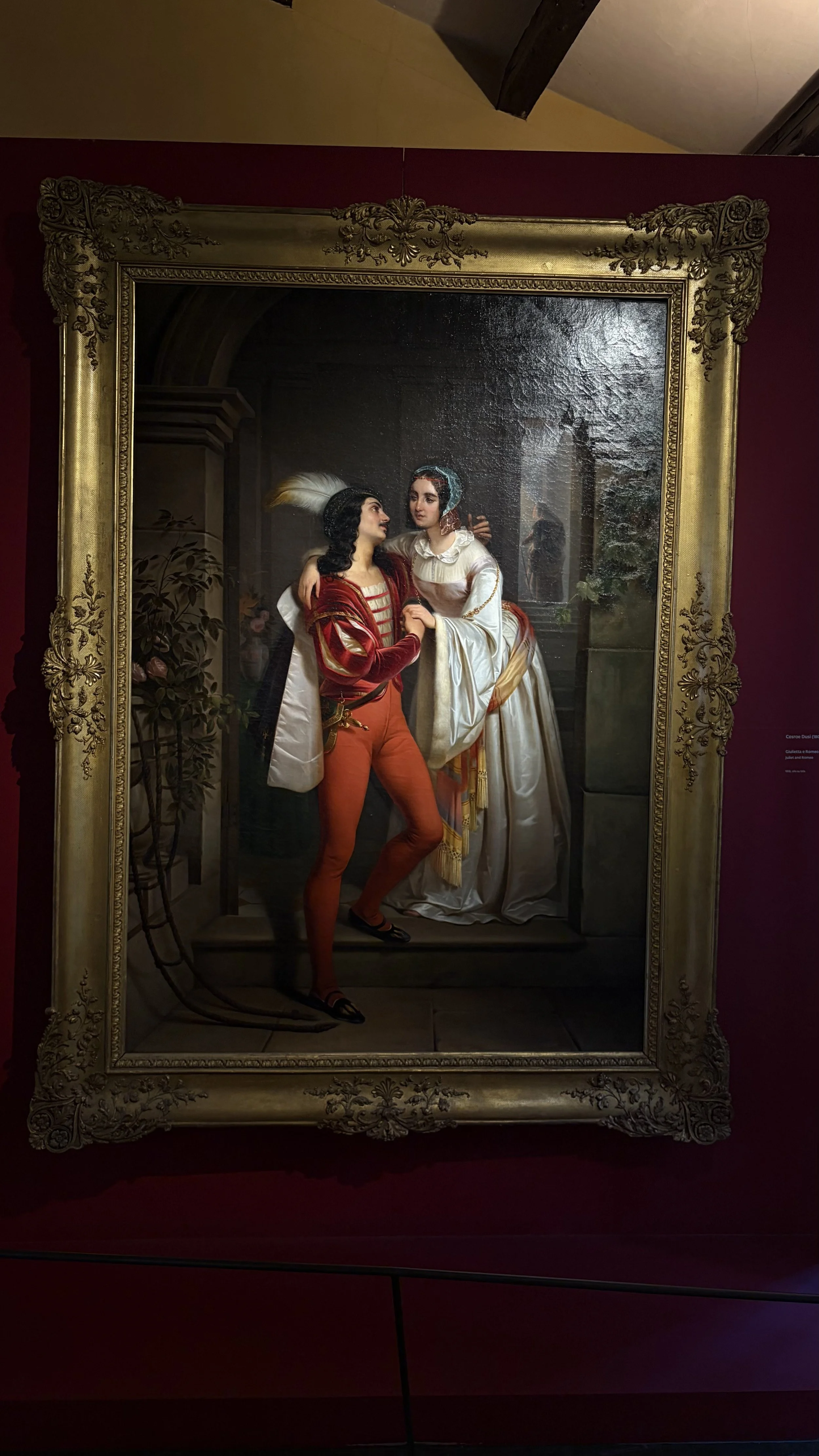
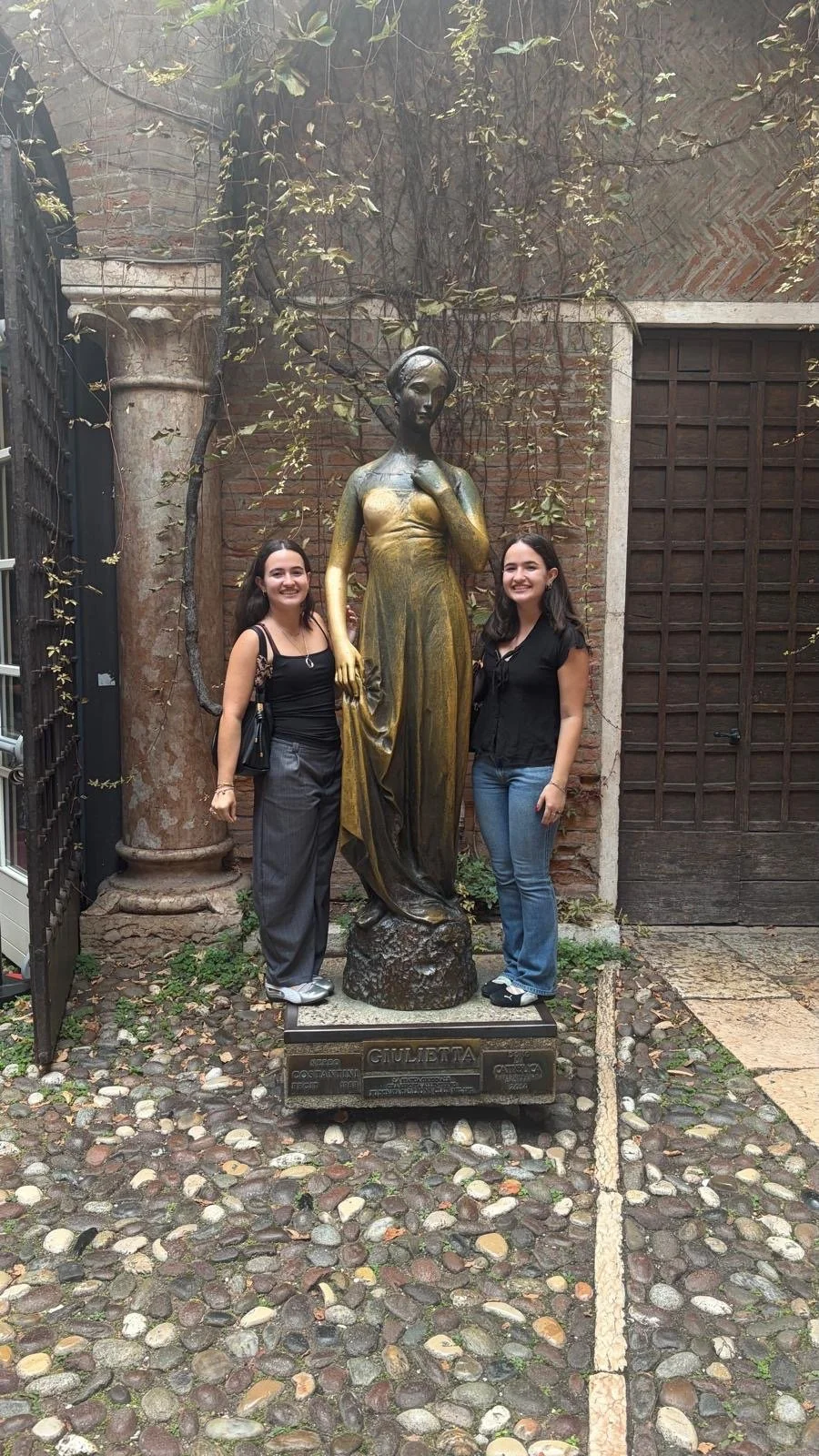
The courtyard contains the famous statue of Juliet, so of course Lucy and I posed for a picture before heading inside the house itself. The house was filled with everything you could imagine to be Romeo and Juliet themed: costumes from stage productions, props and set pieces from film adaptations, and paintings from centuries ago to modern.
-
![]()
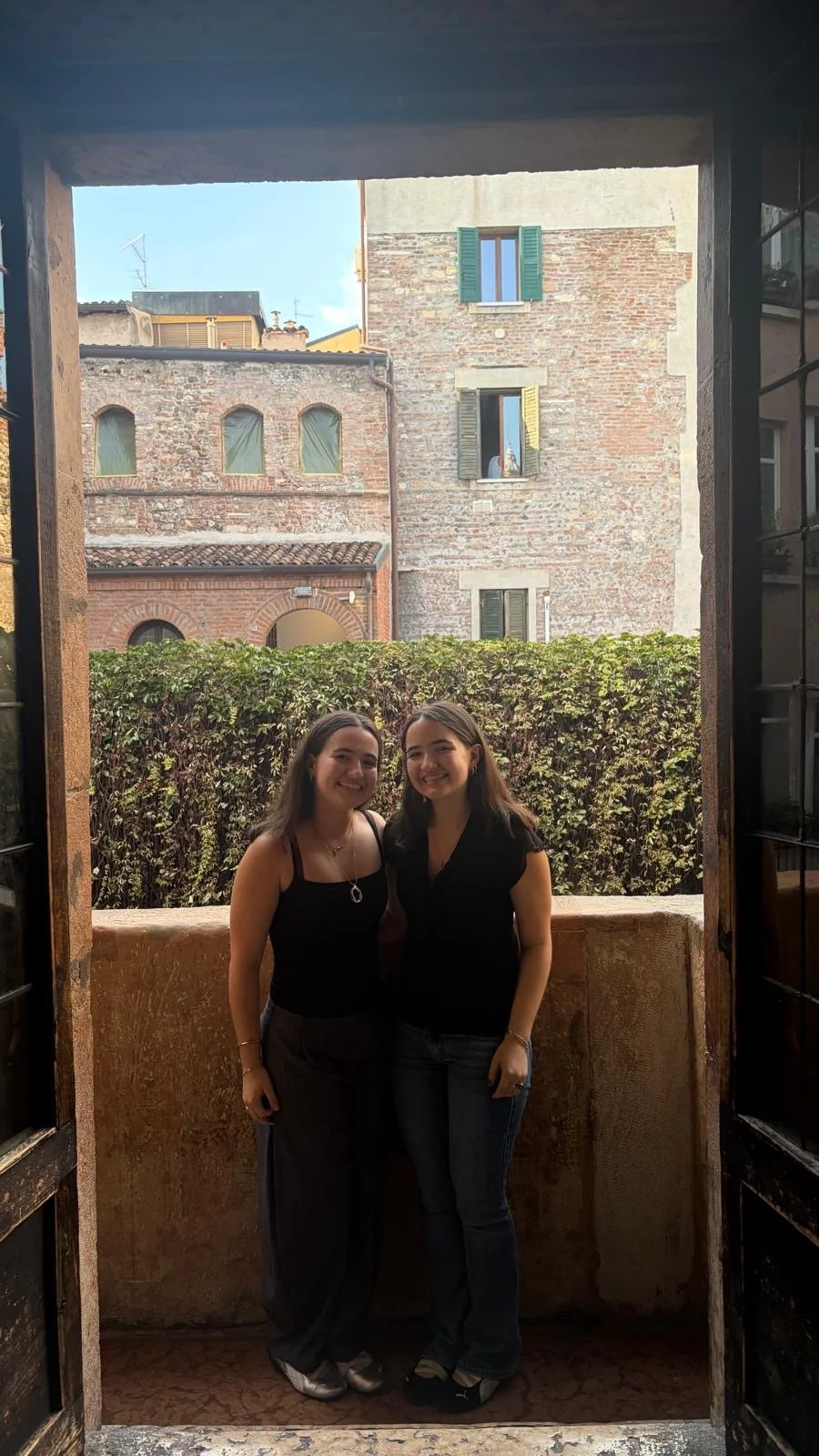
It was so much to take in as we walked up to the famous balcony. There was a gorgeous view, and it was quite surreal to be at the perceived inspiration of such a classic work of literature.
-
![]()
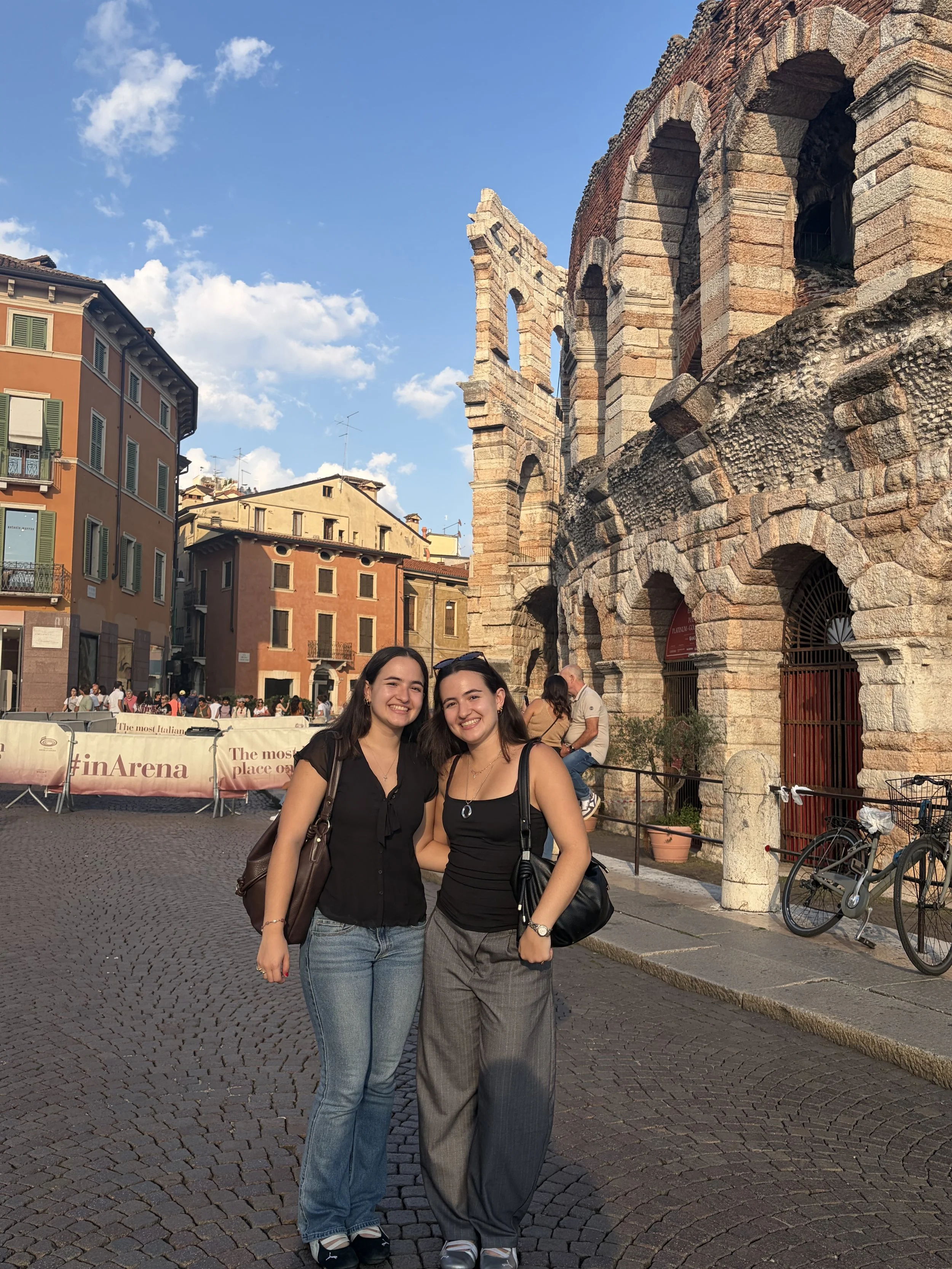
After seeing the house, we walked around the city a bit and wandered back into Piazza Bra by the Verona Arena in the center of the city. It was definitely a ‘gelato for dinner’ kind of night, so we stopped by this really cute place before walking back to the train station. It was truly a lovely day, and I’m excited to see what other Italian cities this semester takes me to.
Week 4
-
![]()
This past week contained the last two excursions for the cultural portion of my language and culture class. First, we took an official tour of Bologna that supplemented the wandering my friends and I have been doing for the past few weeks. After our language class one afternoon, we jumped into a mini lecture on Bologna's history, which focused on four facets: the porticos, the towers, the canals, and the university.
-
![]()
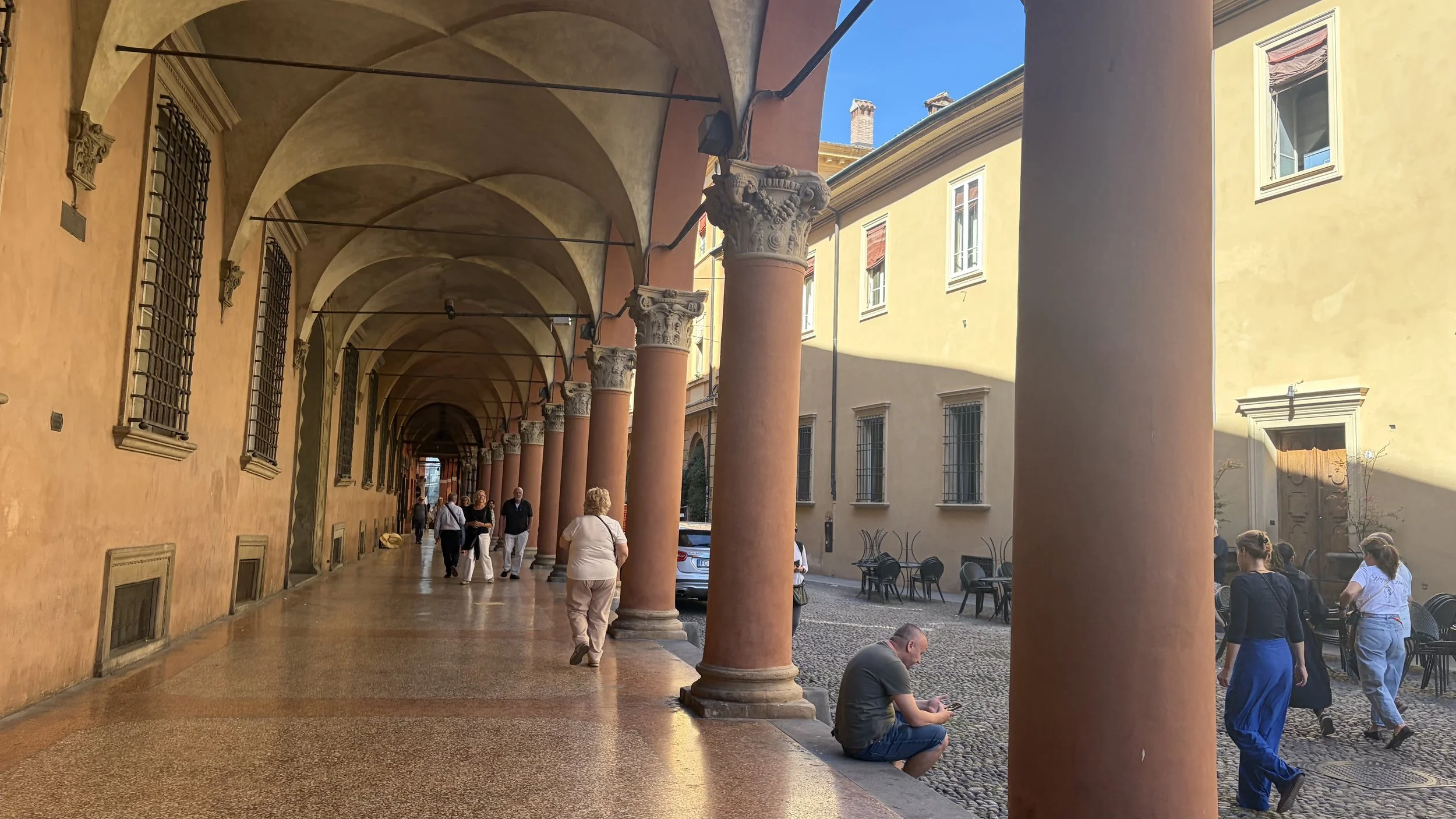
The porticos were the most fascinating part of the tour for me. I learned that the porticos I had been walking under for the past few weeks were built because of the influx of students into the city for the university. The city simply didn’t have enough housing for all of the students, so they started to build small apartments off the front of other buildings. These apartments needed to be held up by wood supports, some of which can still be seen throughout the city today.
-
![]()
As the demand increased, bigger apartments were constructed, eventually necessitating the porticos that Bologna is so famous for today. I was just grateful to have some much-needed shelter from the intense heat and then the pouring rain. I didn’t realize how much history I was walking under.
-
![]()
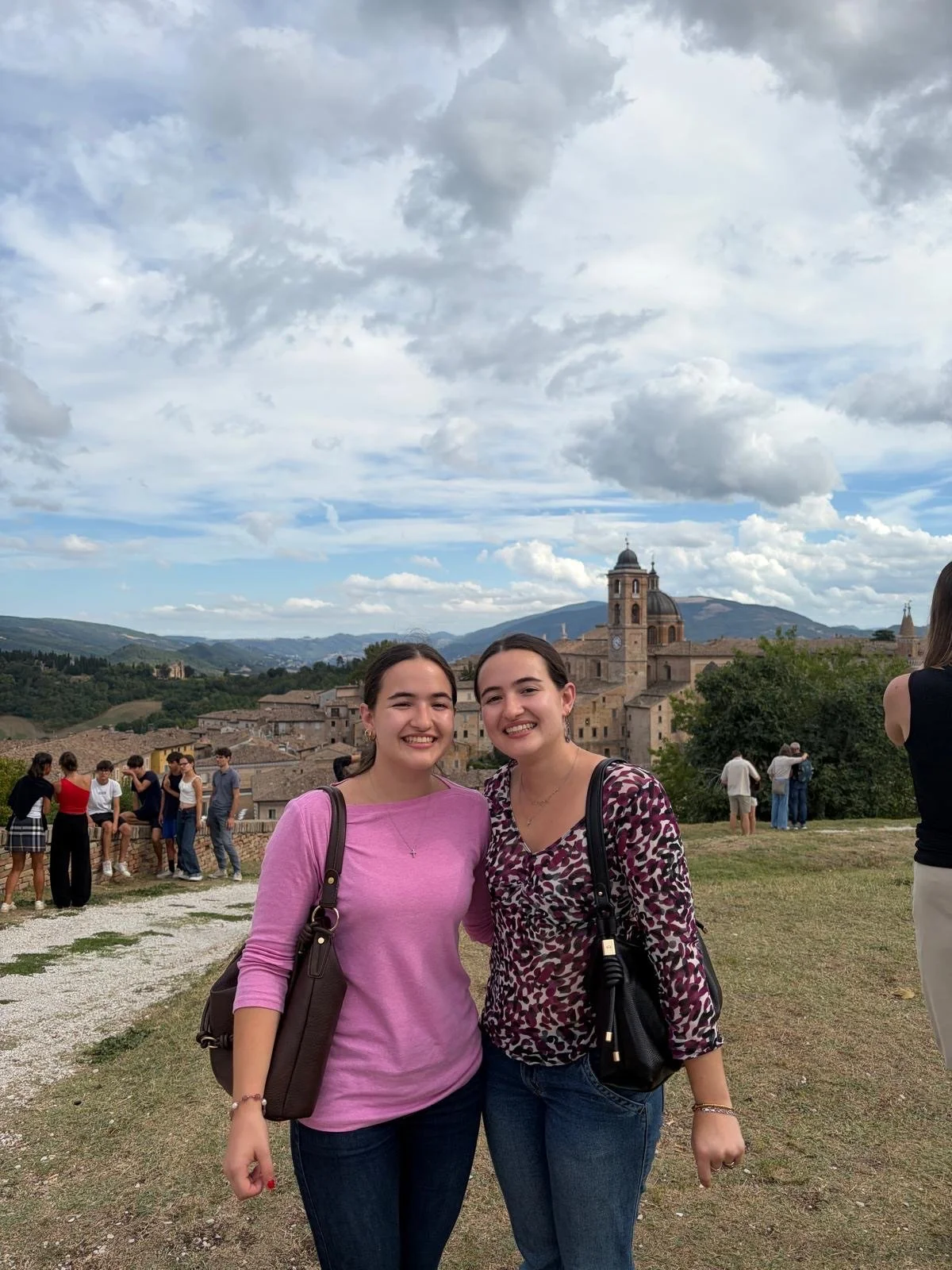
The trip to Urbino was very similar to that of Ravenna. I met the rest of the program at the bus station, and our history professor gave us a tour of the city before we returned on the same bus that evening.
-
![]()
The drive to Urbino was very easy. The city is about 2 hours away from Bologna, mostly on the highway, but eventually the bigger road gave way to the smaller, steep, and curvy paths that would take us up the hill to the city itself. When the bus pulled into the parking lot, everyone got out, and all our eyes were drawn upwards. Rather than Urbino sprawling outwards and expanding from a city center to the suburbs, it expands up the hill.
-
![]()
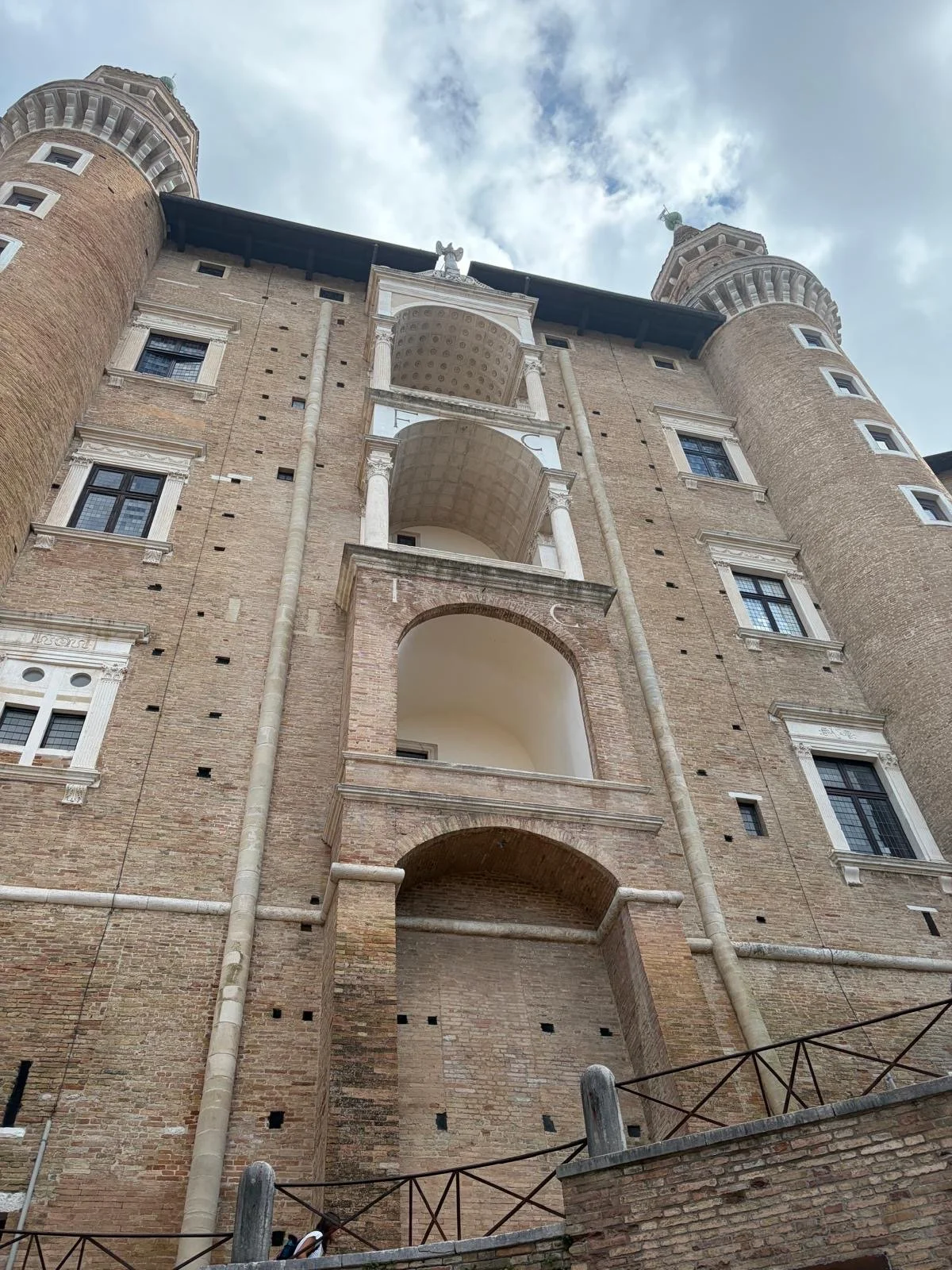
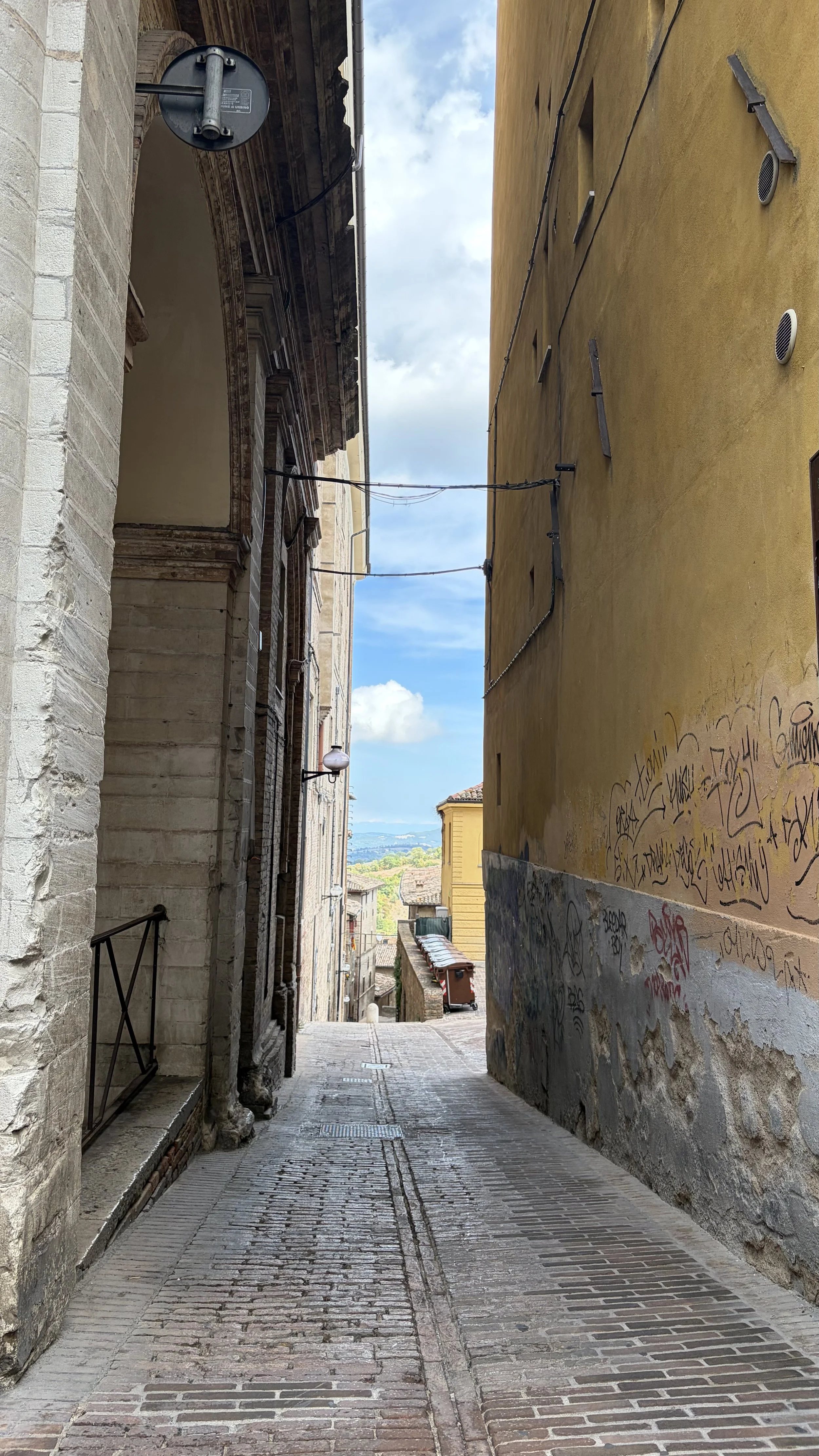
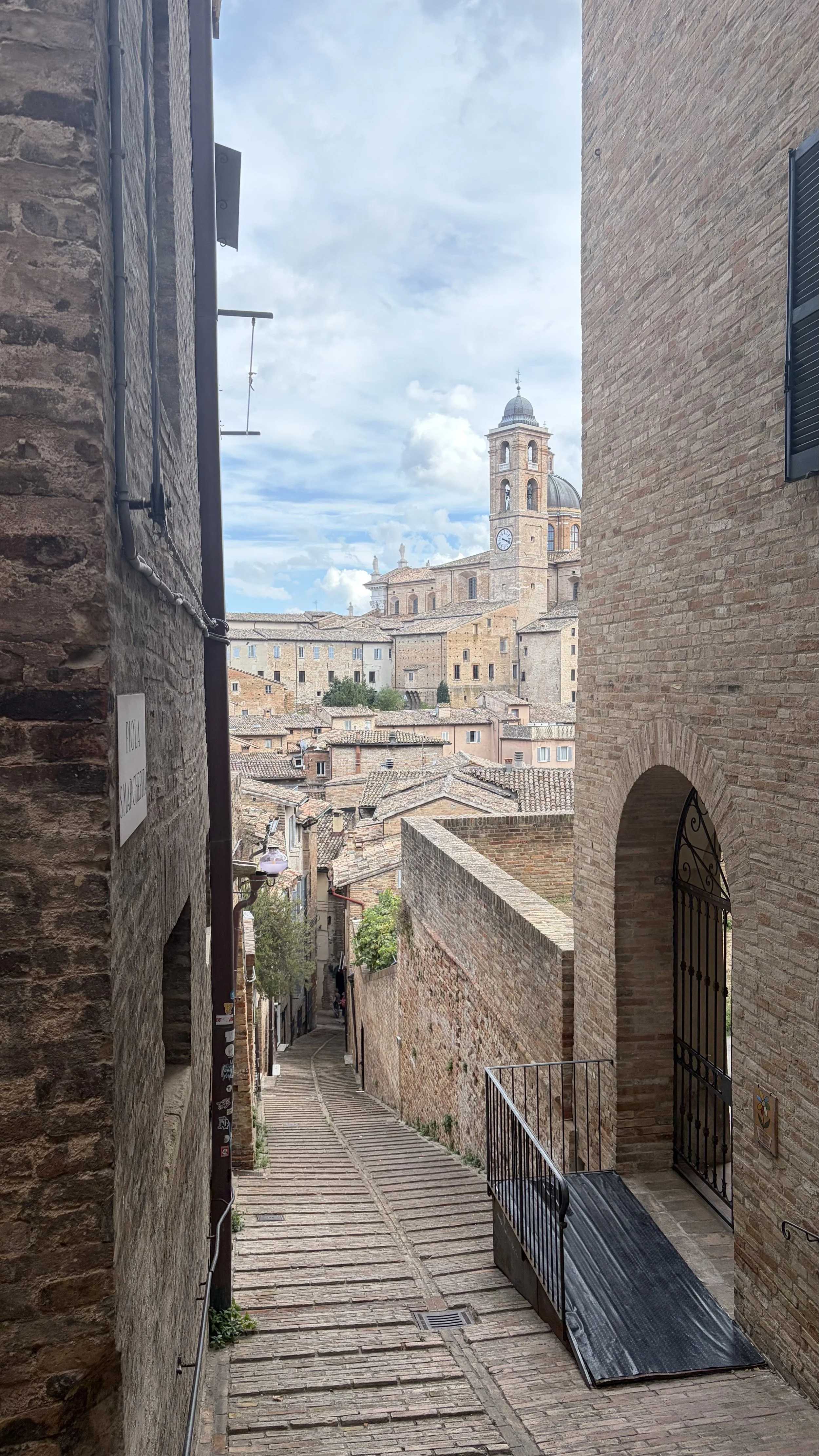
We started the tour, as we would start any excursion, with espresso at a local bar. Then, we began our ascent to the Ducale, the massive Palazzo that is situated on the top of the hill. When we were walking up — though it felt more like climbing — I kept trying to capture the steepness of the paths.
-
![]()
In other hilly cities I have travelled to, there are stairs that take you to the higher levels of the city. Urbino, as it is one of the main Renaissance cities, needed to be able to accommodate cavalry, so these stairs were not an option.
-
![]()
Instead, the cobblestone roads had narrow lips all the way up, almost like rungs on a ladder, to give some traction when you’re walking up the super steep paths. It definitely took some getting used to. If that were my daily commute, I’d have legs of steel by the end of the semester!
-
![]()
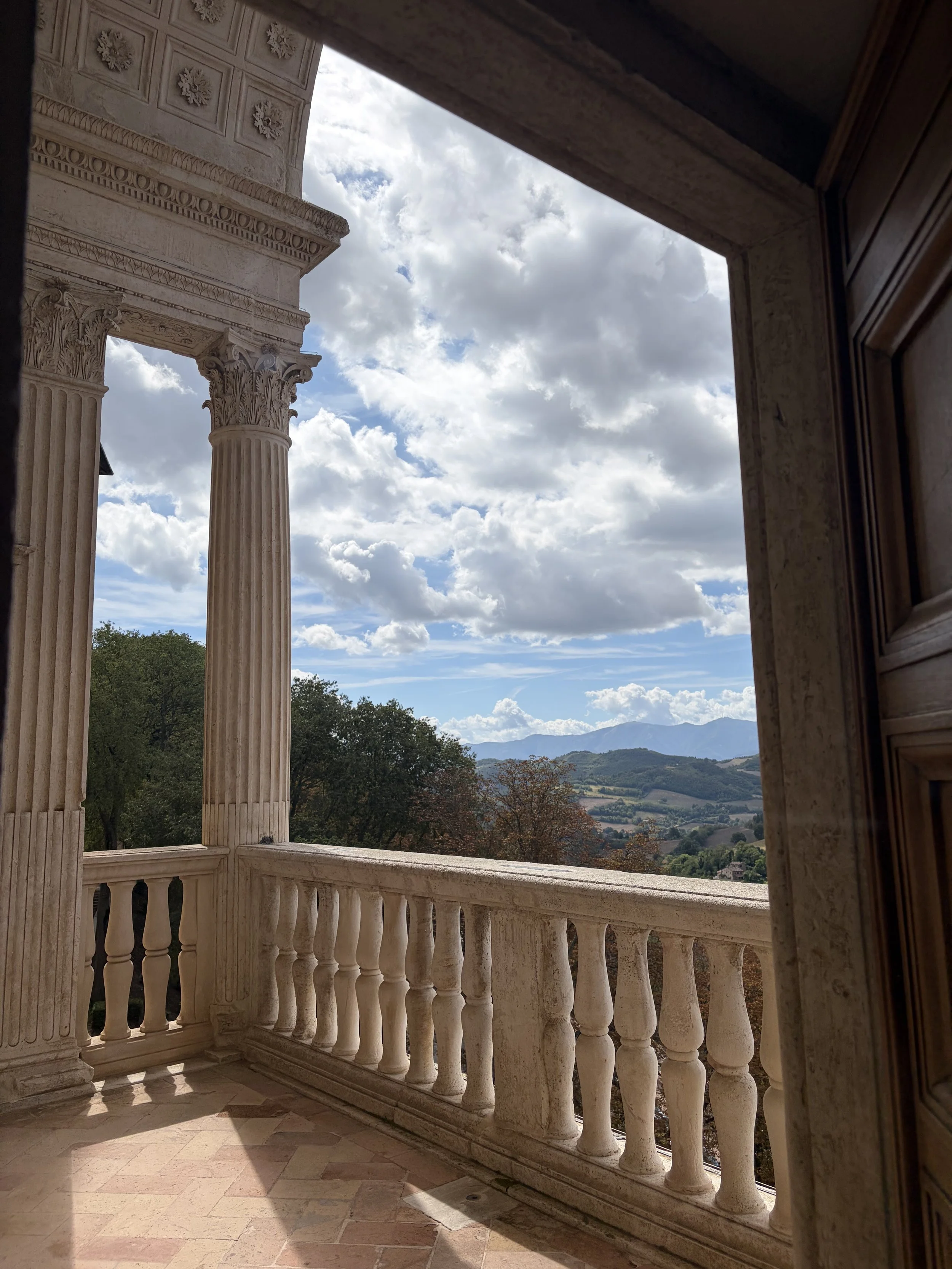
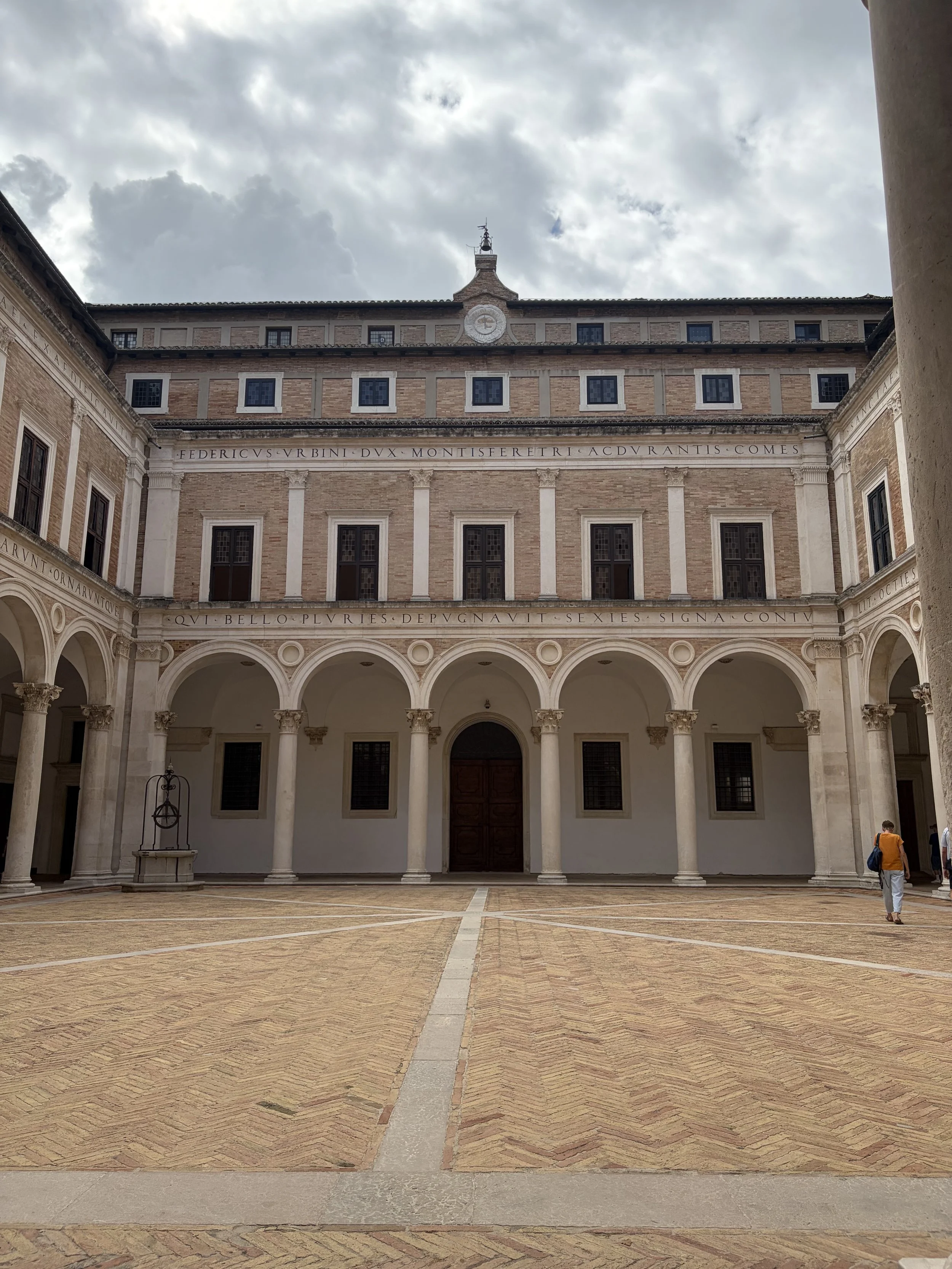
The museum of Palazzo Ducale seemed about halfway up from where the bus had parked and we had enjoyed our espresso. We learned about how the Palazzo was constructed in phases, and each phase reveals something different about the city at that time. The first and main architect, other than Federico da Montefeltro, the duke of Urbino who lived from 1422 to 1482, was Luciano Laurana, who engineered this massive palazzo that needed to be built into the side of a hill.
-
![]()
The concepts of Renaissance architecture that seemed so trivial in lecture were now clearly important when I had them right in front of me. For example, in the lecture we talked about the Cortile d’Onore and the Scalone, the courtyard and the entry stairs, respectively. My professor kept talking about linearity and perspective, about how the lines are straight and symmetrical, and how that is a specific characteristic of Renaissance architecture.
-
![]()
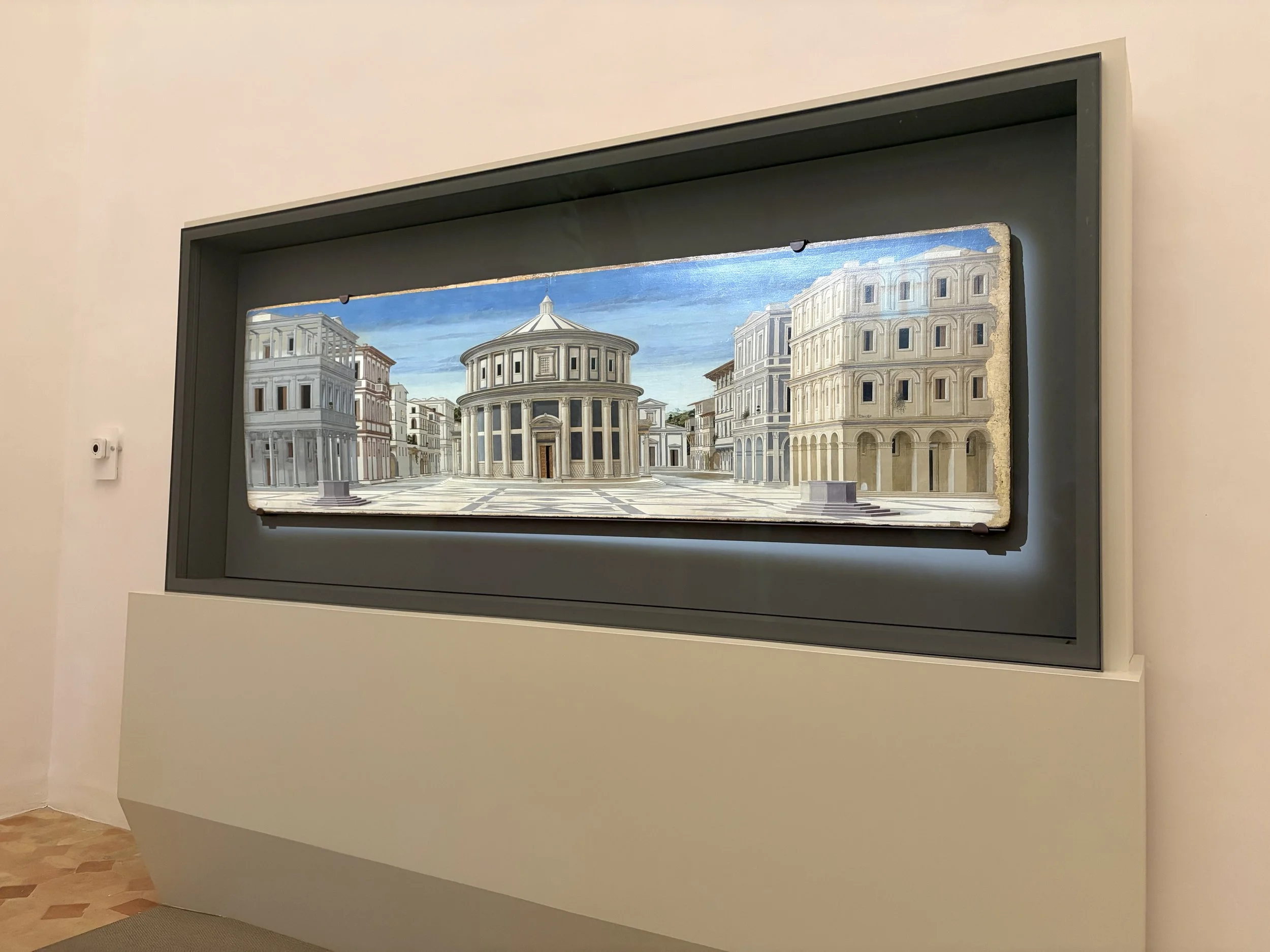
For someone who doesn’t know anything about architecture, the idea of linearity seemed like just a way to improve the structural integrity of a building literally on a hill. However, seeing these places in person, I could really see how integral these concepts are: a short staircase is elongated through strategic placement of natural light and moulding running along the banister and along the ceiling; a courtyard that draws your eyes up through the sheer perfection of every window pane and every meticulously measured column. Each aspect that seems so simple actually works to align the building with the “ideal city” and to demonstrate the wealth, power, and knowledge that once filled the Palazzo Ducale.
-
![]()
Inside the Palazzo, the same surprising and welcoming attitude was present that had been in all of the other museums I have visited here so far. Around every corner, there was another gorgeous statue or painting, another interesting fact I was excited to learn, and another helpful volunteer who would gladly practice my Italian with me.
Week 3
-
![]()
One of the courses I am taking this semester is an advanced language and culture course through the Bologna Consortial Studies Program. In this course, we have been reviewing Italian grammar and learning the specifics of Bologna to prepare us for our University of Bologna classes starting next week. The culture aspect is divided into three parts: Ravenna, Bologna, and Urbino. Each part corresponds to a lecture and tour of that city. This Saturday, we went to Ravenna and used the city to learn about the transition period between the Roman Empire and the medieval period.
-
![]()
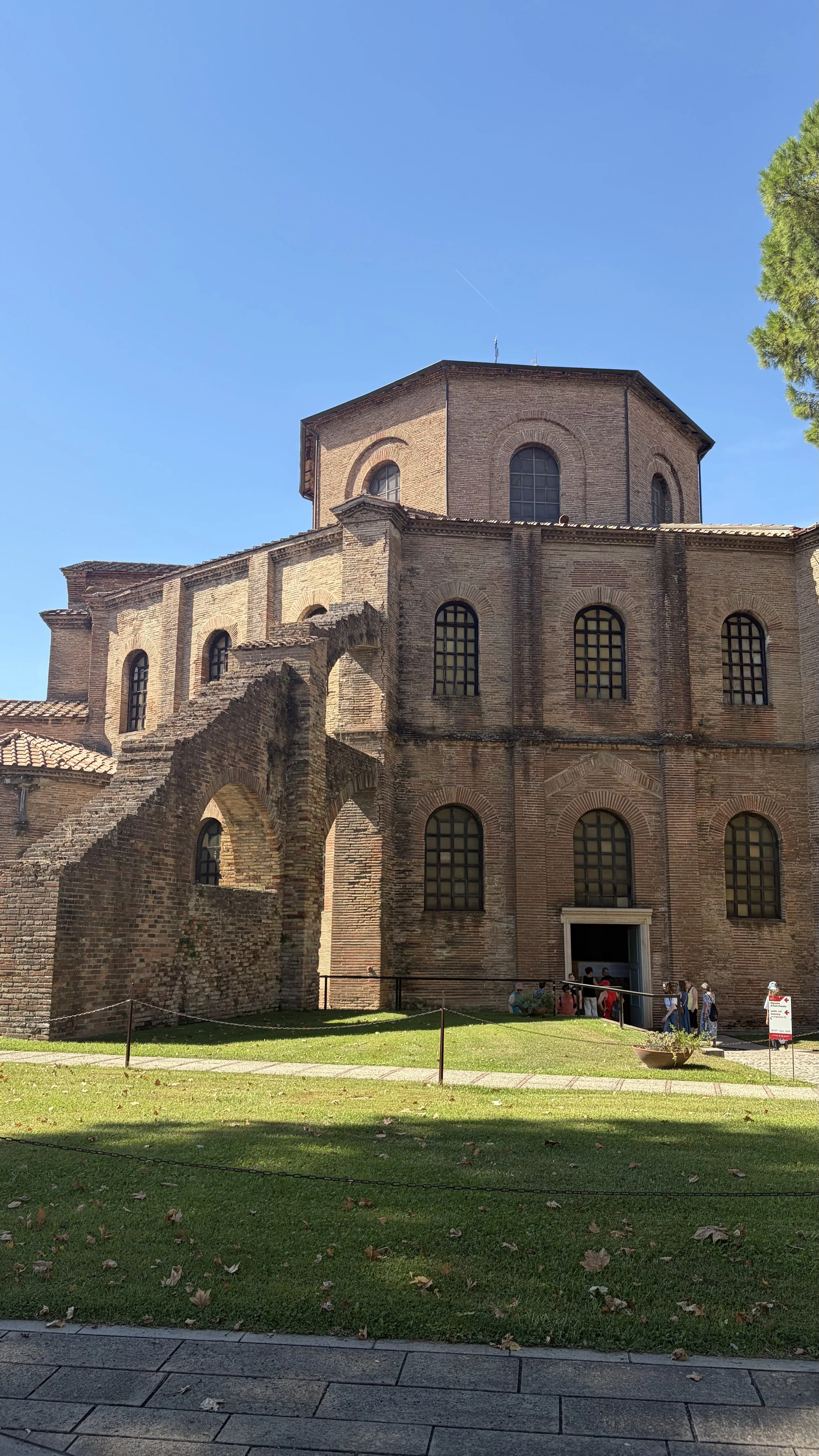
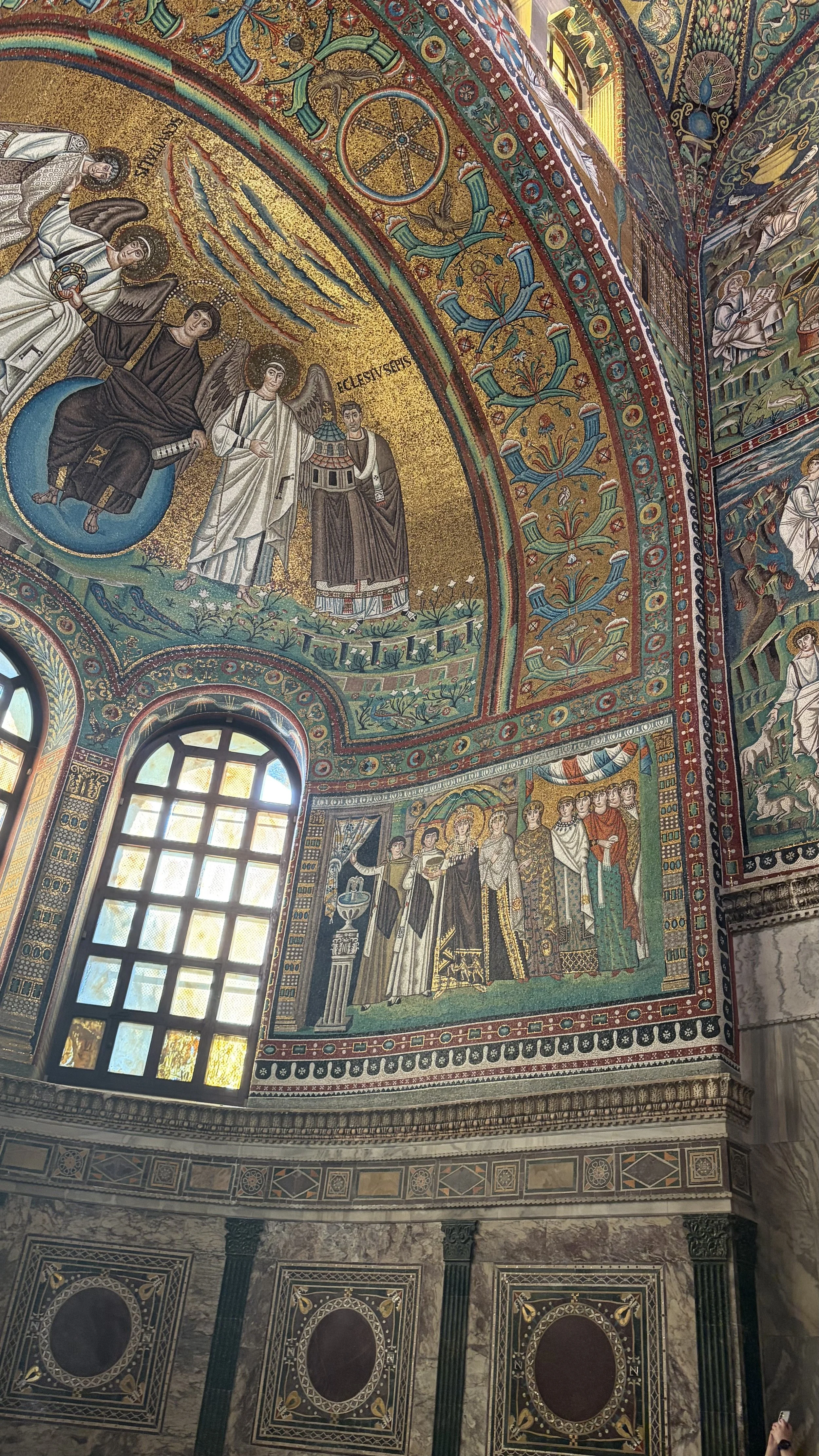
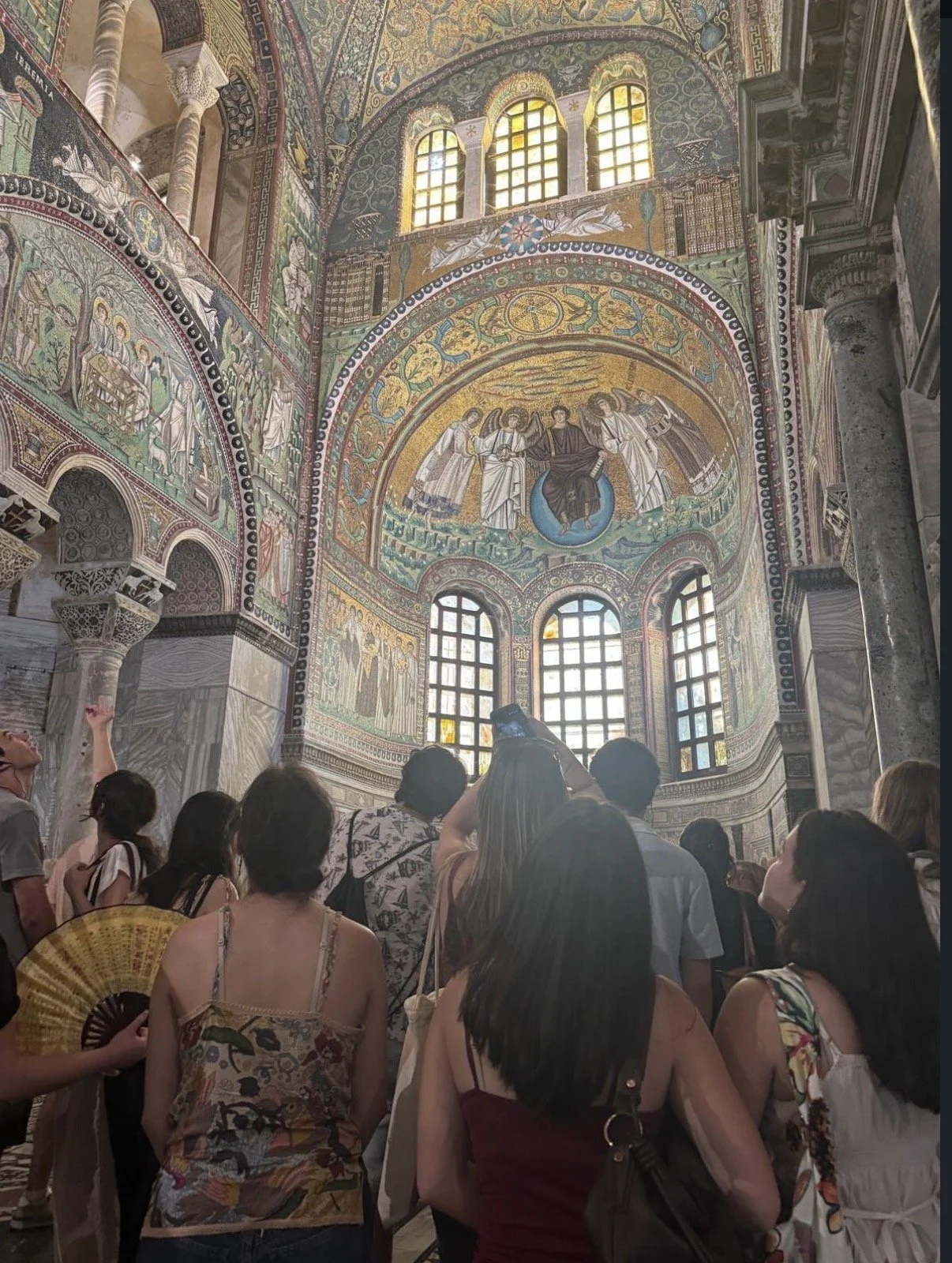
Our day was split into two parts. The first of which contained tours of the Basilica di San Vitale and the Mausoleo di Galla Placidia. These buildings are next to each other, so we looked at them together. I found it really interesting how the mosaics showed the transition from Imperial Rome to Christianity as we have it in the medieval period through their iconography. The first image is of the outside of the Basilica di San Vitale, and the second image shows what the mosaics above the altar look like. On the upper left of the photo, there are angels and religious figures depicted surrounding the world, as shown by the blue sphere.
-
![]()
This kind of religious iconography wasn’t surprising for me to see; however, I found it fascinating how the emperor and his wife were shown. In the middle of the photo, Teodora (the wife of the emperor Giustiniano) is shown with her handmaidens and is a symbol of elegance but also power. That is what made this basilica so interesting for me: rather than having the Christian figures and the Roman figures in conflict or just completely separate, there is a combination of the two that I hadn't expected.
-
![]()
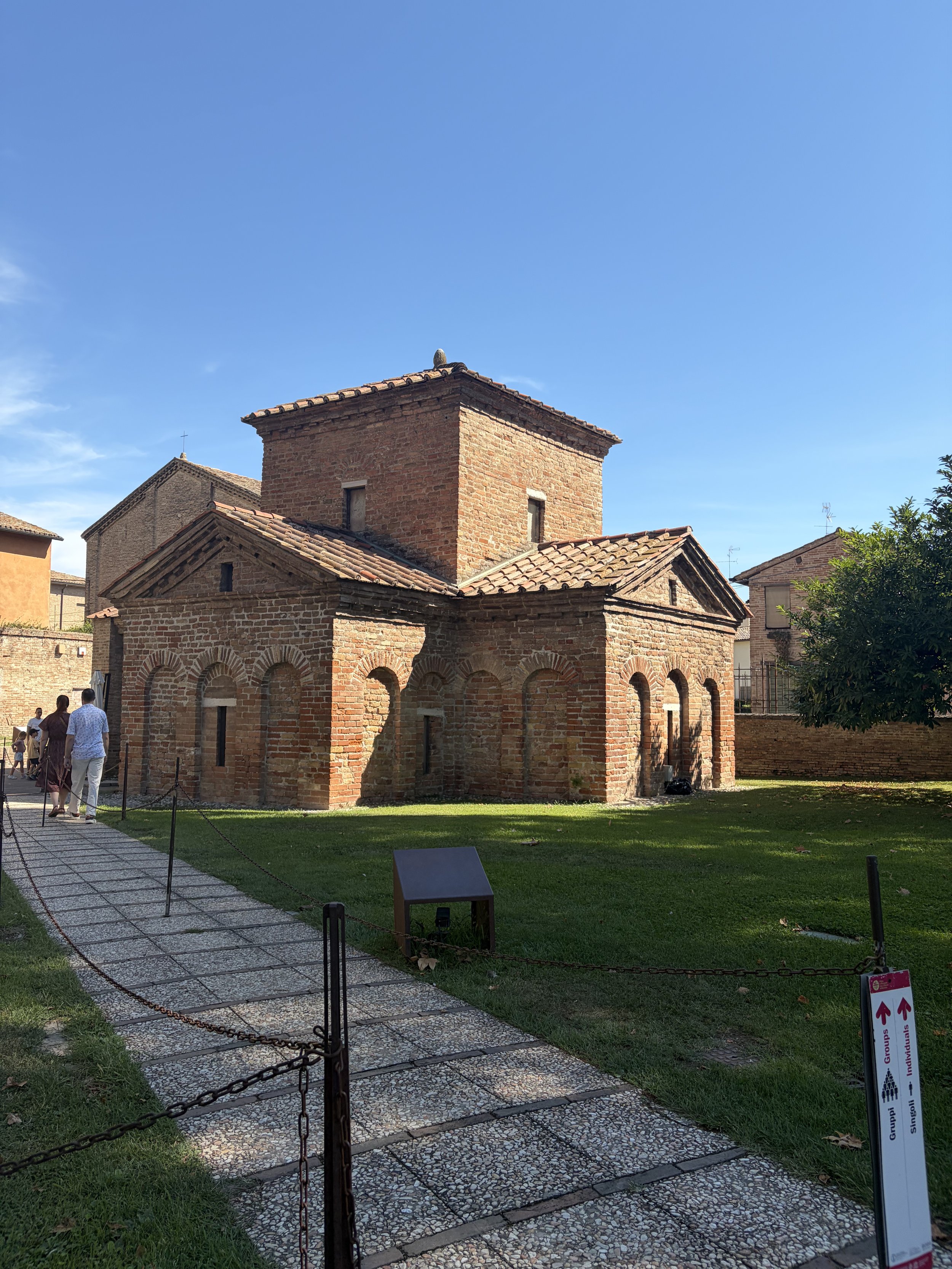
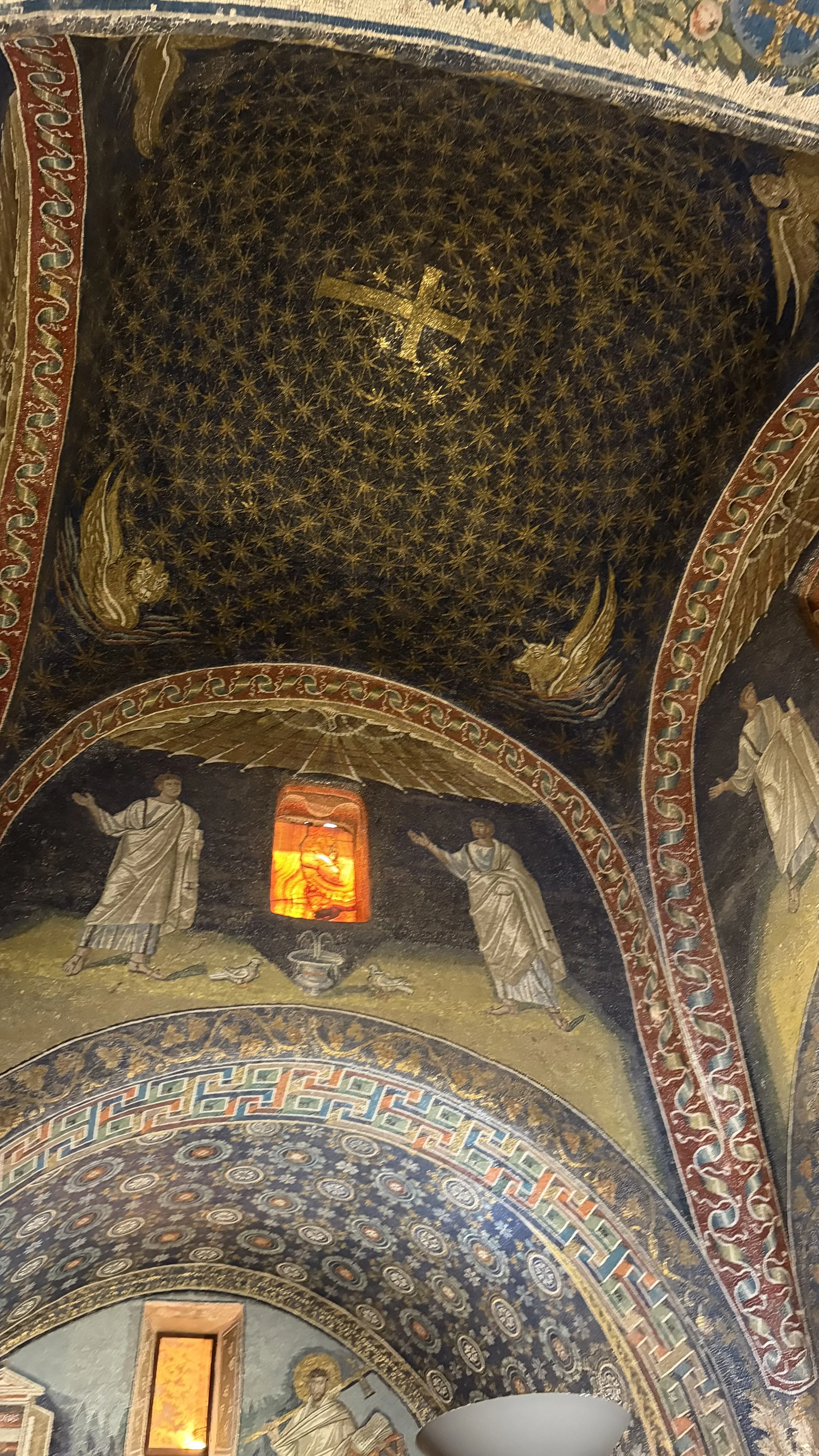
The Mausoleo di Galla Placidia was next, and it is so hard to describe this space. The photos make it seem to be a similar size to the Basilica di San Vitale, but it felt so small in comparison. It doesn’t have these large domed ceilings, but rather is short and very angular.
-
![]()
There aren’t any large windows that bring in light either, so my eyes really had to adjust upon entering. When I walked in, blinking from the newfound darkness, the stars on the ceiling literally seemed to glow. The dark blue around the vast majority of the interior really made the little light in the room reflect off the stars in a way that no photo can do justice.
-
![]()
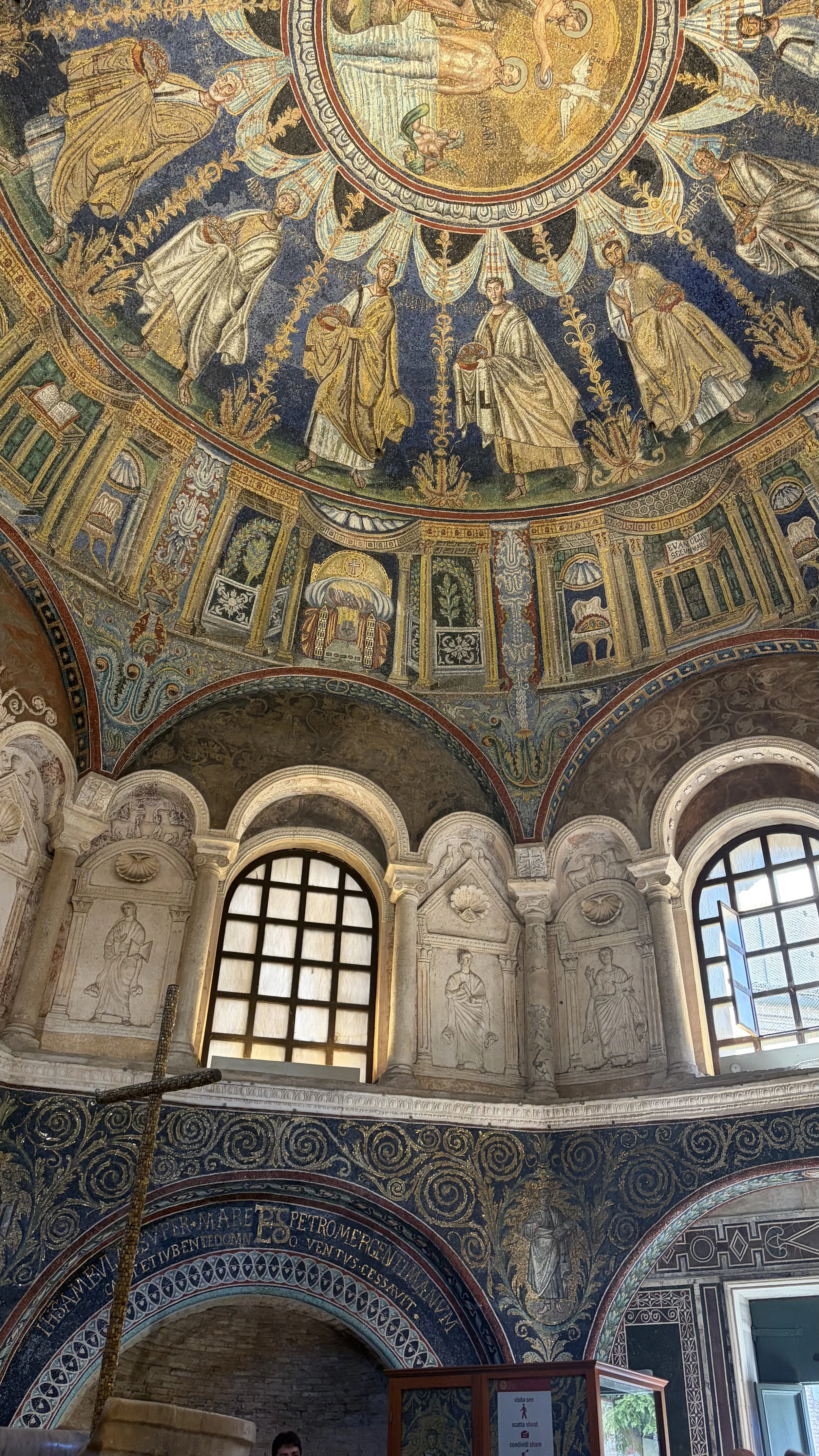
After a lovely lunch with the entire Italian cohort, we started the second part of the day: Battistero Neoniano and the Basilica di Sant’Apollinare Nuovo. The Battistero Neoniano also had some really interesting iconography to show this late Roman/pre-medieval period. The highest point of the dome at the top of the photo depicts Jesus in the Jordan River, but surrounding him were saints, each with their names written in gold around their heads. These saints, however, are dressed very similarly to how Roman senators were often depicted with long robes, sandals, and a more static stature.
-
![]()
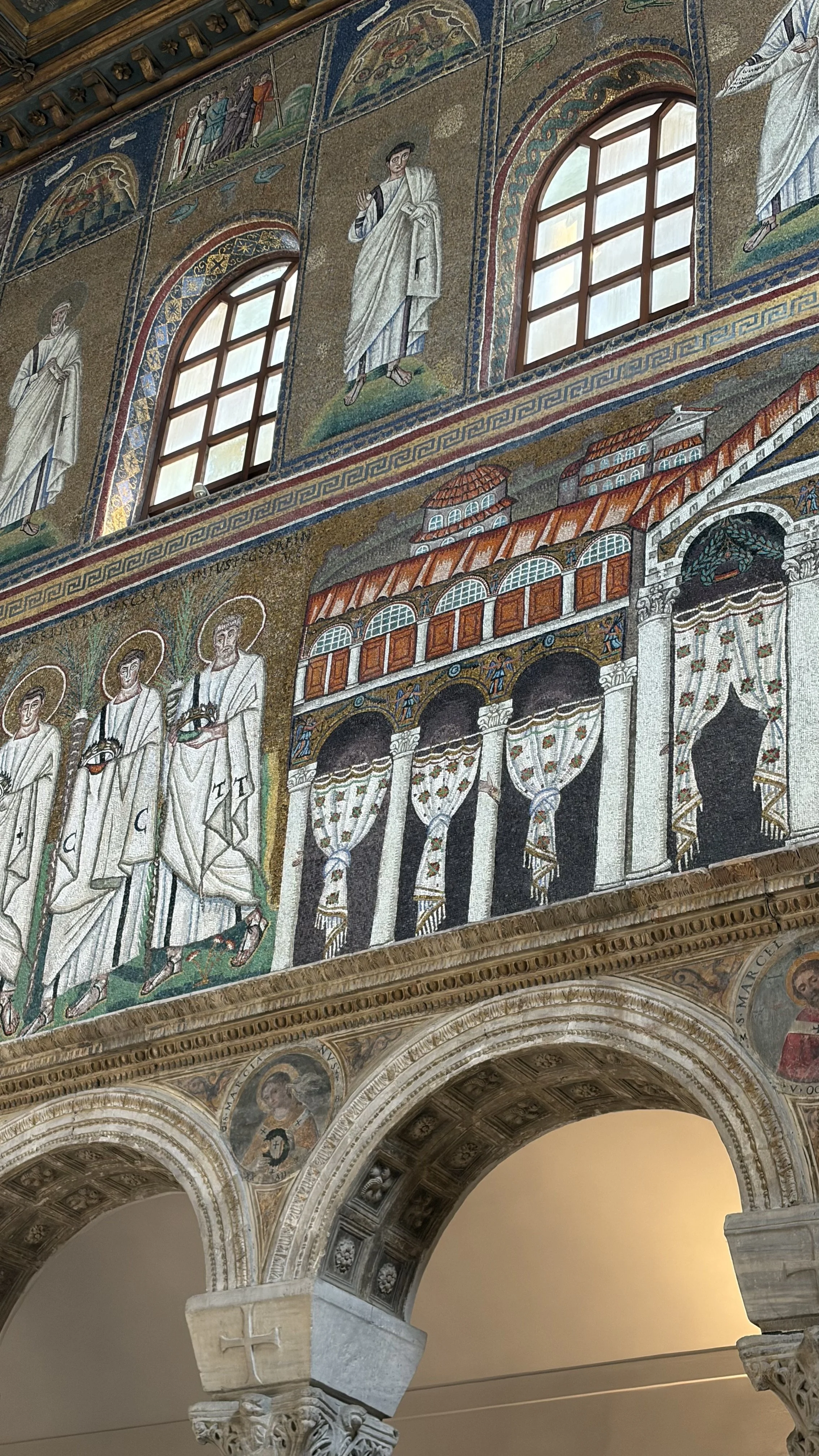
This trend was seen again in the Basilica di Sant’Apollinare Nuovo. In the center row of the second photo, the left side is the beginning of a procession of the martyred saints dressed like Roman senators. This blending of eras was so interesting to me because I’m used to thinking of time periods as pretty rigid, having had to memorize dates and key elements for classes. This tour really showed, however, how culture isn’t that easy to nail down to a specific set of years. It flows as ideologies shift. I definitely want to go back to Ravenna to spend even more time there.
Week 2
-
![]()
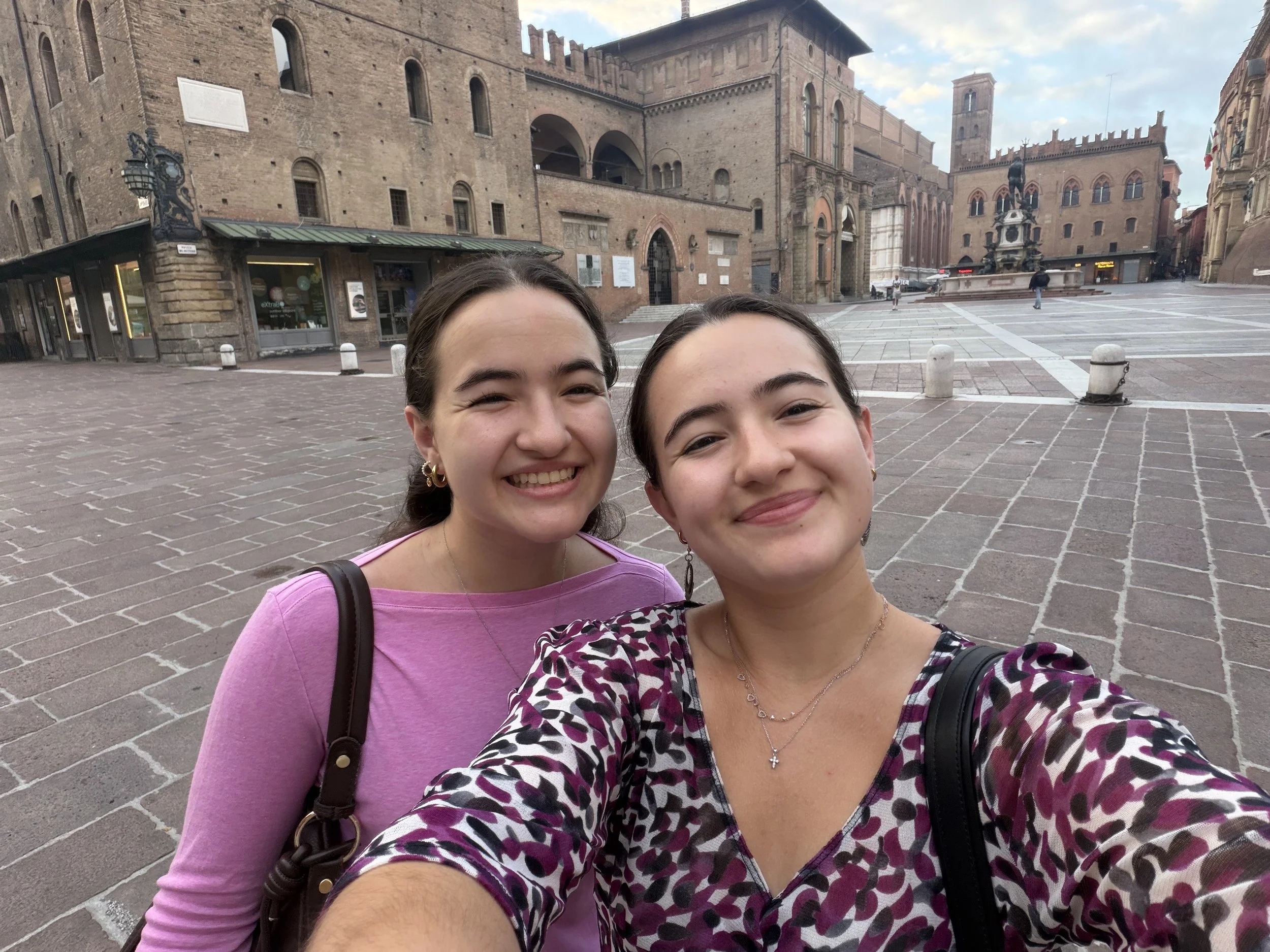
In my first week in Bologna, I have embraced how eating together is a cornerstone of Italian culture. So, for this newsletter, I’d like to share how I’ve been building relationships in the city best known for its food.
-
![]()
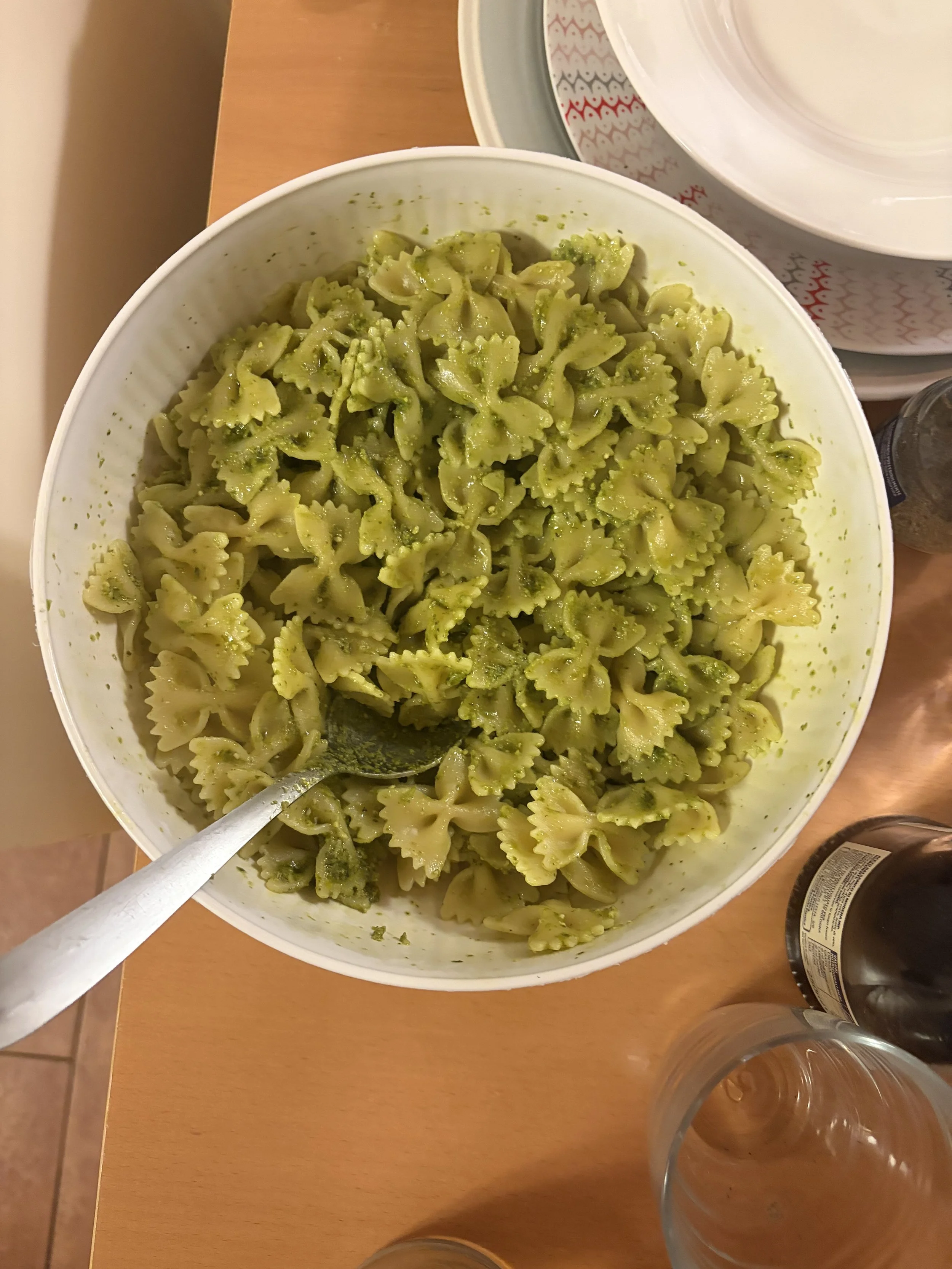
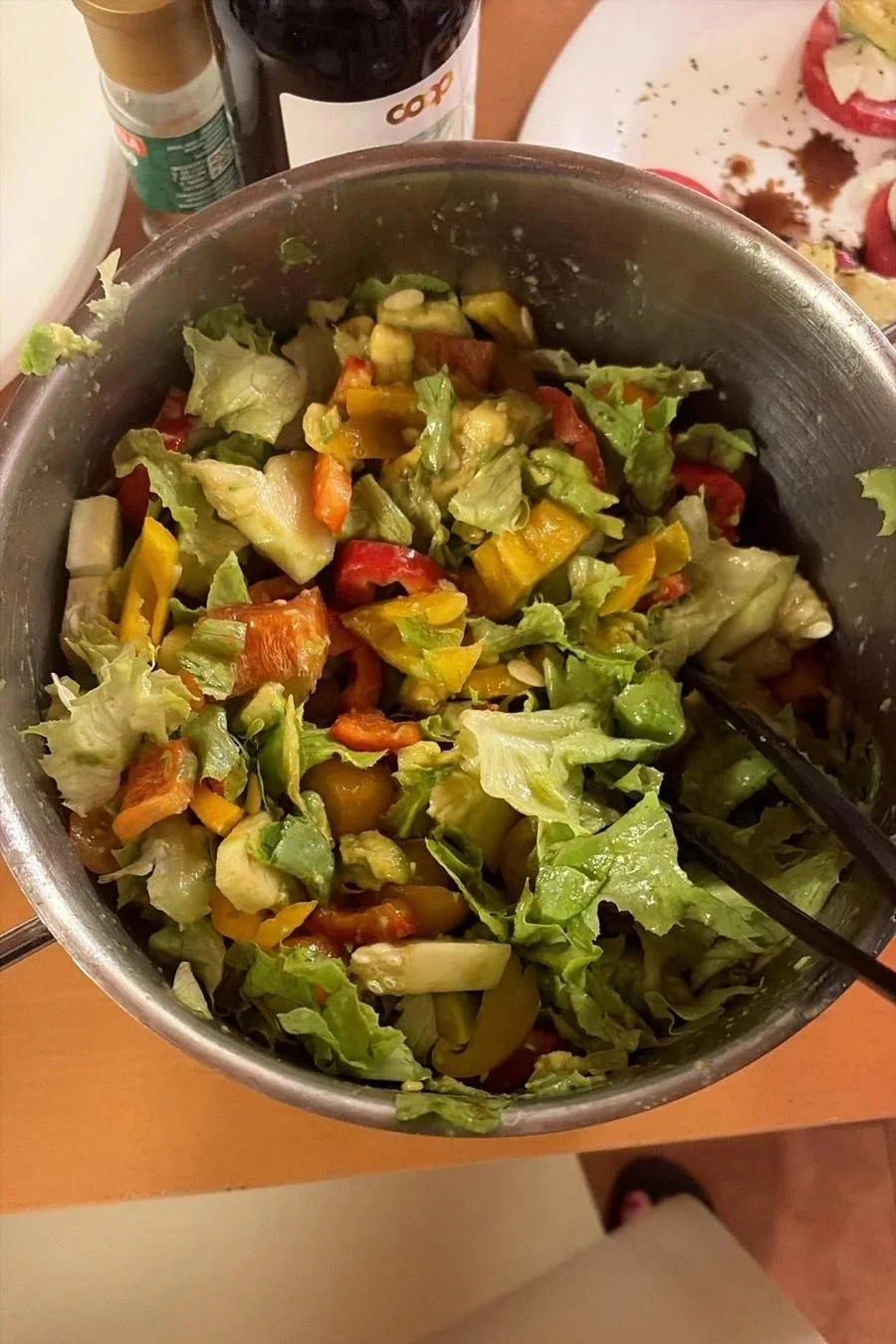
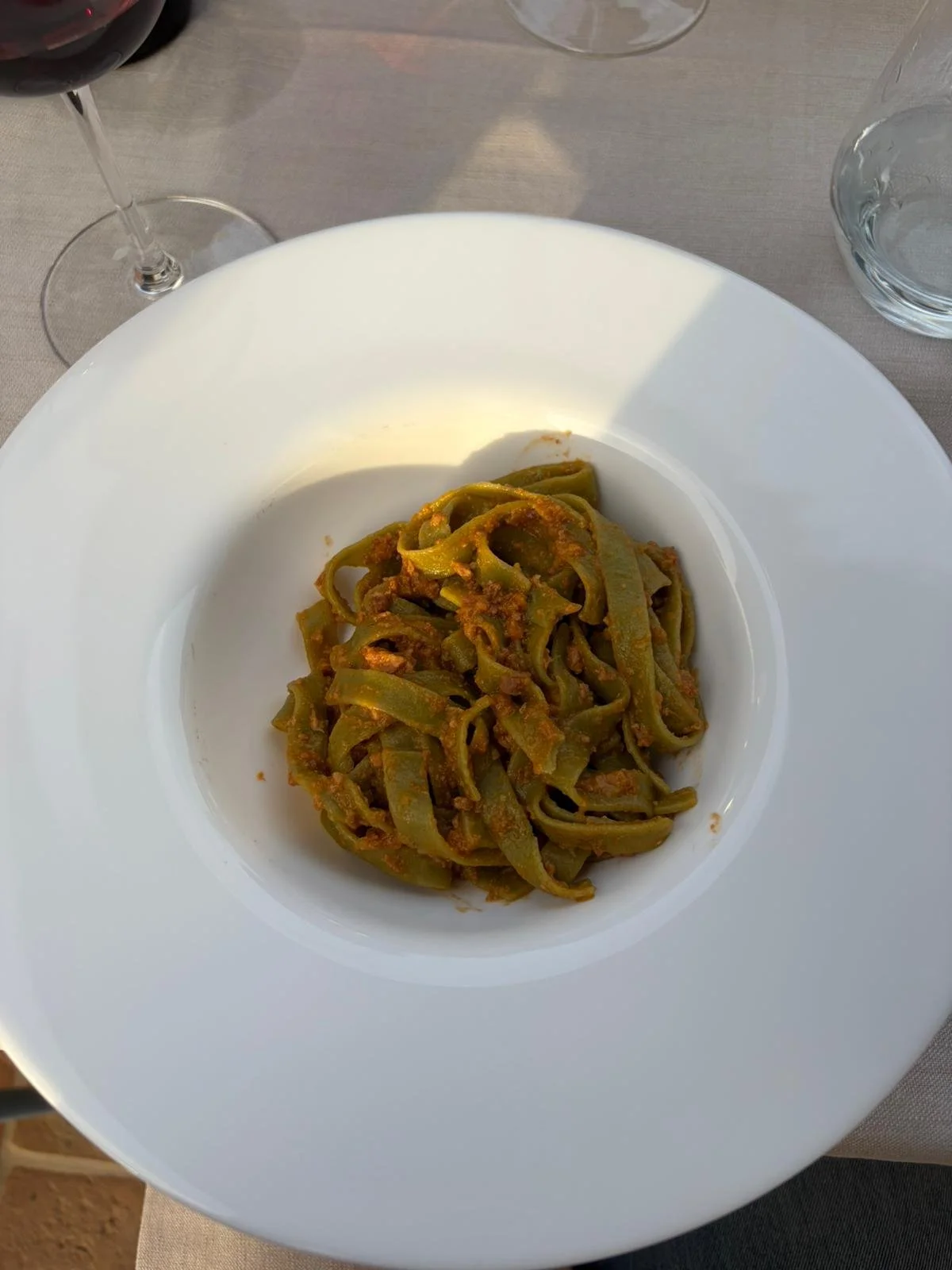
First, we had a welcome dinner where all the students sat around a long community table, tasting classic dishes starting with caprese and ending with tagliatelle con ragù. A couple of nights later, my friends and I decided to host a potluck dinner at our apartment.
-
![]()
During the day, we wandered around the produce markets to get vegetables for a salad — because we hadn’t been eating nearly enough greens — and decided that the fresh pasta near Piazza Maggiore was too “tourist-pricey,” so we just went to the supermarket. My friends came down, and we all cooked together until the rest of the program arrived. Everyone was welcome; they just may have needed to bring their own plate!
-
![]()
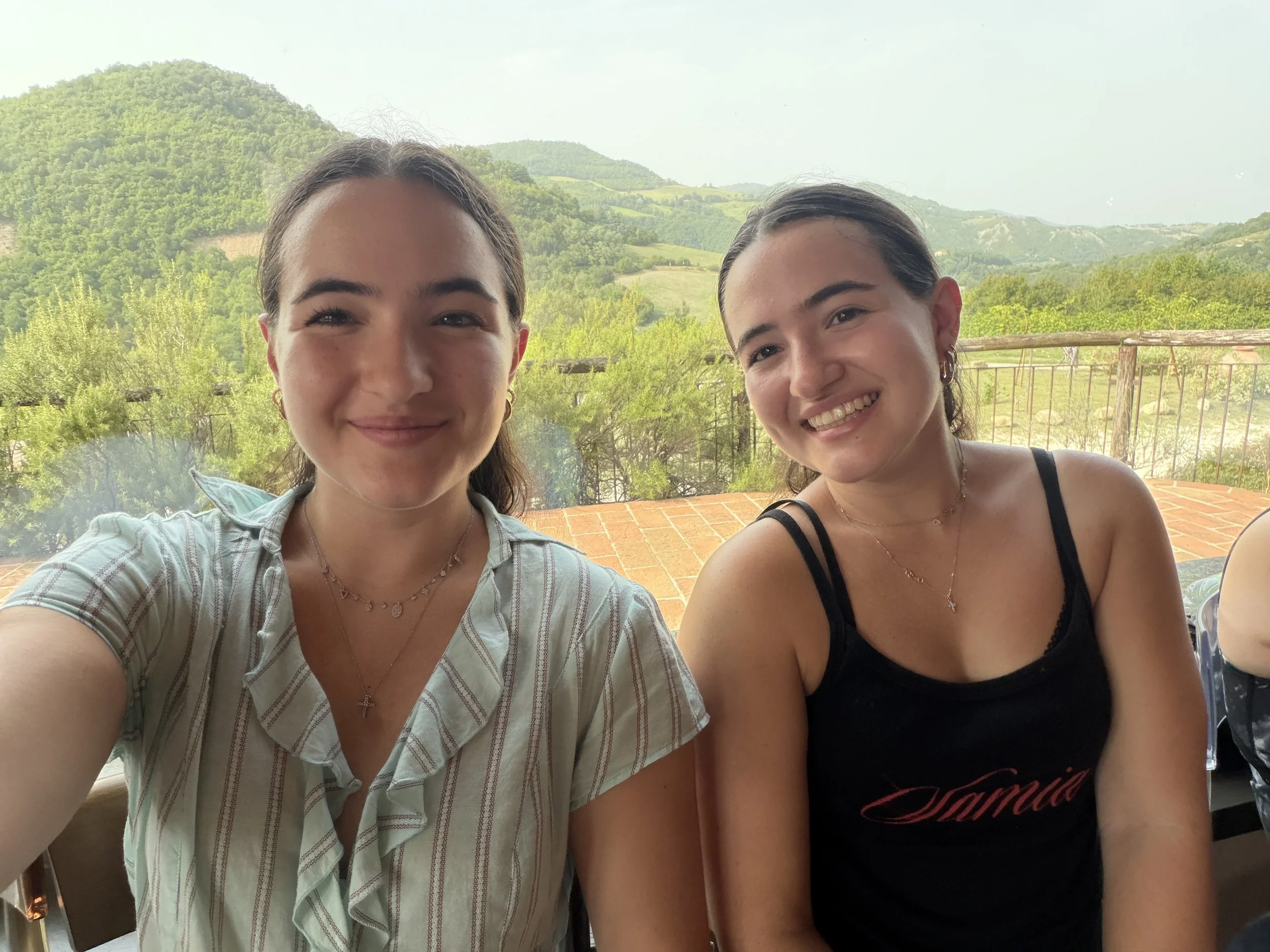
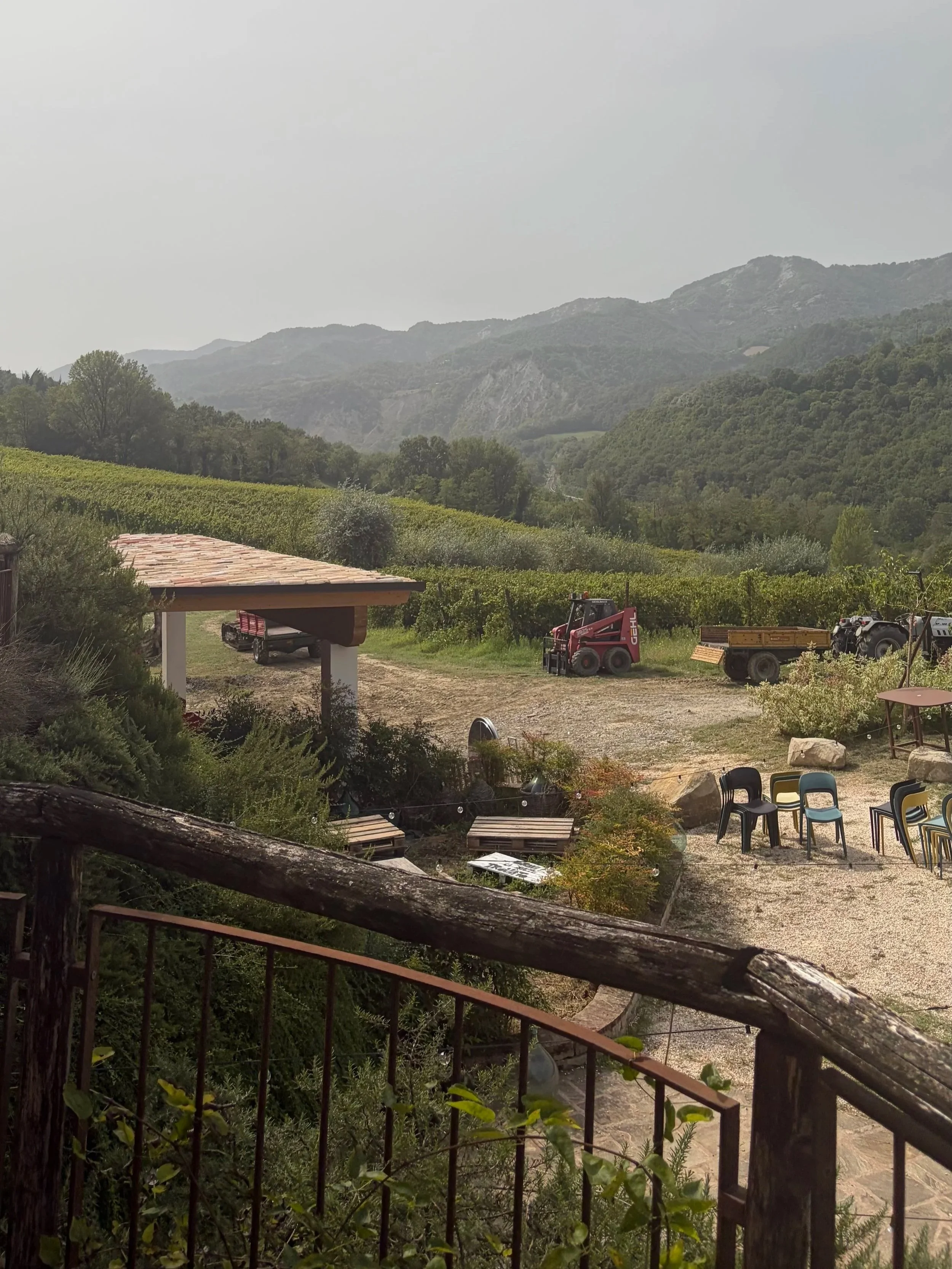
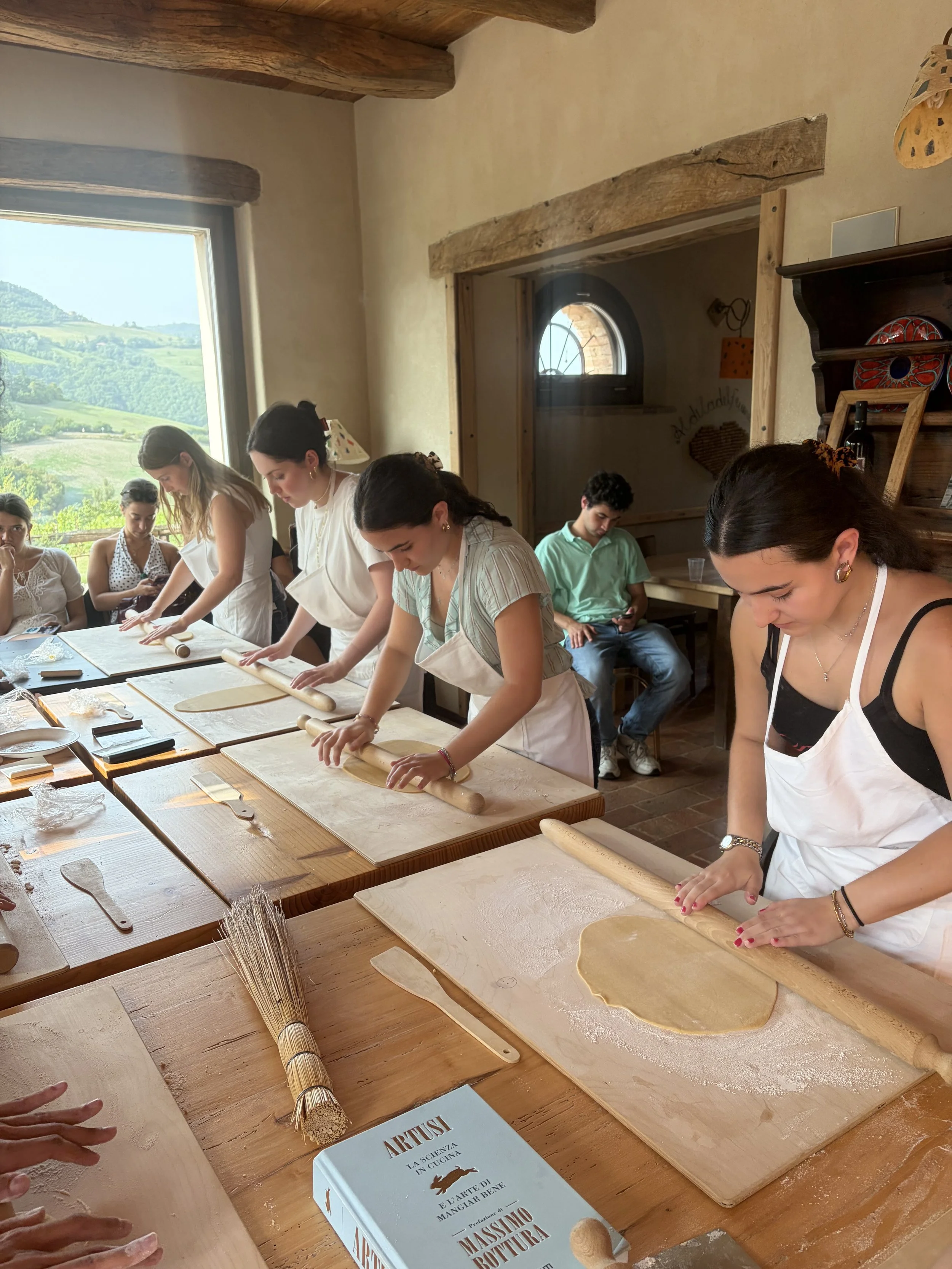
For our first program excursion, we went to “Al di là del fiume,” a large biodynamic farm just an hour outside of Bologna that specializes in cultivating relationships between the land and the people. As the bus started to climb the hills, the scenes of the city gave way to the hills, and the smaller towns hurried among what seemed like endless green.
-
![]()
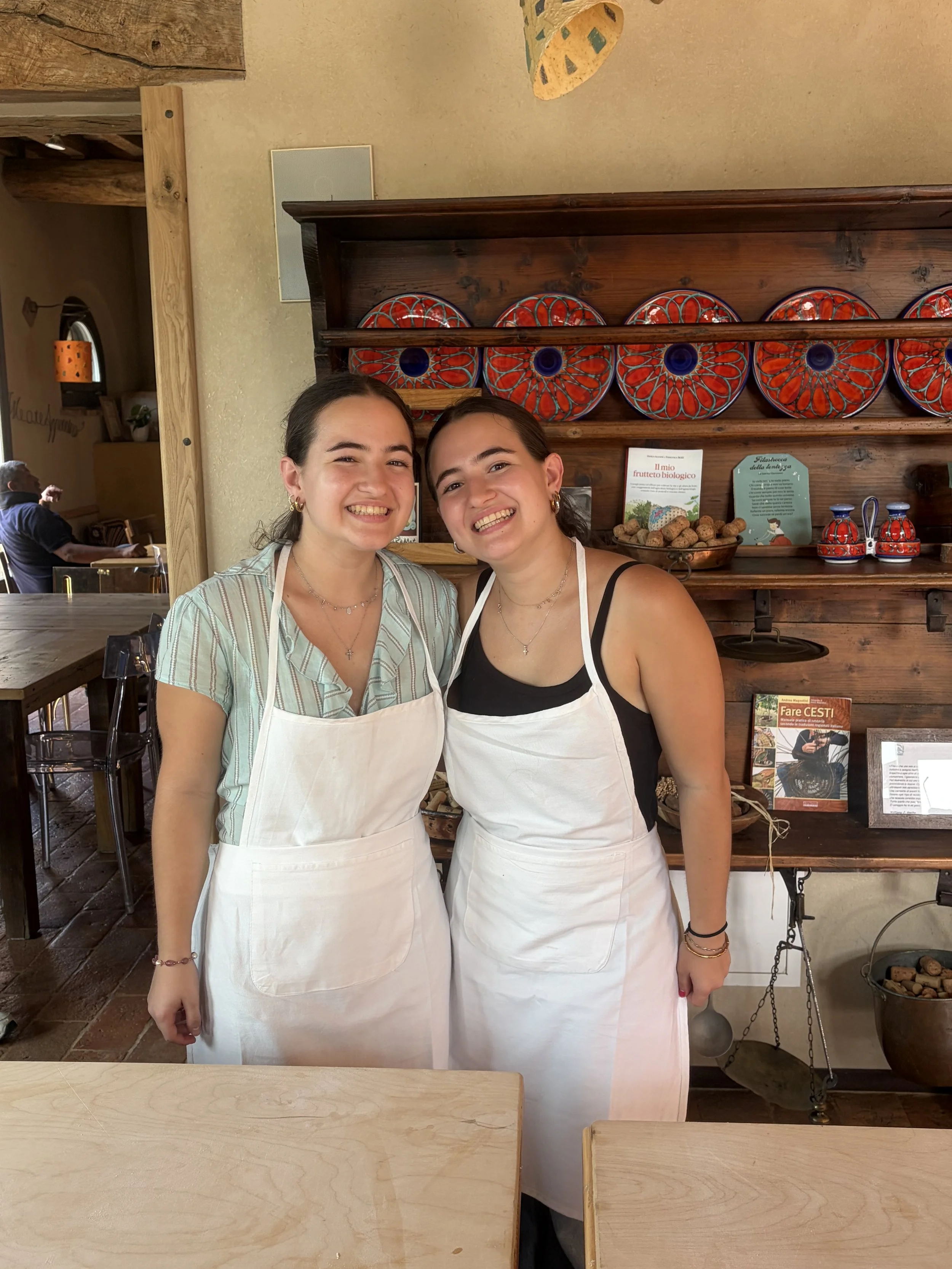
The first part of the evening was a pasta-making class. Since my program is so large, we split into two groups: one to make the dough and another to shape it into tagliatelle. For the first half, I got to sit and enjoy the lesson without the pressure of making the pasta dough myself!
-
![]()
But the second part I jumped right in — the chef showed us how to properly maneuver a rolling pin so that the super thin dough wouldn’t break when we switched rolling directions. He showed us how to use just the right amount of flour and how to knead the dough like experts. When our dough was rolled out, we were taught the proper technique for cutting the even strands with knives because no fancy modern tools would be used in this authentic experience! Once our pasta was finished and ready to be cooked, we learned the history of the vineyard, the groves of fruit trees, and their wine storage.
-
![]()
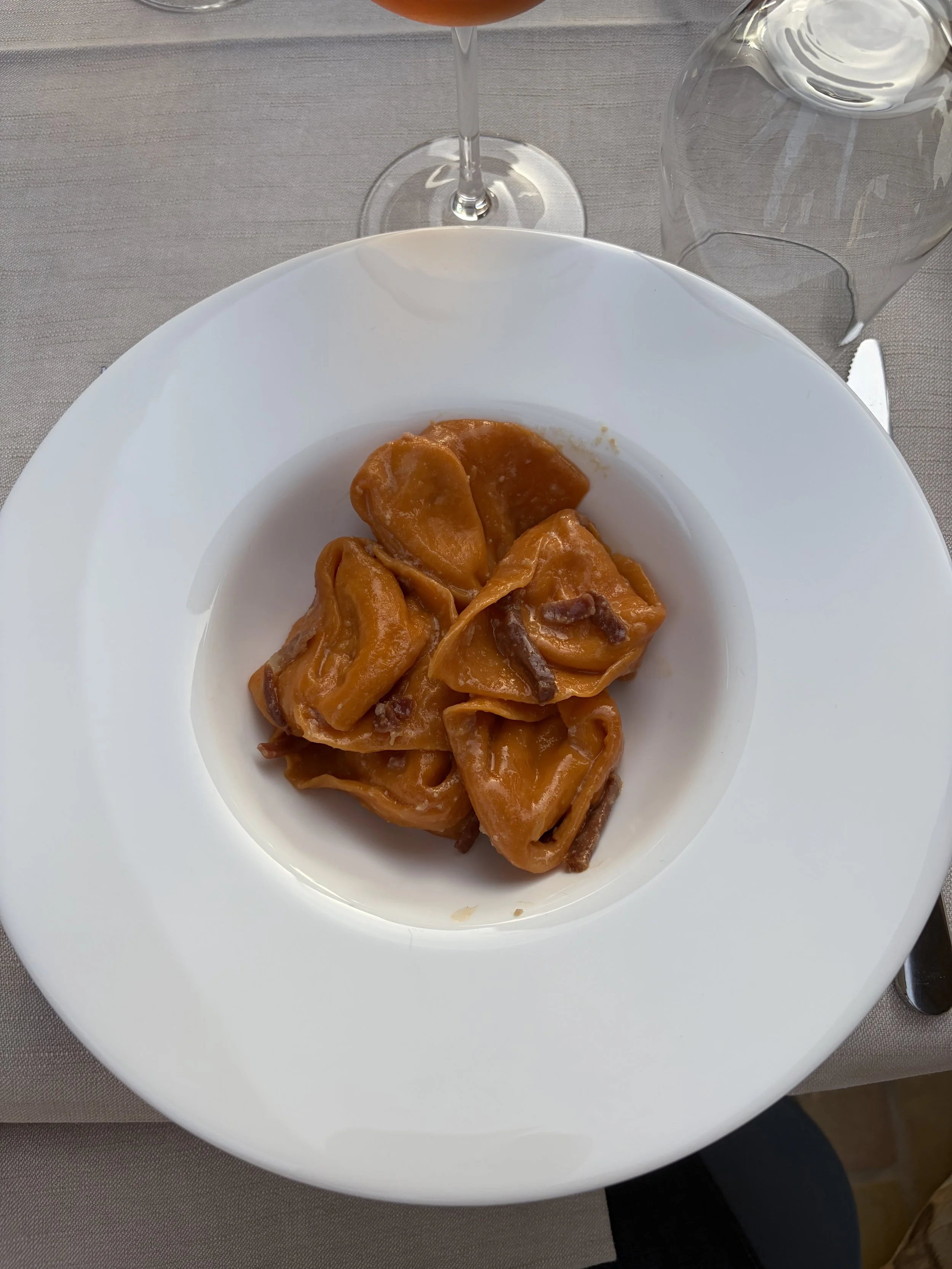
After the tour, we had a true Italian dinner with everything made on the farm. This meal felt so much like a story my family always tells of when my sister and I ate solid food for the first time. We were walking back from the park, Lucy and I as infants, starving from all the running around we did before 10 a.m., and my grandpa told my mom to just take us to the diner for breakfast. So Lucy and I sat in highchairs, and when we tasted the scrambled eggs in front of us, we just sank into our chairs as if those eggs were the best things we’d ever had.
-
![]()
This homemade meal felt like that. I sat next to Lucy, and the second we started on the first course of tortellini, we sank into our chairs and knew that this was truly the best thing we’d ever had. The subsequent ragù was even better, and we ended with crema fritta, which means fried cream and is traditional to Bologna.
Week 1
-
![]()
My suitcases were wide open on my bedroom floor. For the past week, I’ve been walking past them and adding one more thing I am suddenly certain I cannot live without. It felt so strange thinking about winter boots as I was walking to my summer job at Penn’s library in 95º Philly heat. I’m Rose, a rising junior at Penn studying English and Italian, and this past Sunday I swapped Philadelphia for Bologna for the fall semester.
So, I’d like to share one thing I did in preparation and a few more I am excited to experience.
-
![]()
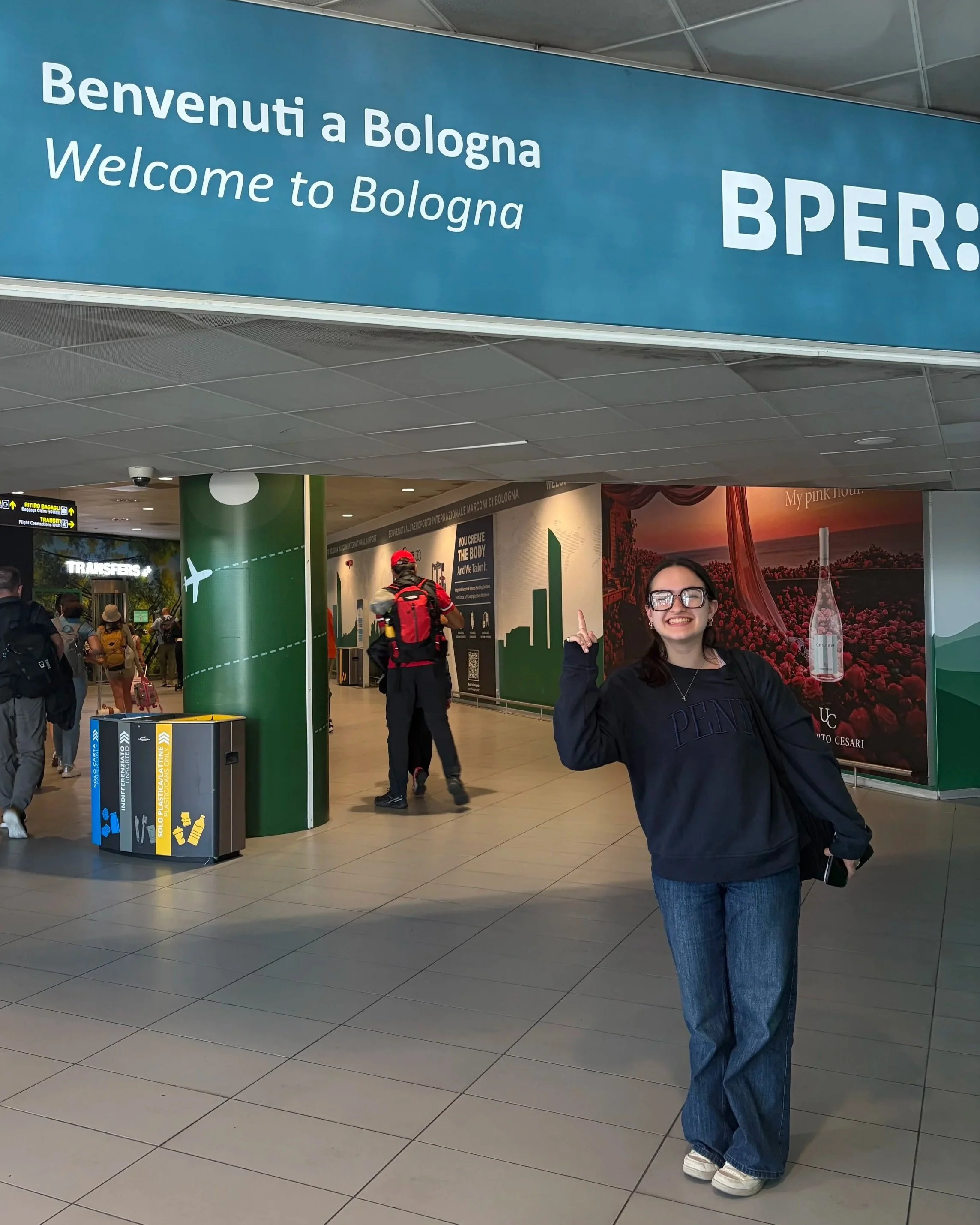
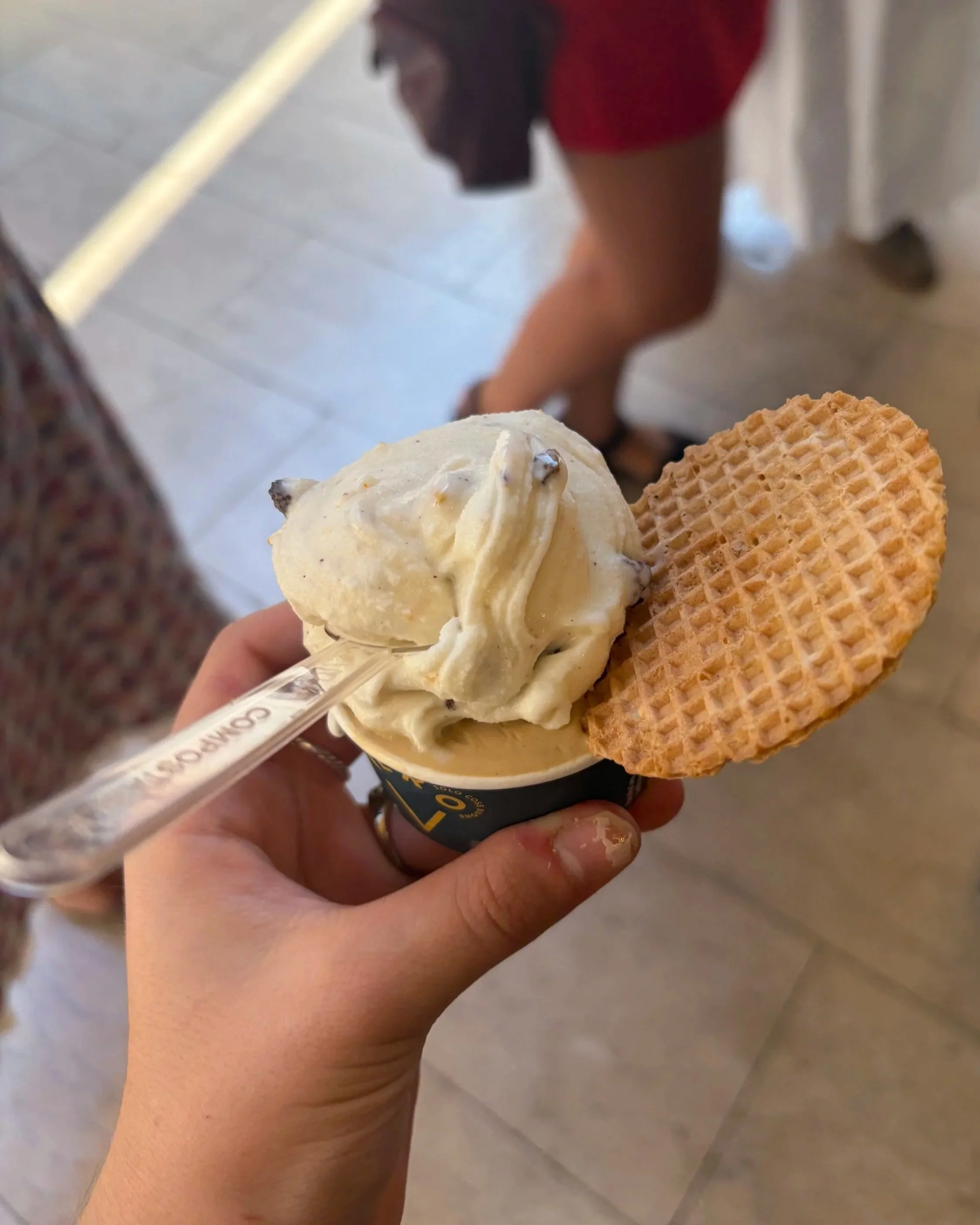
My travel day was surprisingly smooth — no delays, but it was shockingly hard to find an iced drink during my layover in the super hot Munich airport! I think I texted my mom updates every 15 minutes of my travel day: “Hey Mom, I just found my gate,” “Hey Mom, I got those peanut M&Ms we always get at airports,” “Hey Mom, made it to Europe,” “Hey Mom, made my connecting flight,” “Hey Mom, finally touched down in Bologna, time for gelato!”
-
![]()
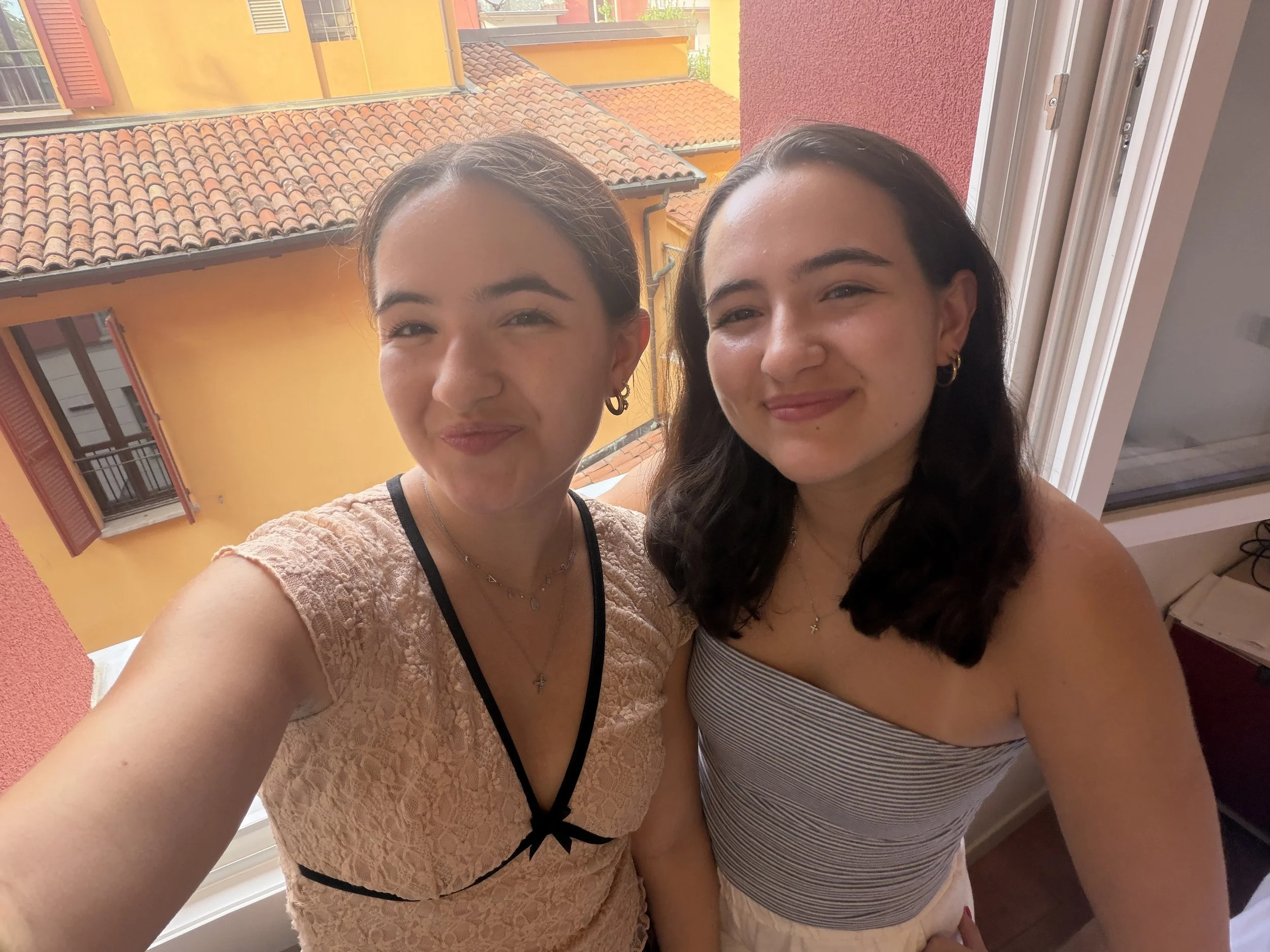
On my first morning in Bologna, I had orientation meetings starting at 10 a.m. and with the time difference making it feel like it was actually 4 a.m., I was still recovering from the travel day. We did introductions with the other students in the Bologna Consortial Studies Program (BCSP), many of whom are also on the Italian track, meaning that they are taking all of their classes in Italian like me. Most have the same goals as I do: improve my language skills and explore a new
city. I’m staying on Via San Felice for orientation and here is the view from my window. Quite different from Philadelphia!
-
![]()
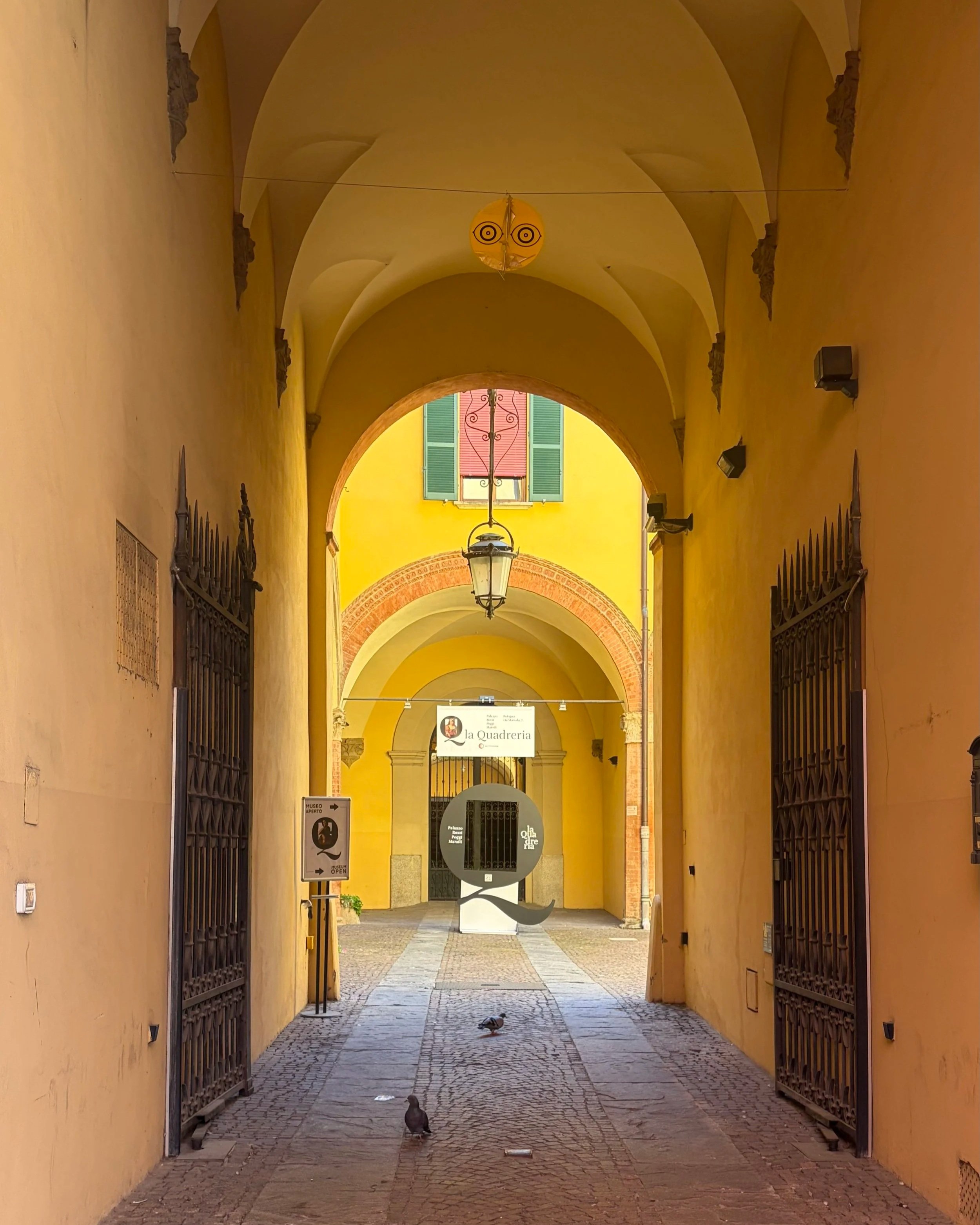
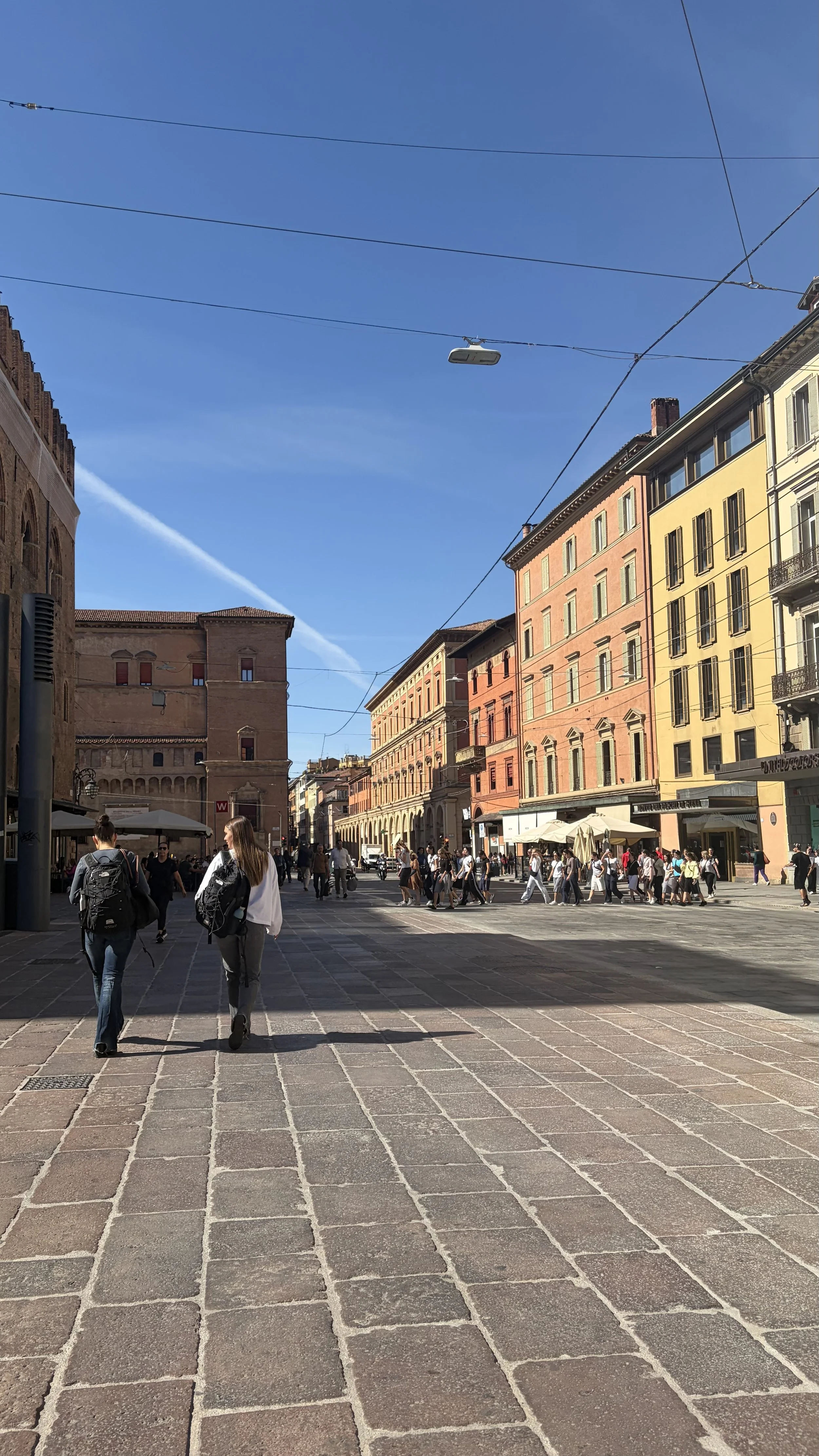
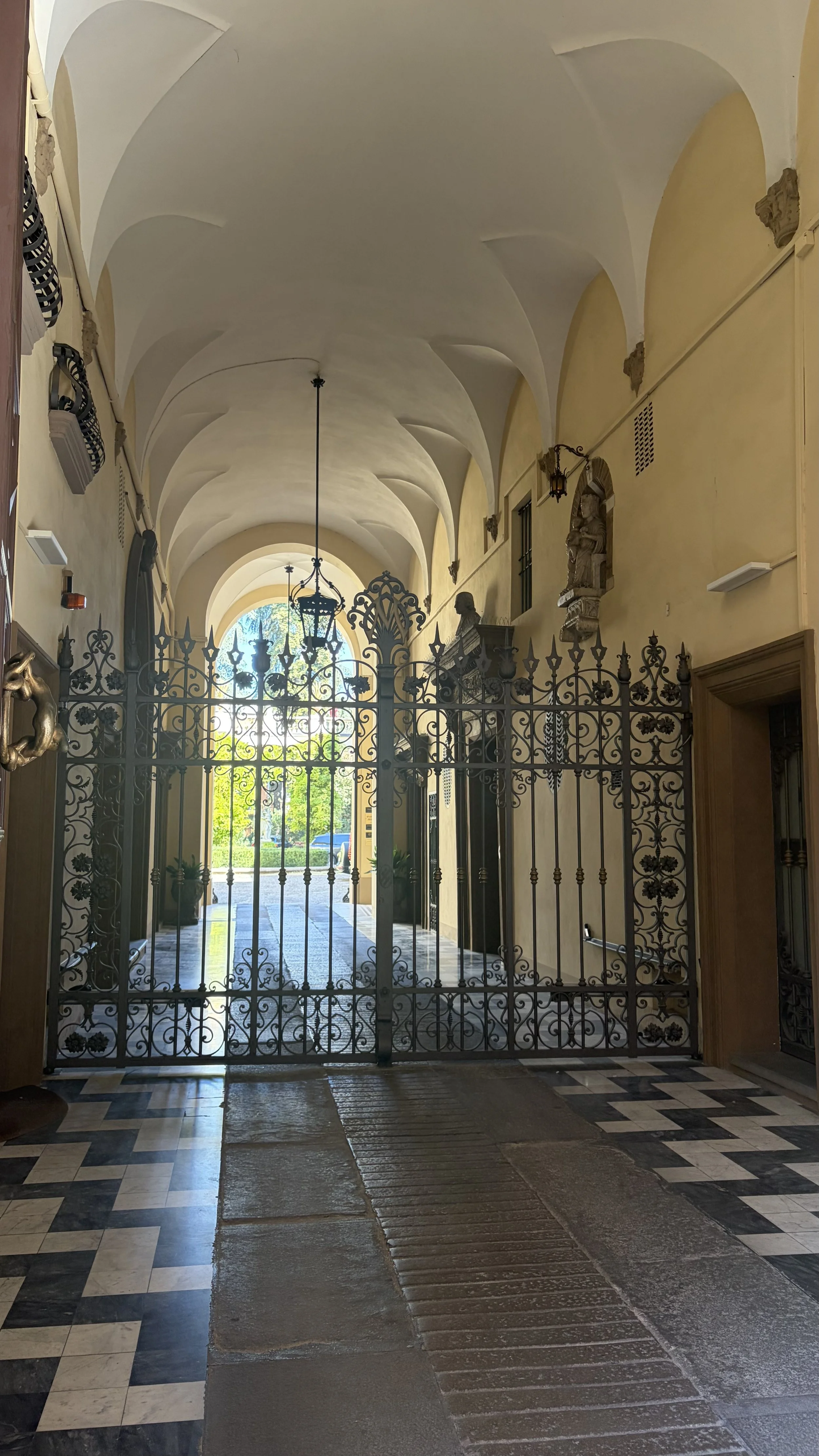
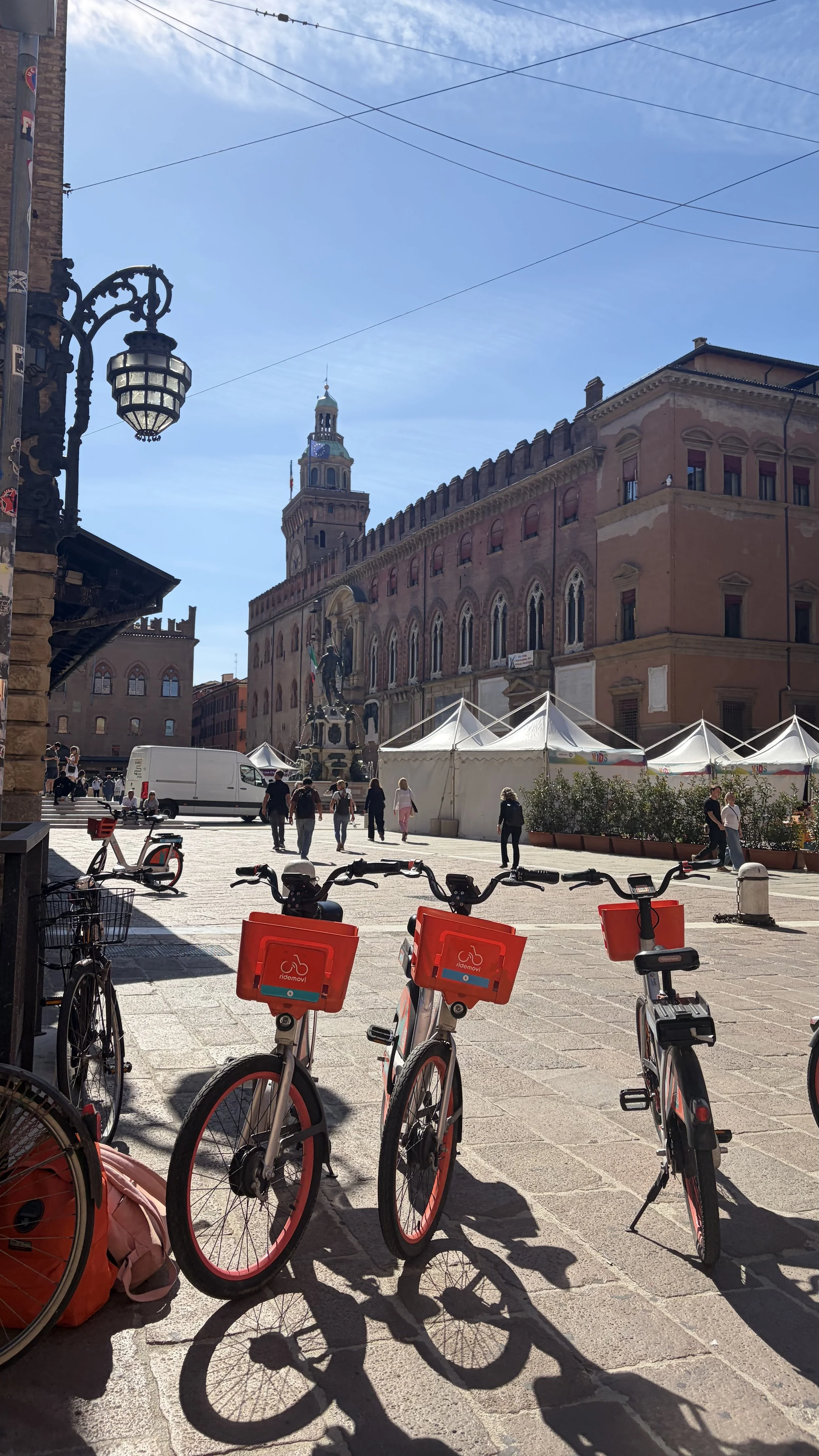
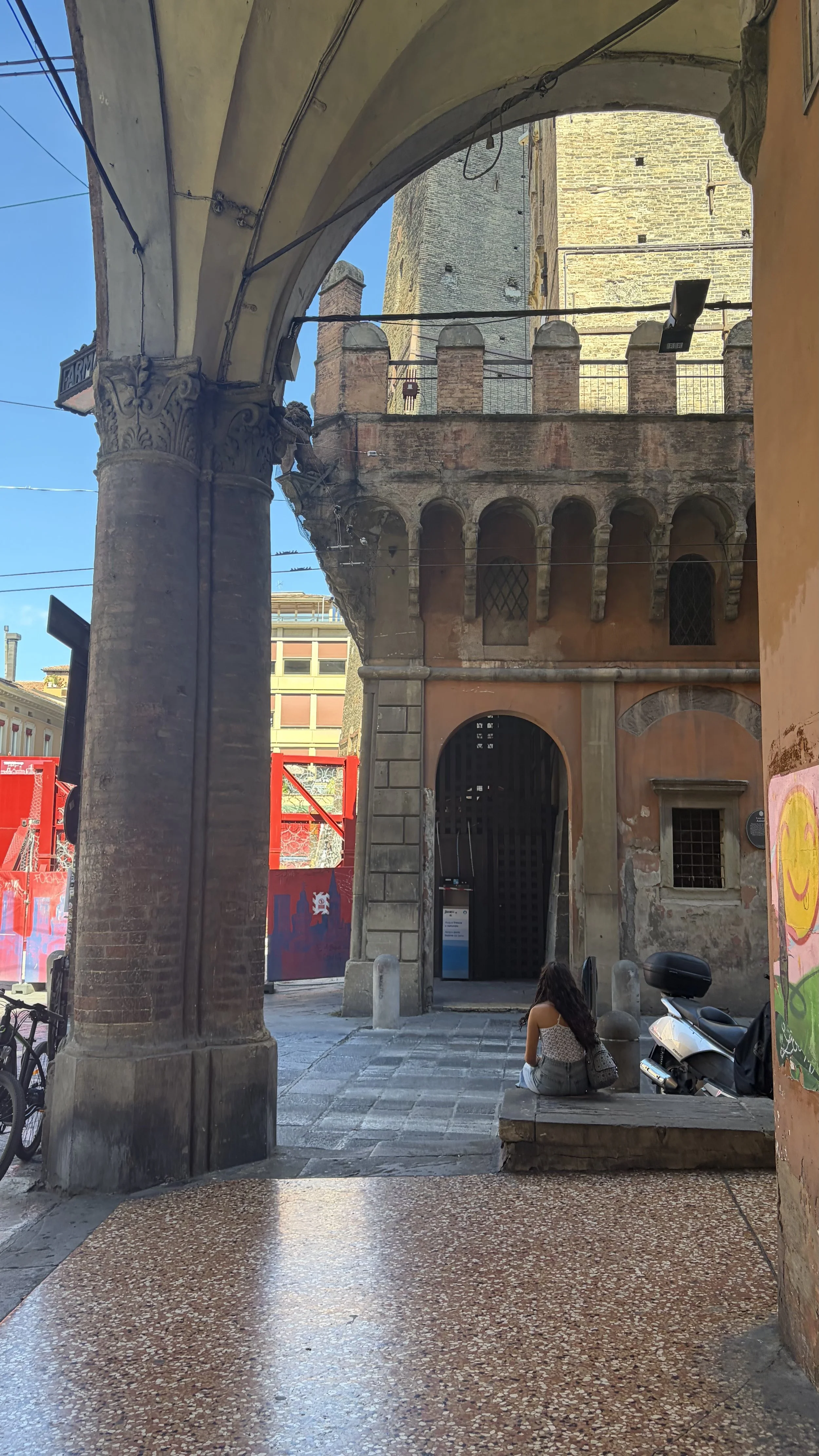
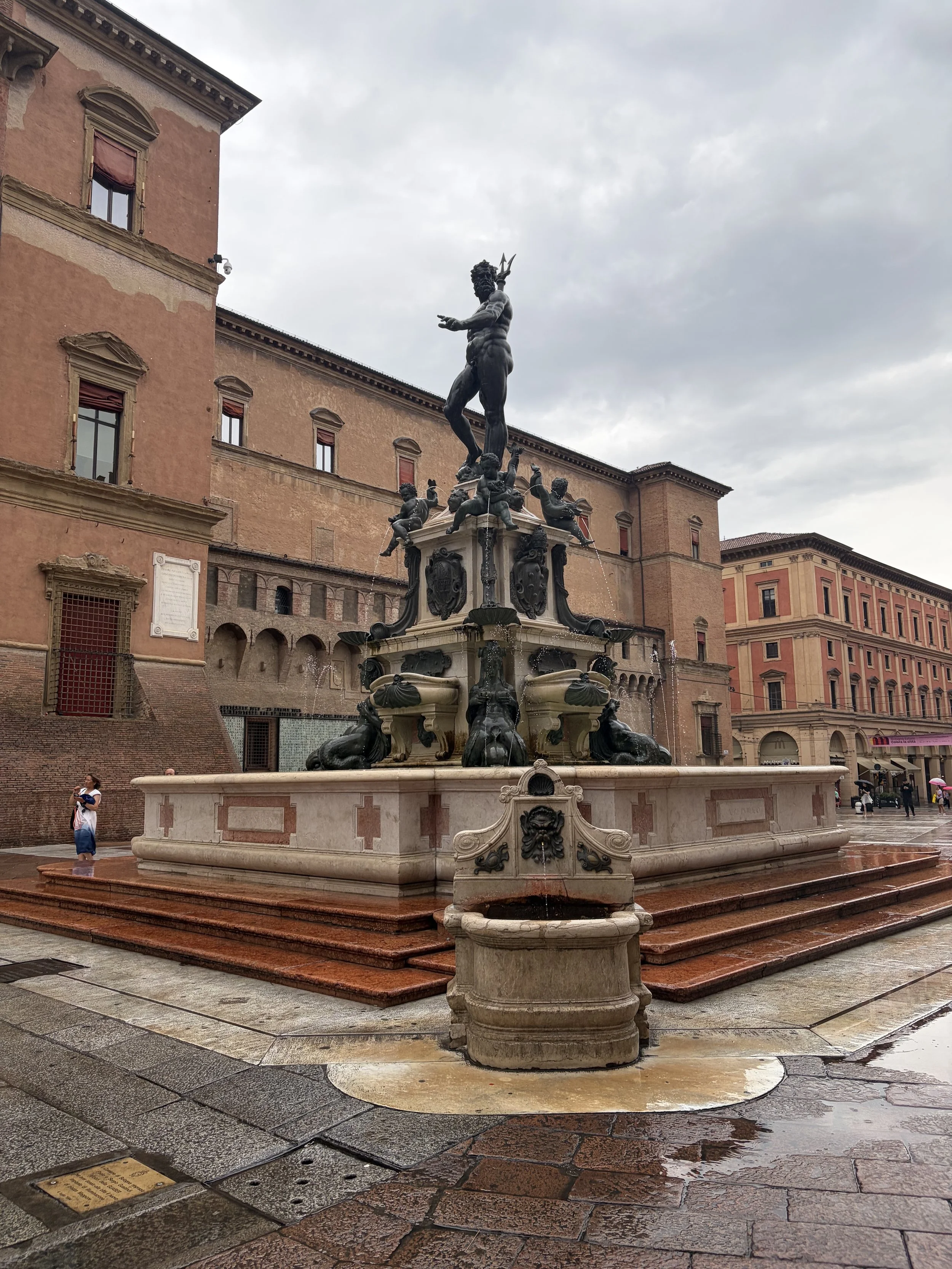
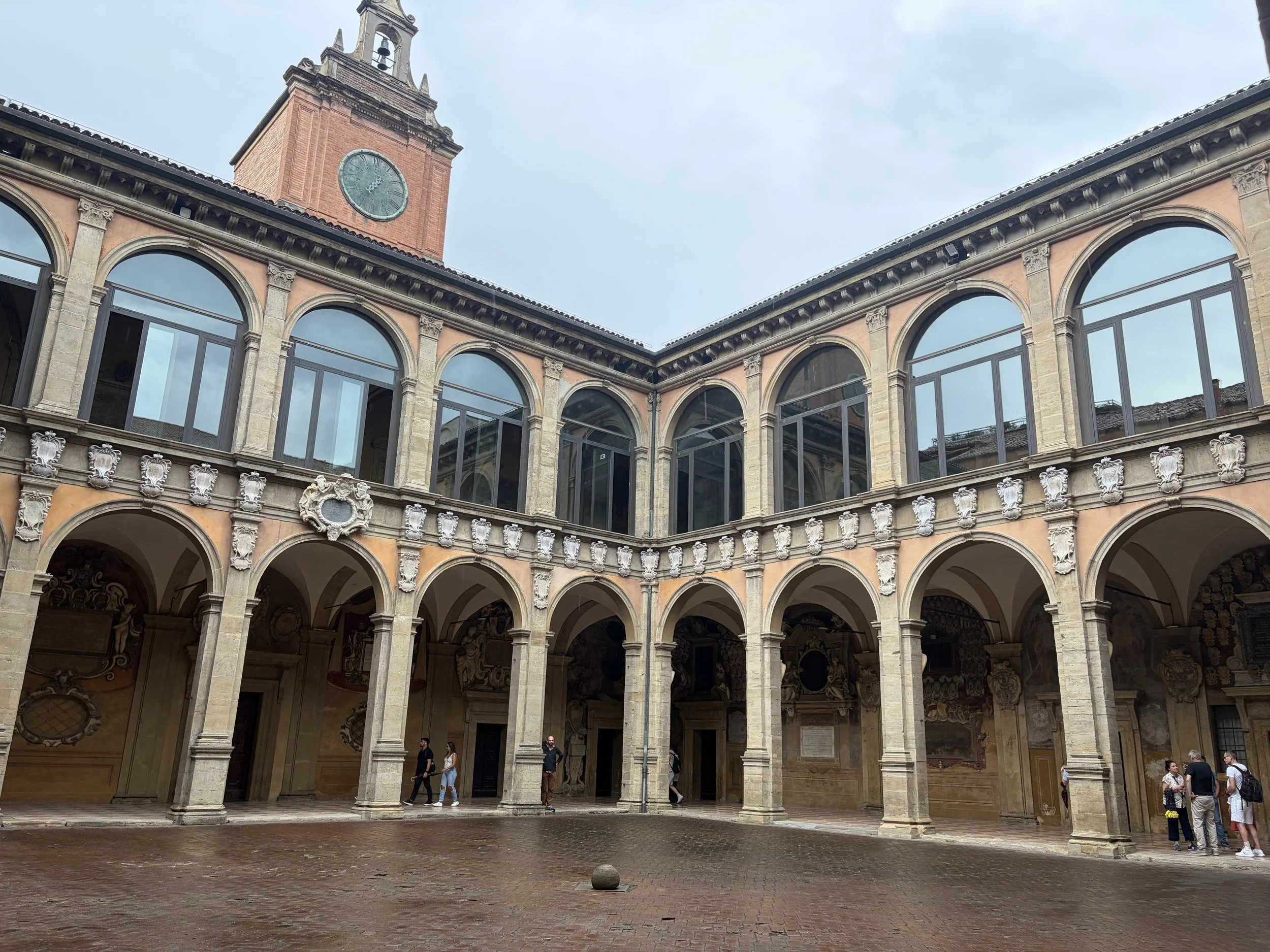
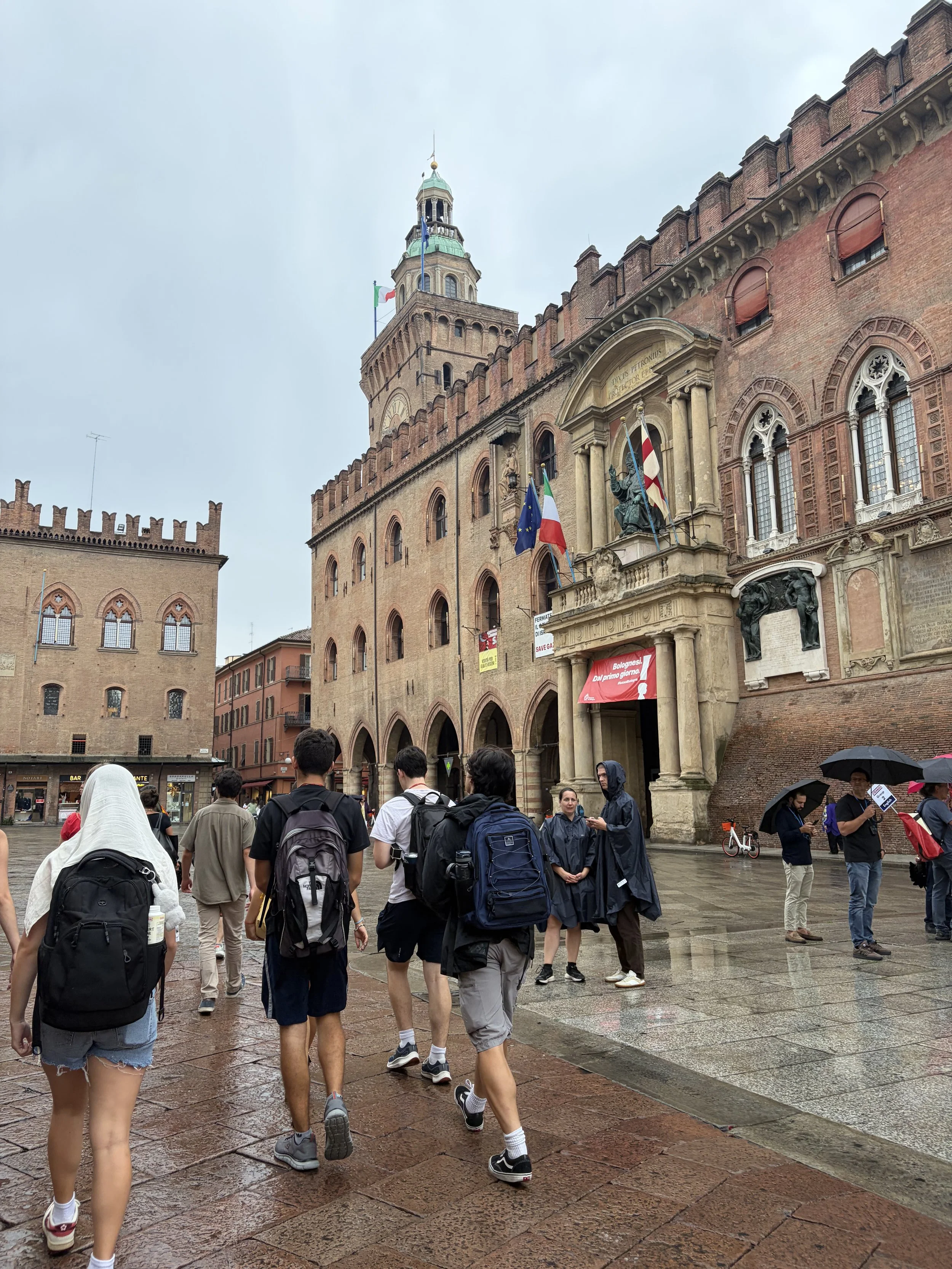
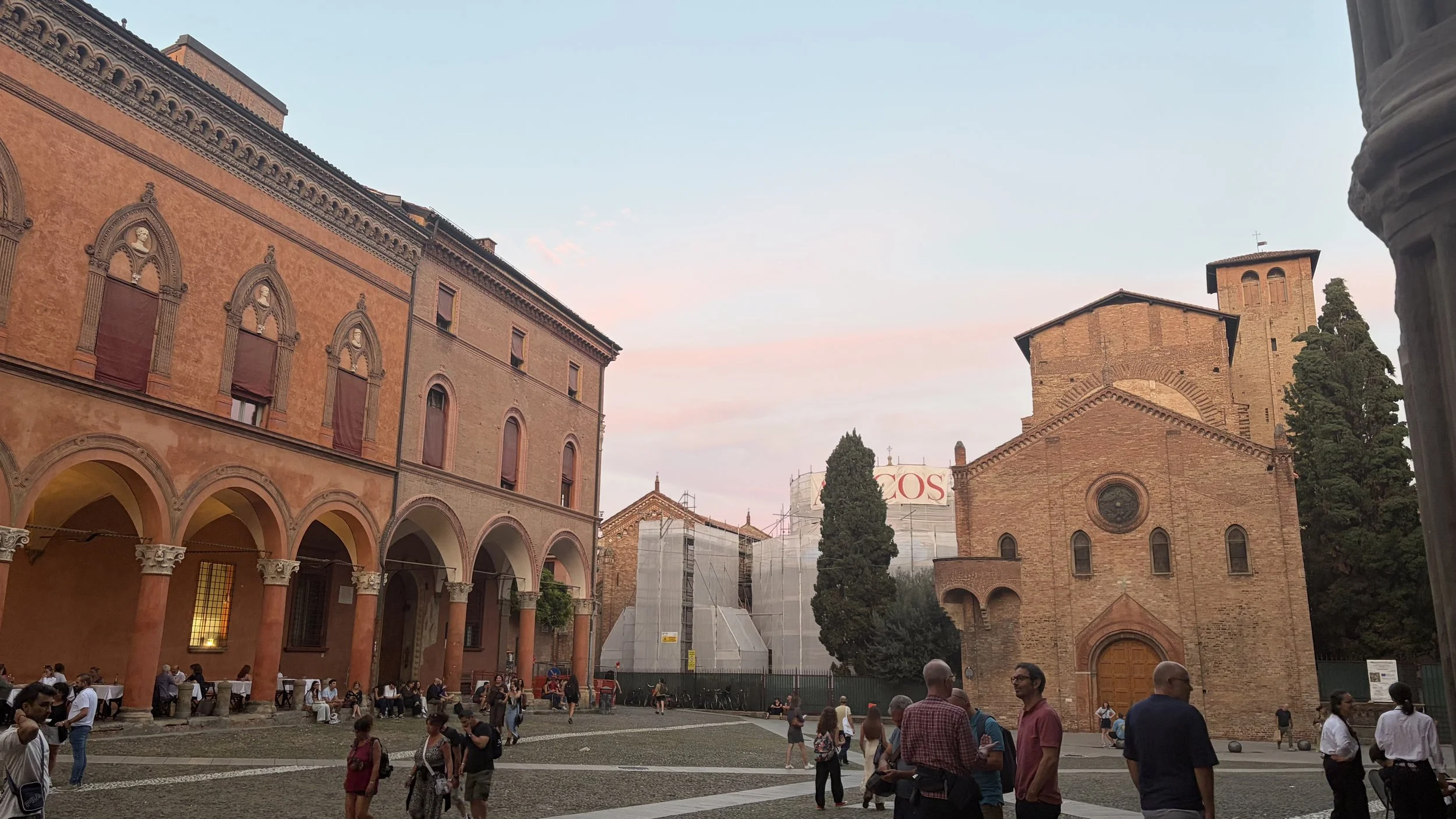
Outside of the orientation meetings, introductions with professors, and program events, I’ve been walking around to get my bearings in Bologna since I’ll be here for the next few months. I keep being surprised by how vibrant the city is, even though most people are still away on their summer vacations. Here are some pictures of views that I don’t think could ever get old.
-
![]()
I have had such an incredible week and I am excited for everything else I have yet to experience. There is a coffee bar somewhere in Bologna where I will certainly order a cappuccino at the wrong hour. There is a bus I’ll take in the absolute wrong direction, thinking I’m heading to class but ending up across the city on some corner I wasn’t expecting to find. There is a classroom where I’ll sit through my first week of lectures in Italian, relying on hand gestures and context to get the meaning of the lesson. There are so many places that will be part of new routines I haven’t started yet and I can’t wait.
All the best,
Rose